
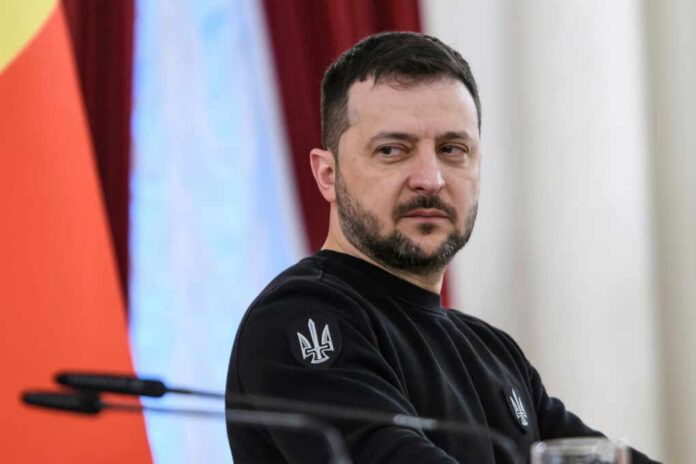
Ukraine’s wartime government has just put a powerful energy executive in charge as prime minister, raising big questions about where global aid money and critical infrastructure decisions go next.
Story Snapshot
- Ukraine’s parliament approved state energy boss Sergii Koretskyi as the new prime minister.
- Zelensky says Koretskyi is the “most prepared” leader to guard energy and survive a harsh winter.
- Koretskyi built his reputation turning loss-making state oil and gas firms into profitable giants.
- His rise shows how wartime Ukraine is tightly tying politics to energy, aid, and European Union plans.
Energy CEO Becomes Wartime Prime Minister
Ukraine’s parliament voted to make **Sergii Koretskyi**, the former head of state energy company Naftogaz, the country’s new prime minister, giving him 289 votes and a clear mandate during an ongoing war with Russia. Lawmakers backed him as a capable and efficient manager at a time when Ukraine’s survival depends on keeping the lights on and the heat running through missile strikes and power cuts. This move turns an energy crisis manager into the top political leader shaping Kyiv’s budget, aid use, and long-term rebuilding plans.
President Volodymyr Zelensky had already told Ukrainians that winter readiness was the top concern and called Koretskyi “surely the most prepared candidate” for the job. That message matters for American readers who watch billions in U.S. support flow to Ukraine’s military and civil infrastructure, including power grids and gas systems. When a president ties leadership to energy security first, it signals where war-time spending, foreign loans, and Western backing will be focused in the months ahead.
From Oil and Gas Turnaround Boss to National Leader
Koretskyi built his career running major state oil and gas firms, including Ukrnafta and Ukrtatnafta, before stepping in as Naftogaz chief in 2025. Under his leadership, Ukrnafta shifted from heavy losses to strong profits, boosted oil and gas output, and modernized equipment even as Russian strikes hammered energy sites. An independent audit later confirmed billions in net profit and full repayment of tax debts, giving him a rare reputation as a state-sector manager who could both clean up finances and keep essential services running.
Supporters argue this track record is exactly what Ukraine needs at the top as it heads into what Zelensky’s allies call possibly “the most difficult winter in its history,” with gas fields, pipelines, and storage still under threat. Koretskyi’s crisis management experience means he has already had to keep energy flowing when missiles hit key sites, a situation not far removed from the pressure he now faces at the national level. For conservatives in America, this looks like a wartime bet on skill and numbers over party insiders, but it also tightens the link between politics and a vast state-controlled energy machine.
Priorities: Defence, Economy, and Europe’s Demands
Addressing parliament before the vote, Koretskyi said his top goals are defending Ukraine, keeping the economy stable, and pushing integration with the European Union. He also told Zelensky’s faction that his government would focus on support for the public, preparing for the heating season, strengthening the armed forces, and protecting critical infrastructure, especially in energy. This mix of defence and economic priorities lines up closely with what Brussels and Washington want from Kyiv in return for weapons, budget aid, and reconstruction funds.
As Prime Minister, Koretskyi will now oversee how foreign money is used to rebuild power plants, gas networks, and fuel storage that Russia has tried to destroy. European Union partners watch these decisions closely because they tie into Ukraine’s bid for deeper political and trade ties with Europe. American taxpayers should care too, because a leader whose main skill is running large state energy firms will have huge sway over how Western financing flows into this sector, and whether it supports free-market reforms or locks in state-heavy control.
Risks, Unknowns, and What Critics Are Saying
Despite his strong management record, Koretskyi comes to the prime minister’s office with little direct government or parliamentary experience, raising questions about how he will handle broader issues like constitutional law, political reforms, and civil liberties. Some Ukrainian reporting notes he had earlier declined offers to lead the Energy Ministry, saying he needed to focus on Naftogaz, which feeds doubts about how quickly he is now shifting roles from company to country leadership. Critics worry that putting a powerful energy boss at the top could blur the line between sound crisis planning and entrenched state control.
🚨 BREAKING | Ukraine
🇺🇦⚡️ — The Ukrainian Parliament has approved Serhii Koretsky, the current CEO of state energy company Naftogaz, as the country’s new Prime Minister. pic.twitter.com/rsEc2Fzd2y
— Global Affairs Report (@GlobalAffairsRp) July 16, 2026
Another concern is transparency around his appointment. Key early reports on Zelensky’s offer and Koretskyi’s acceptance relied on unnamed sources, not formal documents, which gives opponents room to challenge the story even though parliament has now confirmed him. There is also no detailed public record yet of his full energy security plan for the coming winter, beyond broad goals like boosting domestic production and protecting infrastructure. If Ukraine’s grid or gas system fails this winter, both Zelensky and Koretskyi will personally carry the blame for betting the country’s future on one energy-focused leader.
Sources:
insiderpaper.com, iz.ru, kyivindependent.com, pravda.com.ua, meduza.io, globalbankingandfinance.com, theedgemalaysia.com, naftogaz.com, en.interfax.com.ua, babel.ua