
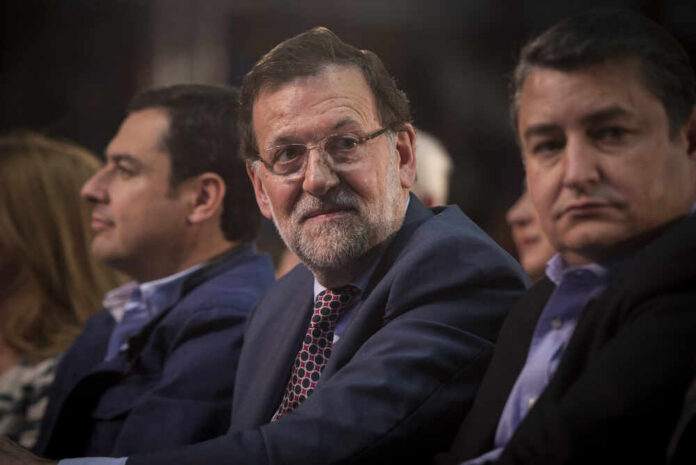
A former Spanish prime minister set off an international firestorm by writing that France’s World Cup team has “no Frenchmen” — and now governments on both sides of the border are demanding answers.
Story Snapshot
- Former Spanish Prime Minister Mariano Rajoy wrote in a newspaper column that France’s World Cup squad plays “without Frenchmen,” pointing to players with immigrant or colonial backgrounds.
- France’s interior minister called the remarks “completely unacceptable,” and political leaders in both Spain and France quickly condemned Rajoy.
- The comments came just days before the Spain vs. France World Cup semifinal, adding fuel to an already heated rivalry.
- Rajoy’s remarks followed a similar controversy one week earlier, when a Paraguayan senator made racially charged comments about French star Kylian Mbappé.
What Rajoy Actually Said
Mariano Rajoy, who led Spain as prime minister from 2011 to 2018, writes a regular World Cup column for the Spanish outlet El Debate. In a piece published July 10, 2026, he praised France’s squad as “top-tier” — then added, “That said, there are no French.” The column appeared just days before Spain and France were set to meet in a World Cup semifinal in Dallas on July 14.
Rajoy’s remark was widely understood as a reference to the fact that many players on France’s roster have immigrant backgrounds or roots in former French colonies. Every player on the French squad holds French citizenship and was selected under standard FIFA rules. France has won the World Cup twice — in 1998 and 2018 — with rosters built the same way, drawing heavily from its diverse, multicultural population.
Governments Fire Back
France’s Interior Minister Laurent Nunez was among the first to respond publicly, calling Rajoy’s comments “completely unacceptable.” Political leaders in both France and Spain quickly piled on, rebuking the former prime minister and calling the remarks xenophobic. The French government issued a formal rebuke, rejecting the idea that any of its players are somehow less than fully French. The backlash was swift and crossed party lines in both countries.
Spain’s current political leadership also distanced itself from Rajoy’s words. His comments threatened to overshadow the semifinal matchup entirely, turning a major sporting event into a diplomatic flashpoint. The timing made things worse — coming just one week after Paraguayan Senator Céleste Amarilla had already sparked an international uproar with racially charged remarks aimed at Mbappé personally.
A Debate That Keeps Coming Back
Rajoy is not the first public figure to question whether a diverse national team truly represents its country. This kind of argument surfaces regularly at major tournaments like the World Cup, where immigration, citizenship, and national identity all collide in a very public way. Critics say these claims confuse ancestry with citizenship — and ignore the legal and cultural reality of what it means to be French, or any other nationality.
⚽️ Controversy ahead of Spain vs France, World Cup semifinal (Tuesday, Dallas)
Former Spanish PM Mariano Rajoy (2011–2018) wrote in a column for Spanish outlet El Debate that France has "a top-level squad" but "no French players" — a comment widely seen as referencing the… pic.twitter.com/3Y87NV6Eur
— D.Or (@DorSport100) July 13, 2026
From a conservative standpoint, the debate touches on real and legitimate questions about national identity and what it means to belong to a country. Those are fair discussions to have. But Rajoy’s framing — flatly saying there are “no French” on France’s team — ignores a basic fact: every player legally is French. Whether his comment reflects a broader frustration with mass immigration policy or something more troubling is a question his critics and supporters are still arguing over. What’s clear is that the remark lit a match in an already tense political climate, and the fire spread fast on both sides of the Pyrenees.
Sources:
euronews.com, lemonde.fr, facebook.com