A Nobel Peace Prize winner who once called Donald Trump her main ally now finds his administration quietly siding with a former Maduro insider instead.
Story Snapshot
- Maria Corina Machado, Venezuela’s top opposition leader, won the 2025 Nobel Peace Prize for fighting dictatorship.
- She publicly dedicated the prize to President Trump, praising his “decisive support” for Venezuela’s freedom.
- U.S. intelligence and Trump officials now favor acting president Delcy Rodríguez, a longtime regime figure, for “stability.”
- Trump has dismissed Machado as “not respected,” while his team lifts sanctions and opens business channels with Rodríguez.
A Nobel Laureate Who Framed Trump as Democracy’s Ally
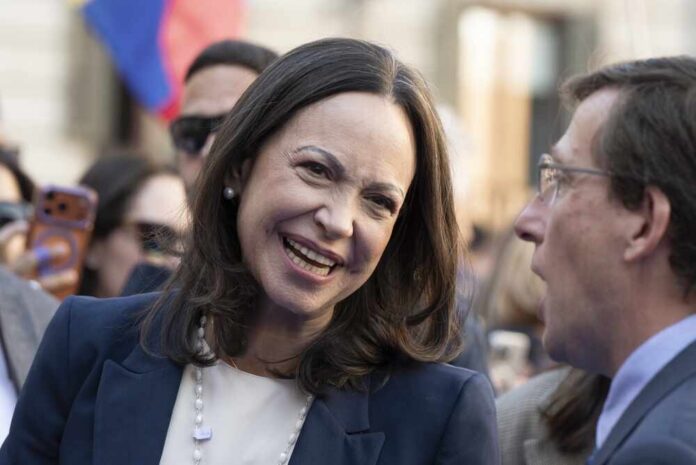
Maria Corina Machado is not a fringe activist; she is the Venezuelan opposition leader the Norwegian Nobel Committee chose for the 2025 Nobel Peace Prize, praising her “tireless work promoting democratic rights” and a peaceful transition from dictatorship to democracy. For years she has led resistance to the socialist regime that destroyed Venezuela’s economy and drove millions to flee. She operates largely in hiding, after arrests and intimidation, yet still argues that most Venezuelans want a real democratic change.
After the prize announcement, Machado did something striking for American conservatives. In a message shared on social media, she said she dedicated the prize “to the suffering people of Venezuela and to President Trump for his decisive support of our cause,” directly tying her fight for freedom to Trump’s stance against the Maduro regime. She later described the United States, Latin American peoples, and democratic nations as “our main allies to achieve freedom and democracy,” casting Trump’s America as central to that coalition.
How Trump’s Team Drifted Toward Delcy Rodríguez
Despite that praise, reports now show the Trump administration moving away from Machado and toward Delcy Rodríguez, the acting Venezuelan president who spent years in Maduro’s inner circle. A classified Central Intelligence Agency assessment reportedly argued that senior regime insiders, including Rodríguez, were best placed to run a temporary government and keep “near-term stability” after Maduro’s fall. That phrase is key: the focus is not deep democratic change, but short-term order, oil flows, and regional calm.
Acting president Rodríguez has tried to show Washington she can be useful. Coverage notes that she cooperated on extraditing a former Maduro ally to the United States and backed electricity reforms that opened parts of the sector to private investment. In April 2026, the Trump administration lifted sanctions on her, removing her name from the Specially Designated Nationals list, which allowed access to some blocked assets and business with American firms. That step sent a clear signal to banks and energy companies that dealing with Rodríguez’s government was now acceptable policy.
Trump’s Harsh Words for Machado Raise Red Flags
At the same time, Trump himself has publicly undercut Machado’s claim to leadership. In comments cited by multiple reports, he said it would be “very tough for her to be the leader” and claimed she does not have “the support within or the respect within the country.” For many conservatives, that language clashes with the picture painted by the Nobel Committee and by years of opposition organizing, which describe her as the main democratic voice against a socialist dictatorship.
The White House press operation has backed this line. Communications officials have stressed that Trump’s view on Venezuela’s leadership “hasn’t changed,” and they highlight Rodríguez’s faction as “extremely cooperative” and meeting United States demands. Meanwhile, analysts warn that media coverage now frames the policy as “normalization without transition,” meaning Washington stabilizes relations with Caracas without insisting on a true, free election that would let leaders like Machado test their support at the ballot box.
Energy, Oil Deals, and the Risk of Mixed Signals
Behind all this sits hard power politics. The United States has seized tankers linked to Venezuela and completed a $500 million oil sale tied to the region, giving the administration a direct stake in keeping barrels flowing and prices steady. That reality pushes policy toward whoever can pump oil and avoid chaos. It helps explain why a regime insider who promises cooperation may suddenly look more attractive than a dissident who demands full democratic transition, even if that dissident just won the most famous peace prize in the world.
There are risks. Reports quote Rodríguez saying she has had “enough” of United States orders on oil production, hinting that her cooperation has limits. Corruption concerns have also surfaced, including earlier inquiries into money laundering tied to state oil company dealings, which officials have tried to brush aside as “false” without publishing full audits. If Rodríguez pulls back or turns hostile, Washington may find it backed a former Maduro loyalist while sidelining a democratic leader whose entire life’s work has been fighting the kind of socialist, corrupt system American conservatives reject.
Sources:
theamericanconservative.com, reuters.com, theowp.org, youtube.com, bbc.com, theguardian.com, politico.com, washingtonpost.com, apnews.com