
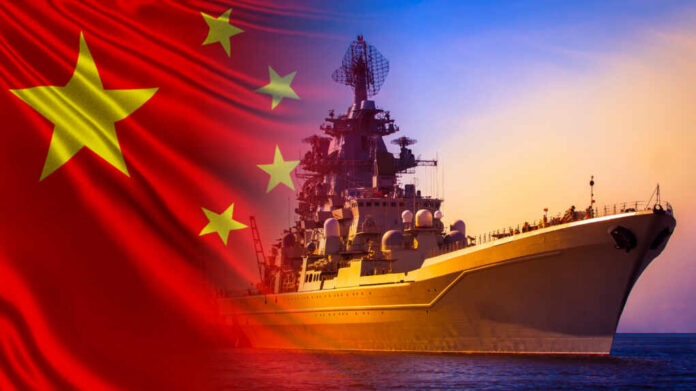
As Iran squeezes the Strait of Hormuz and U.S. forces fight to reopen it, China is loudly demanding “safe, free passage” while quietly protecting its own energy lifeline and leverage over the crisis.
Story Snapshot
- China is pressing both the United States and Iran to restore safe shipping through the Strait of Hormuz, calling for an immediate ceasefire.
- Beijing’s push is driven by its huge dependence on Gulf oil, even as it stays off the front lines and avoids joining U.S.-led naval efforts.
- Chinese officials publicly back “free, unimpeded passage” and oppose tolls or blockades that would let Iran or others tax global trade.
- The Trump administration is working this crisis with China from a position of strength, but Beijing is also using it to expand influence in the Middle East.
China’s Calls for Safe Passage Through Hormuz
Chinese leaders are telling the world that the Strait of Hormuz must reopen and stay safe for all ships. In calls with Saudi Arabia’s crown prince, President Xi Jinping said normal transit through the strait serves the shared interests of regional countries and the global community. China’s Foreign Minister Wang Yi has told Iran’s foreign minister Abbas Araghchi that navigation through the strait must be “properly handled” and that hostilities need to stop. Beijing also welcomed a U.S.–Iran memorandum of understanding that includes steps to reopen Hormuz. These statements make clear China wants the shooting to end and energy cargo to move.
Foreign ministry spokesmen in Beijing have repeated this line in public briefings. Lin Jian said China hopes safe and free passage can be resumed “as soon as possible” and that reopening is written into the first-phase deal between Washington and Tehran. Guo Jiakun stressed that the Strait is a route for international navigation and that resuming safe passage “serves interests of all parties.” Another spokesperson, Mao Ning, called the waterway an important trade route for goods and energy and urged all sides to stop military operations and avoid wider economic damage. On paper, China is presenting itself as a champion of open seas and stable markets.
Energy Security and China’s Self‑Interest
Behind the soft language, China’s real concern is energy security. Roughly forty percent of China’s oil imports move through the Strait of Hormuz, and a lasting closure could trigger a global downturn that hits trade, the backbone of China’s economy. Rising oil and gas prices hurt American families, but they also threaten China’s factories and export model. Chinese media and officials frame their position as neutral and multilateral, yet their priority is clear: keep cheap Gulf energy flowing without committing warships to a coalition or accepting U.S. control of the lanes. That approach lets Beijing gain from Western security efforts while avoiding direct costs.
This fits a pattern where China pushes diplomacy and “de‑escalation” but stays on the sidelines militarily. Analysts describe Beijing’s posture as calculated neutrality, with public calls for restraint and safe navigation and private pressure on Iran to keep Chinese tankers moving. China has rejected joining a U.S.-led naval coalition in the strait, preferring bilateral deals and quiet talks with Tehran. It wants the benefits of an open Hormuz and stable prices without sharing the burden of defending shipping or confronting Iran’s aggression. For American readers, that looks like another foreign power riding on U.S. strength while criticizing U.S. actions.
Beijing’s Position on Blockades, Tolls, and U.S. Power
Chinese officials are not only calling for an end to fighting; they are also attacking the idea that Iran or any other country can charge fees or tightly control passage. Guo Jiakun warned that talk of shipping tolls from Iran and Oman clashes with the need for “unimpeded” passage. U.S. trade officials say China wants the strait reopened “without restrictions or fees” and that Beijing has signaled support for keeping it free of military oversight that could be used to tax or divert trade. At the same time, Chinese spokesmen criticize U.S. naval blockades as “dangerous and irresponsible” and claim American actions could threaten safety of navigation. China is trying to shape the rules of the waterway without putting its own fleet on the line.
The Trump administration has pushed China to use its influence in Tehran to reopen Hormuz. U.S. officials recognize that Beijing is Iran’s top economic partner and has real leverage over oil exports and shipping. Reports say Washington and Beijing have even found common ground in opposing permanent tolls in the strait and insisting that no state should be allowed to tax global shipping lanes. For conservatives, this is a reminder that strong U.S. leadership can force even rivals like China to align with our core interest in free navigation. But it also shows how far Iran’s behavior has gone in violating the spirit of international law and threatening everyday Americans through higher energy prices.
What This Means for American Families and Security
For American families already squeezed by years of inflation and high energy costs, the Hormuz crisis is not an abstract map problem. When Iran closes or chokes the strait, and when foreign powers maneuver for advantage instead of stepping up to secure the lanes, oil and gas prices jump. That hits gasoline, home heating, food, and everything shipped by truck. China’s calls for safe passage line up with our basic interest in keeping the sea lanes open, but they are mainly about protecting Chinese imports, not defending the broader constitutional order or American prosperity.
President Trump’s team is now managing this crisis, and the stakes are high for U.S. power and pocketbooks. The administration is pressing Iran to honor deals, pushing China to stop giving Tehran cover, and working with allies to keep the world’s energy lifeline from becoming a permanent pressure tool for hostile regimes. Conservatives should watch closely how China uses its “neutral” stance to expand influence in the Middle East while relying on American strength to keep trade moving. The fight over the Strait of Hormuz is about more than tankers; it is about whether free nations or authoritarian states will write the rules of global commerce.
Sources:
insiderpaper.com, tribune.com.pk, amp.scmp.com, chinadailyhk.com, english.news.cn, bloomberg.com, straitstimes.com, reuters.com, chinadaily.com.cn, firstpost.com, x.com, youtube.com, english.www.gov.cn, theguardian.com