

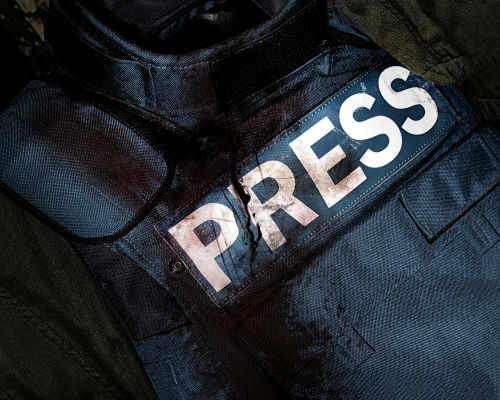
A Lebanese reporter’s death under the rubble of a struck home is fueling a new dispute over whether journalists are being treated as protected civilians or as targets in a widening border war.
Story Snapshot
- Lebanese journalist Amal Khalil was killed during Israeli strikes in southern Lebanon after taking shelter in a house following an earlier attack, according to her employer.
- Lebanon’s health ministry alleged the strike “pursued” Khalil by hitting the house where she sought cover, an accusation not independently verified in the reporting available.
- Photographer Zeno Faraj, who was with Khalil, was wounded and evacuated by the Red Cross; reports said an ambulance came under fire during the rescue.
- The incident highlights the growing risk to civilians and press workers in conflict zones and the limits of real-time fact-checking during active military operations.
What happened to Amal Khalil during the strikes
Lebanese journalist Amal Khalil, who worked for the Beirut-based daily Al-Akhbar, was reported killed on Wednesday, April 22, 2026, during Israeli strikes in southern Lebanon. Accounts cited by news reporting said an initial attack hit the area, after which Khalil and photographer Zeno Faraj took shelter inside a house. The house was then struck, killing Khalil. Reports said her body was still under debris as rescue efforts continued.
Faraj was wounded in the strike and was pulled from the scene by Red Cross teams, according to the same reporting. Details of the evacuation added to the sense of chaos on the ground: one account said an ambulance came under fire during the rescue. Faraj was described as initially critical but later stabilized. These are the kinds of operational details that often emerge quickly in wartime coverage, but are still difficult to verify independently while fighting is ongoing.
The competing claims: “pursuit” allegation versus limited verification
Lebanon’s health ministry framed the incident as more than collateral damage, alleging Israel “pursued” Khalil by targeting the house where she took shelter after the initial attack. That allegation is significant because it implies intent and potentially a violation of protections typically afforded to civilians, including journalists, under the laws of armed conflict. The available reporting, however, was described as breaking-news level and limited in scope, leaving key questions unresolved.
Israel’s military conduct and target selection have been heavily contested in past regional conflicts, and both sides routinely use information warfare to shape international opinion. In this case, the public record presented in the research relies on statements from Khalil’s employer, a Lebanese military official, and Lebanon’s health ministry. Without additional independent investigations—such as forensic review, geolocation, or corroborated communications intercepts—outside observers cannot responsibly treat “deliberate pursuit” as an established fact.
Why this matters to Americans watching from afar
Americans often see foreign conflicts filtered through partisan narratives at home, but the core issue here is simpler: when fog-of-war reporting becomes headline certainty, public trust gets damaged. Conservatives frustrated with “managed narratives” from institutions will recognize the pattern—big claims, limited verification, and fast-moving outrage cycles. Liberals concerned about civilian harm will also see a familiar dilemma: how to demand accountability without prematurely locking in conclusions that may not withstand later scrutiny.
The broader trend: civilians, press freedom, and escalating instability
Khalil’s death underscores a broader trend across modern conflicts: journalists increasingly operate in environments where front lines are blurred, precision weapons still produce civilian casualties, and rescues can be perilous. The report also cited that the incident adds to documented cases of journalists killed or injured while covering the Israeli-Lebanese conflict, intensifying international scrutiny of military operations. For policymakers, the immediate question is whether credible, transparent investigations will follow—or whether politics will swallow accountability.
Lebanese journalist Amal Khalil killed in Israeli strike on a house where she took cover, paper says https://t.co/kJQ0WrobUz
— The Washington Times (@WashTimes) April 23, 2026
For the U.S., the strategic stakes are indirect but real. Washington’s alliances, aid debates, and diplomatic posture can shift based on public perception of events like this—especially when claims of intentional targeting spread faster than verified facts. In an era when many voters on both left and right believe “elites” protect their own narratives, credibility is currency. The most responsible takeaway now is to separate confirmed reporting—Khalil’s death and Faraj’s injury—from allegations still awaiting independent confirmation.
Sources:
Lebanese journalist killed on duty by Israeli strike