
A leaked Pentagon memo proposing Spain’s suspension from NATO exposes growing frustration over allies who enjoy American protection while refusing to support U.S. military operations—yet the alliance’s own rules make such action legally impossible.
Story Snapshot
- Pentagon policy chief Elbridge Colby’s internal email explores suspending Spain from NATO for denying access, basing, and overflight rights during Iran military operations
- Spain hosts major U.S. military bases at Rota and Morón but refused support for February 2026 air war against Iran, citing international law compliance
- NATO’s founding treaty contains no expulsion mechanism—only voluntary withdrawal after 20 years with one-year notice
- Memo reflects Trump administration pressure on allies spending just 2.1% of GDP on defense versus the new 5% target set for 2035
Pentagon Memo Targets Spain Over Iran War Refusal
Elbridge Colby, the Defense Department’s top policy adviser, circulated an internal email in late April 2026 exploring punitive measures against NATO allies who refused access, basing, and overflight rights during U.S. military strikes against Iran. Reuters obtained the leaked document, which specifically singled out Spain for potential suspension from the alliance. Pentagon Press Secretary Kingsley Wilson confirmed widespread frustration, stating allies were “not there for us” and that the administration was exploring mechanisms to guarantee future access. The memo characterized such access as the “absolute baseline for NATO” membership.
Spain Defends Position on International Law Grounds
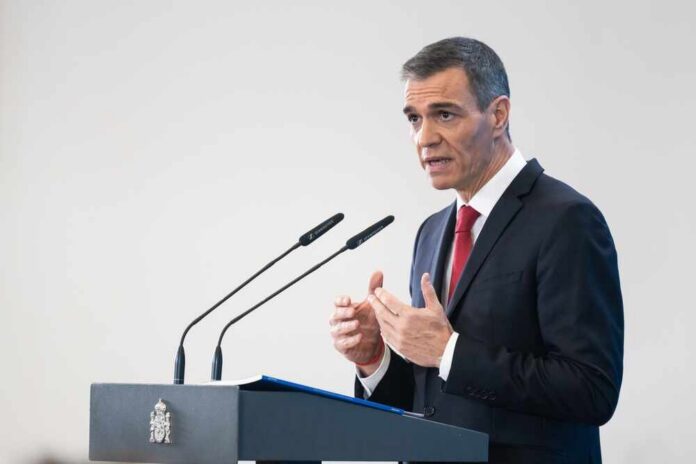
Spanish Prime Minister Pedro Sánchez responded from Nicosia on April 24, affirming Spain as a “loyal partner” that meets NATO responsibilities under international law. Spain currently spends 2.1% of GDP on defense, falling short of the alliance’s new 5% target established at the June 2025 summit in The Hague. Despite hosting critical U.S. military installations at Naval Station Rota and Morón Air Base, Spain denied support for the February 2026 air campaign against Iran. Sánchez emphasized Spain’s commitment to defensive operations while prioritizing de-escalation and legal compliance over participation in offensive strikes that closed the Strait of Hormuz.
NATO Treaty Blocks Expulsion Despite U.S. Threats
The North Atlantic Treaty, signed in 1949, contains no provision allowing member expulsion. Article 13 permits only voluntary withdrawal after a nation has been a member for 20 years, requiring one year’s written notice. Spain joined NATO in 1982, making any forced removal structurally impossible under current alliance rules. France previously withdrew from NATO’s integrated military command in 1966 but remained a political member, illustrating the treaty’s limitations on punitive actions. President Trump has publicly threatened Spain’s membership multiple times, including immediately following the 2025 summit, yet no legal pathway exists to implement such threats without Spain’s consent or comprehensive treaty renegotiation.
Symbolic Pressure Tactics Reveal Alliance Tensions
The leaked email acknowledges suspension would have “limited” operational impact but “significant symbolic” effect to counter what Pentagon officials characterize as European “entitlement” within the alliance. This reveals the memo’s primary function as a pressure tactic rather than actionable policy. The controversy exposes fundamental disagreements over burden-sharing, with the U.S. dominating NATO funding and military capabilities while allies like Spain leverage strategic base hosting for influence without committing to offensive operations. Analysts across multiple outlets deemed the proposal impossible to implement, categorizing it as rhetorical leverage amid ongoing Iran conflict frustrations. The episode underscores questions many Americans increasingly ask: why does the U.S. foot the bill for allies who refuse support when it matters most?
Why a Leaked Pentagon Memo Just Proposed Suspending Spain From NATO — and Why It Will Almost Certainly Not Happenhttps://t.co/4jqUaFCa3q
— 19FortyFive (@19_forty_five) April 24, 2026
Short-term implications include heightened U.S.-Spain bilateral tensions and potential renegotiations over base access terms. Long-term consequences may involve intensified pressure on all NATO members to meet the ambitious 5% GDP defense spending target by 2035, though the alliance’s structural inability to enforce compliance through expulsion leaves only economic and political leverage. The incident also signals potential shifts in how the Trump administration approaches transatlantic relationships, prioritizing operational commitments over traditional diplomatic norms. For millions of Americans watching their tax dollars fund overseas bases and alliance commitments, this episode reinforces concerns that elites in Washington continue arrangements benefiting foreign governments at American expense.
Sources:
Pentagon email raises the possibility of suspending Spain from NATO due to Iran disagreements
Petty Donald Trump Plots to Snub NATO Allies Like Spain and the U.K. Over Iran Response
Pentagon considers suspending Spain from NATO