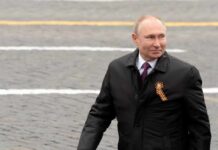

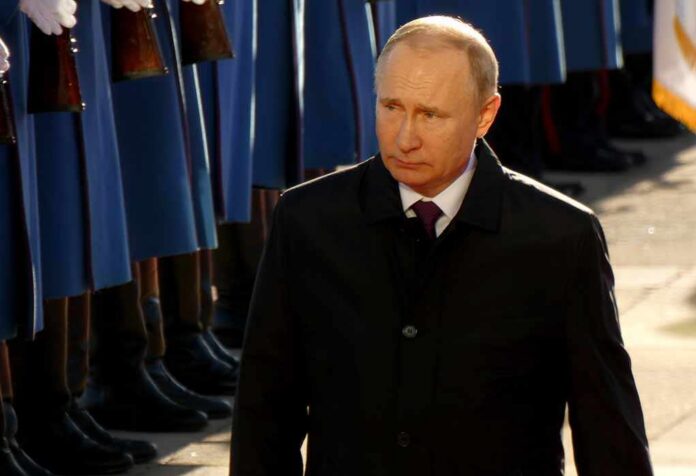
Britain’s own security strategies now label Russia an “immediate and pressing threat,” and the record shows why.
Story Highlights
- United Kingdom strategies warn of a persistent Russian threat across cyber, sabotage, space, and information operations.
- British authorities linked Russian officers to the 2018 Salisbury nerve-agent attack on UK soil.
- United Kingdom and allies expelled more than 150 Russian operatives after Salisbury, showing broad backing for the assessment.
- Analysts say a direct Russian attack on Britain is unlikely; hybrid tactics remain the main risk.
United Kingdom Labels Russia a Present and Persistent Security Threat
United Kingdom leaders put clear words on paper. The 2025 National Security Strategy says Russia is running cyber attacks and sabotage against the United Kingdom and other North Atlantic Treaty Organization allies, paired with nuclear talk meant to chill decisions in Western capitals. The 2025 Strategic Defence Review calls Russia “an immediate and pressing threat,” and flags danger in space, cyberspace, undersea lanes, and information warfare. These are official positions, not media spin or think tank gossip.
Policy is now built for this “grey zone.” The National Security Act 2023 regulations for Russia target foreign influence and espionage structures that London links to past poisonings and covert work. The document cites Russia’s 2022 invasion of Ukraine, earlier United Kingdom poisoning cases, and ongoing intelligence activity as the rationale for tighter law and registration rules. This is classic rule-of-law defense: tighten statutes, expose covert agents, and punish those who hide their hand.
Salisbury Attack: A Concrete Case on British Soil
Facts on Salisbury cut through the fog. The British ambassador said the government assessed the Russian state as highly likely behind the attempted assassination of Sergei and Yulia Skripal using a nerve agent developed by Russia. A later government statement said prosecutors had enough evidence to charge two men, identified as Russian military intelligence officers, for attempted murder and for using the Novichok agent in the attack. This was not theory. It was a crime scene in an English city.
Allies took the United Kingdom’s case seriously. After the Salisbury attack, the United Kingdom expelled 23 undeclared Russian intelligence officers. Twenty-eight countries and the North Atlantic Treaty Organization joined with further expulsions, removing about 130 more Russian diplomats from their posts. That kind of coalition action does not happen on a whim. It reflects shared confidence in the assessment and the need to impose real costs for crossing a red line on allied soil.
The Threat Today: Hybrid Pressure, Not Imminent Invasion
Analysts across the spectrum agree on one key point. A direct Russian strike on the British homeland is unlikely in the near term, partly because a North Atlantic Treaty Organization response would be devastating for Moscow and because Russia remains tied down in Ukraine. That does not mean safety. It means the threat will look like sabotage, cyber intrusions, espionage, and information warfare, not tank columns at Dover. That is how modern adversaries bleed a society’s trust and resilience.
For families and businesses, that has real costs. Cyber attacks can hit hospitals, banks, and energy networks. Disinformation targets elections, faith in the courts, and even whether people trust their own neighbors. Undersea disruptions can threaten internet cables and trade. The United Kingdom documents say these hostile actions are happening now. They attack daily life without a formal declaration of war. That is why British strategies warn about an “enduring threat” that reaches inside the home front.
American Lens: Strong Borders, Strong Energy, Strong Deterrence
Conservatives should read this as a cautionary map. Russia’s playbook exploits every weakness: open borders, fragile energy grids, and soft-on-crime politics. The United Kingdom is hardening laws, exposing covert agents, and coordinating with allies. In the United States, President Trump stresses peace through strength, energy dominance to cut foreign leverage, and secure borders that shut out hostile operatives. Those steps deny adversaries the gaps they use to divide free nations and drive up our costs.
What to Watch Next: Proof, Transparency, and Deterrence
United Kingdom papers rely on intelligence that the public cannot fully see. That is normal, but it puts a premium on credible summaries and concrete case files when possible. Clear evidence on cyber and sabotage cases, released without harming sources, would boost trust. Until then, the public record already supports caution: Salisbury happened, expulsions followed, and strategies lay out where the fight sits today. Hybrid pressure is the front line, and resilience is the shield.
Sources:
gov.uk, assets.publishing.service.gov.uk, legislation.gov.uk