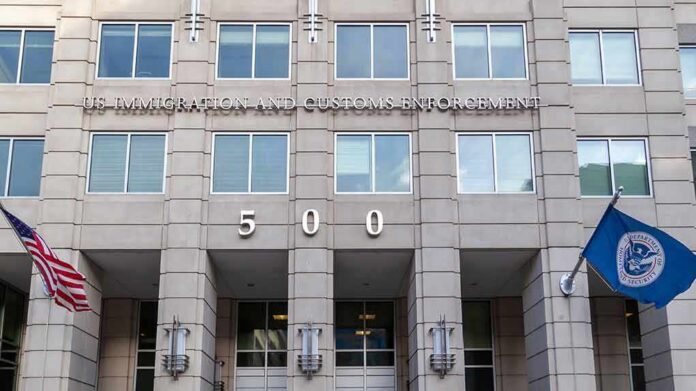
Immigration and Customs Enforcement says recent operations target criminals who threaten public safety, even as media amplify claims of “raids” disrupting Latino communities.
Story Highlights
- Immigration and Customs Enforcement says arrests focus on threats to public safety and border security.
- Law grants officers authority to arrest without a judicial warrant under the Immigration and Nationality Act.
- Republican voters widely support strong enforcement, including worksite actions.
- Polling shows many Latino voters back deporting serious offenders but not broad removals.
What Immigration and Customs Enforcement Says Its Mission Is
Immigration and Customs Enforcement states that officers build cases on specific people and prioritize threats to public safety and border security. The agency says it uses intelligence, investigations, and vetted target lists rather than random sweeps. It rejects the term “raids,” describing its work as targeted enforcement. It also points to a legal basis for warrantless arrests under section 287 of the Immigration and Nationality Act, which sets out its authority in the field.
These claims address a core concern for many readers: is the government focused on the “worst of the worst,” or casting a wide net? Polls show most conservatives want firm action against criminals and smugglers. They also want operations that respect the Constitution and avoid chaos for law-abiding families. The agency’s stated focus matches that goal on paper, but the debate now centers on whether practice matches policy across specific operations.
Evidence Gaps And Why They Matter For Trust
Public reporting highlights fear in some Latino neighborhoods and uses the word “raids,” while Immigration and Customs Enforcement disputes that label. The available record does not include arrest-by-arrest data tying each operation to serious criminal histories, active warrants, or national-security outcomes. Without those details, supporters must rely on the agency’s general description instead of case files, while critics point to disruption and fear. That information gap drives the fight over perception and trust.
Conservatives should press for transparency that protects privacy but proves targeting. Operation summaries that list criminal charges, immigration grounds, and removal outcomes would help the public see that violent offenders and traffickers were prioritized. Clear documentation of whether officers used administrative or judicial warrants would also answer legal questions. Releasing such data would back the agency’s claims and blunt narratives that enforcement is indiscriminate.
Where Voters Stand: Support For Targeted Enforcement, Not Mass Deportation
National surveys show a split view among voters. A Harvard Kennedy School summary reports strong Republican support for Immigration and Customs Enforcement enforcing the law and for worksite actions, reflecting a law-and-order stance among the base. At the same time, an NBC News and Telemundo poll found that most Latino voters support deporting undocumented immigrants who committed serious crimes, while opposing broad, across-the-board removals. Voters can back tough enforcement yet still reject mass actions.
This means messaging matters. When leaders center enforcement on violent offenders, drug traffickers, cartel facilitators, and repeat border crossers, they land on common ground. When the focus sounds like mass removal, support drops, and trust erodes. Precision, proof, and plain language help. Stating the target categories, reporting results, and showing due process protect both public safety and the Constitution. That approach can sustain enforcement while building credibility in Hispanic communities.
Cutting Through The “Raid” Narrative With Results
Media reports describe business slowdowns and school absences near operations. Those accounts speak to community reactions but do not, by themselves, show who was targeted or why. The administration can address this by publishing post-operation scorecards: number of arrests tied to felony convictions, gang affiliations, trafficking links, or prior removal orders. One well-documented operation can rebut ten vague headlines. Facts that name threats and outcomes travel farther than labels and rumors.
Law-and-order conservatives want secure borders, safe streets, and respect for families and small businesses. Those goals are not in conflict when enforcement is narrow, lawful, and proven. Immigration and Customs Enforcement’s stated policy fits that model. The task now is to verify it with records, not slogans. Show the targets, show the authority used, and show the results. Do that, and support will hold where it matters most: with voters who value security, fairness, and the rule of law.
Sources:
nbcnews.com, thehill.com, ice.gov