

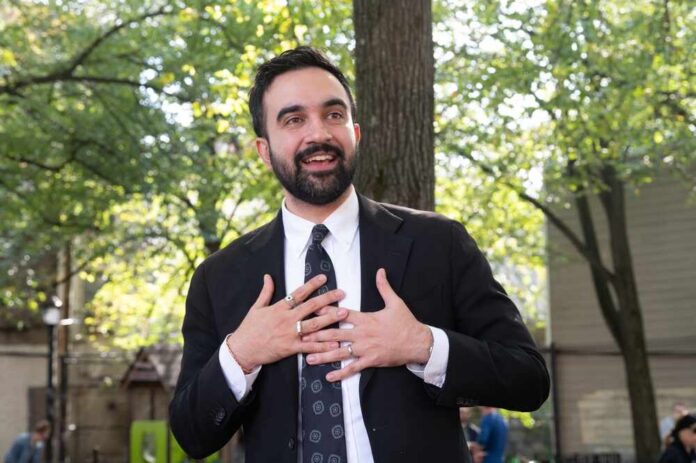
New York City’s mayor vowed to govern as a democratic socialist while claiming Wall Street can still work with him.
Story Highlights
- Mamdani reaffirmed his democratic socialist identity and agenda in office.
- His platform raises corporate and top-earner taxes to fund free buses and childcare.
- Plans include a rent freeze, stricter tenant rules, and 200,000 affordable units.
- Business leaders warn taxes could push jobs and wealth out of the city.
Mamdani Reasserts Democratic Socialism And Sets Policy Markers
CNN reported that Mayor Zohran Mamdani doubled down on calling himself a democratic socialist and said he will govern that way. He repeated this message at his 100-day rally, linking it to a slate of affordability promises. His platform lists rent freezes, debt relief for taxi medallion owners, and a new Social Housing Development Agency to build 200,000 affordable homes. He also backs tougher tenant protections and stronger rent control as key tools to reshape the city’s housing market.
Reporting from multiple outlets describes a broad package of new and expanded city services. Mamdani proposes universal childcare from six weeks to five years, with an annual price tag near six billion dollars, covered by higher taxes on the wealthy. He wants bus rides to be free for all riders, estimated at eight hundred million dollars each year, also funded by those tax hikes. He frames these plans as “common sense” steps to cut family costs and widen access to work and education.
Tax Hikes And Wage Mandates At The Core Of Funding
The Guardian reports that Mamdani plans to increase the city’s corporate tax rate from seven point two five percent to eleven point five percent, which he says would bring in five billion dollars a year. He also backs a flat two percent tax on the top one percent of earners, forecast to raise four billion dollars. The BBC notes he aims to lift the minimum wage from sixteen dollars and fifty cents to thirty dollars by 2030, a sharp climb with wide effects on labor costs.
CNN detailed a legal hurdle that could limit parts of his tax plan. The mayor cannot change major taxes alone and needs support from Governor Kathy Hochul and the state legislature. That means the funding for free buses, universal childcare, and larger housing plans depends on Albany. Without state approval, City Hall may need other cuts, slower timelines, or smaller pilots to honor promises while keeping the budget steady.
Housing, Rent Freezes, And City-Run Stores Face Feasibility Tests
The New York Times reported Mamdani called a rent freeze for nearly one million rent-stabilized apartments his “most straightforward promise” and a top priority. He ties this to a larger push for tenant protections and public-led construction to ease supply gaps. He also pitched city-owned grocery stores in each borough to keep food prices low by removing profit motives, a major shift in how New Yorkers would buy food day to day.
NYC Mayor Zohran Mamdani: “I think that for all of the fear-mongering around Democratic Socialism, the best response is to show what it actually means… A democratic socialist vision is one that paves more than 170,000 potholes.”
Don’t forget the homeless encampments that line… pic.twitter.com/OwsoiPsxGX
— Sergeant News Network (@SGTnewsNetworks) July 19, 2026
Some coverage cites doubts about the scale of these plans. The BBC and Britannica note critics who argue a thirty-dollar minimum wage could push out low-skill jobs and speed up business exits. Business voices warn new taxes on corporations and high earners could drive people and companies away from New York, eroding the very tax base Mamdani needs to pay for new services. Others question whether a network of city-run grocery stores would work beyond small pilots.
Wall Street Cooperation Claim Meets Market Reality
Mamdani says finance and business leaders can still partner with City Hall while he pursues his agenda. The BBC details clear concern from parts of the business community that new taxes and mandates will raise costs, curb hiring, and reduce investment. Analysts add that uncertainty over long-run cooperation remains while his policies move forward and clash with private sector interests. That tension could shape job growth, migration, and city revenue for years.
Sources:
foxnews.com, en.wikipedia.org, theguardian.com, britannica.com, cnn.com, bbc.com, nytimes.com