
A charter-school aide was arrested on campus with a loaded handgun after police tied him to an earlier Brooklyn street shooting, raising fresh alarms about school safety and city crime enforcement.
Story Highlights
- Police arrested a Brooklyn charter-school paraprofessional on campus with a loaded 9mm handgun.
- Officers had identified him as the suspect in an October street shooting where a round was fired toward a group.
- Prosecutors say he lacked a firearm license and also possessed ammunition and a feeding device.
- No injuries were reported; a projectile was recovered at the scene of the shooting.
Police Link Campus Arrest To October Street Shooting
New York City police arrested a charter-school educator at his Brooklyn campus after identifying him as the suspect in an October 29 shooting. The complaint cited in reports says the suspect fired a 9mm round toward a group of people on Bristol Street near Dumont Avenue at about 12:10 p.m. that day. No one was hit. Investigators recovered a projectile at the scene, which confirmed a gun was fired there, according to the reporting based on police and prosecutors.
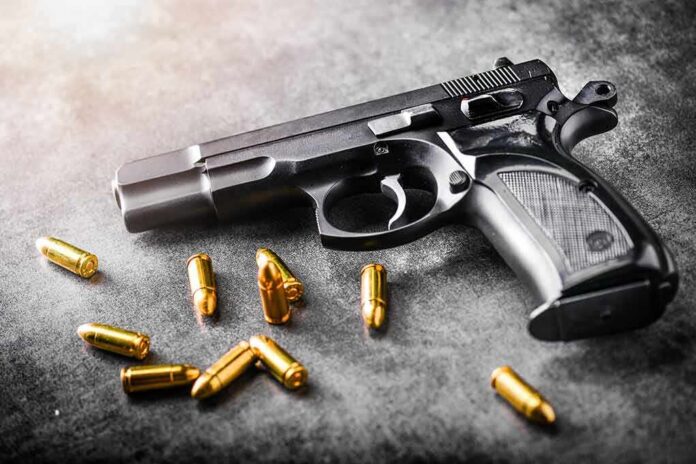
Police later located the suspect at the charter school and arrested him. Officers say they found a loaded 9mm handgun in his backpack, along with ammunition and an ammunition-feeding device. Prosecutors also assert he had no firearm license, a key element for unlawful possession under New York law. The reported identification of the suspect before the school arrest suggests the on-campus seizure followed an ongoing investigation into the October incident.
Charges, Evidence, And What Prosecutors Must Prove
Attempted violent-crime cases in New York require proof of intent and conduct that moves a plan toward completion, while gun possession charges focus on whether the person knowingly possessed a loaded firearm outside a home or business. Prosecutors will seek to link the October shooting to the recovered gun and to show unlawful possession, including lack of a license. Courts allow juries to infer intent from a person’s actions and surrounding facts in shooting cases.
Reports say the projectile from the street scene was recovered, but do not cite a public ballistics match to the seized handgun. That step, if done, would typically appear in lab reports or trial evidence. The current reporting also does not detail operability testing, serial numbers, or chain-of-custody records for the seized items. Those issues are often litigated later. For now, the public account rests on police filings, prosecutors’ statements, and the campus seizure itself.
School Safety And Accountability Pressures
An arrest with a loaded gun inside a school building heightens pressure on city leaders and administrators to secure campuses quickly and clearly. Families want to know how a person linked to a street shooting could be present at school with a weapon. This event underscores a basic duty: keep kids safe and keep weapons out. New York’s strict carry laws aim to deter this exact risk. The case will also raise calls for tighter hiring checks and faster alerts when police identify suspects tied to schools.
Conservative readers know this pattern too well: soft-on-crime policies, slow background reviews, and layers of bureaucracy leave gaps that endanger children and staff. Parents expect fast action, not excuses. School leaders should coordinate with law enforcement to flag risks early and often. Clear protocols for bag checks, campus access, and rapid removal of identified suspects protect students and teachers while respecting due process.
Law-And-Order Stakes In A City Tired Of Excuses
New York’s gun laws are strict, yet criminals still carry and use guns. That truth demands firm, steady enforcement, not political spin. When police identify a suspect in a street shooting and then find a loaded handgun at a school, the public expects serious charges and a careful case. Strong prosecution of proven offenders is the best way to deter the next crime and protect communities. That is common sense and a core public duty.
Equan Earp, 23, a Brooklyn charter-school paraprofessional charged with attempted murder over an October street shooting, was arrested at his own middle school with a loaded 9mm in his book bag. Full record: https://t.co/tgbvIznbIS
— CancelPeople.com (@cancelpeoplenow) November 18, 2026
The legal process must be fair and focused on facts. A single case can involve two tracks: the shooting and the gun possession. Each must be proven in court under clear rules. Juries can weigh actions and context to assess intent. The reported arrest and seized weapon give prosecutors concrete evidence to present. Families need closure. City leaders should back police, support schools, and insist on order within the law.
Sources:
nypost.com, nascpc.org, nycnewscenter.com