

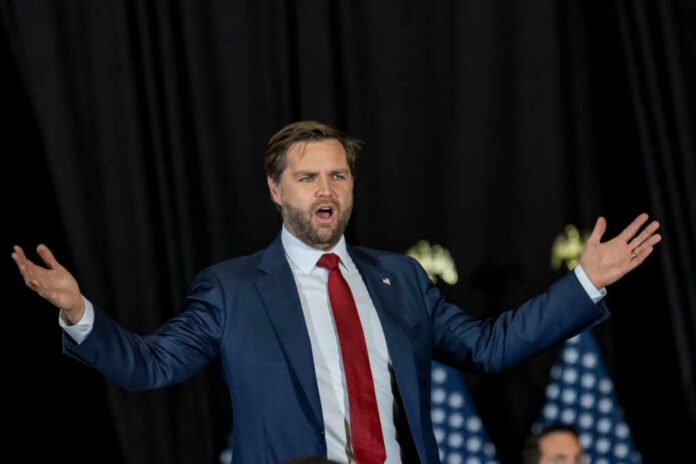
Vice President JD Vance said he will not watch a proposed public livestream of the Fort Hood shooter’s military execution, even as the Pentagon prepares to broadcast it.
Story Highlights
- Vance said he would not watch a livestreamed execution and questioned if it will happen.
- The Pentagon said the firing-squad execution will be livestreamed for the public to see.
- Vance stressed the killer’s brutal crimes while declining to join a public spectacle.
- The plan would mark a rare return toward public viewing of executions in the United States.
Vance Declines To Watch Possible Livestream
Vice President JD Vance told reporters on October 9 that he will not watch a livestream if the military execution is broadcast. Vance said, “If it’s through livestream, I’m not going to be watching it,” and added, “I don’t know that that’s actually going to happen.” His comments centered on his personal choice, not on changing policy. He also highlighted that the condemned man “brutally murdered a lot of innocent people,” underscoring the crime’s gravity while declining any public viewing.
The remarks came as the administration manages a rare and emotional case. The execution involves Nidal Hasan, the former Army major who killed 13 people and wounded dozens at Fort Hood in 2009. Vance’s stance drew a clear line: hold the killer to account, but avoid turning justice into a show. He did not announce any directive or legal challenge. He spoke to the immediate question facing many Americans: whether to watch a public broadcast if it proceeds.
Pentagon Says Execution Will Be Publicly Viewable
The Department of Defense said the execution will be livestreamed. Defense Secretary Pete Hegseth stated that people will be able to watch and that it will be public. Officials have not detailed which platforms will carry it or how access will work. The Pentagon’s move creates a first-of-its-kind moment in modern American justice, where executions have long been conducted out of public view, with a limited witness list.
President Trump’s team has emphasized accountability for a terrorist mass killer under military law. Reporting also captured that the White House was weighing operational questions around any broadcast timeline. That discussion has unfolded alongside the Pentagon’s public stance. While Vance questioned whether a livestream will actually happen, the department has described a plan to show it live, signaling a significant communications and policy choice.
A Rare Step Toward Public Viewing Of Capital Punishment
Public executions disappeared in the United States many decades ago. The 1936 hanging of Rainey Bethea is often cited as the last fully public execution, which drew a large crowd. Since then, executions have been closed to the general public and carried out with controlled witnesses. A modern livestream would mark a sharp departure from that norm and could be the first lawful execution broadcast to a public audience if it occurs as planned.
Legal and historical context show how unusual this proposal is. Courts have blocked efforts to televise executions in the past. Military law experts say the practice would be without strong precedent in the United States. That helps explain why many figures, including Vance, are addressing not whether justice should be served, but whether the act of carrying it out should be made a mass event online for anyone, including children, to watch in real time.
What Vance’s Position Signals To Conservatives
Vance’s stance aligns with a principle many conservatives share: justice without spectacle. He affirmed the killer’s guilt and the horror of the attack while rejecting a live broadcast to millions. That balance upholds order and punishment while avoiding what could become a viral display. It also keeps focus on the victims and the rule of law, not clicks. His choice does not hinder the sentence. It simply declines to turn it into entertainment for the internet age.
Operational Questions Remain For Any Broadcast
The Pentagon’s announcement raises practical issues. Officials have not said which platform would host the stream, how age limits would be enforced, or how the government would protect victims’ families from online exploitation. Those details matter in a digital world where graphic content spreads fast and is hard to control. The department’s plan, if carried out, would require policies that respect families, protect minors, and prevent misuse by America’s enemies.
Bottom Line
Vance declined to watch a possible livestream while standing firm on the killer’s crimes and the need for justice. The Pentagon’s plan marks a major shift toward public viewing of an execution. The decision now carries weight beyond one case. It tests how America punishes evil, honors victims, and guards public decency in the age of viral video. Leaders can deliver justice without making it a show. That is the standard worth holding, every time.
Sources:
nytimes.com, bbc.co.uk, nbcnews.com, politico.com, axios.com, reuters.com