

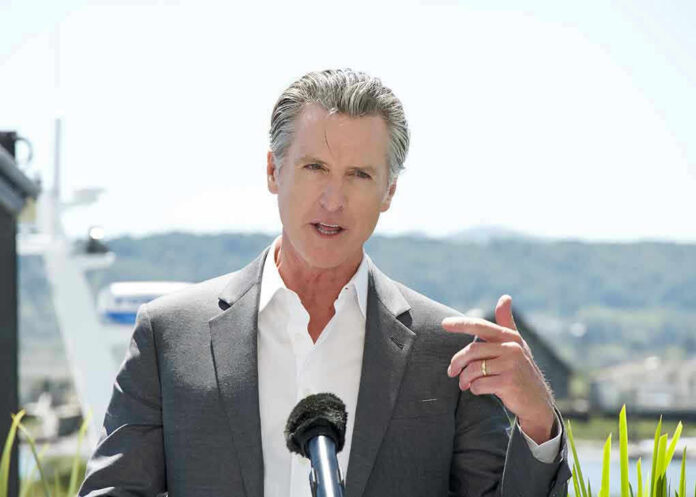
California Governor Gavin Newsom moved to erase every death sentence in the state, igniting a fight over justice and accountability.
Story Highlights
- Newsom said he will commute all California death sentences to life without parole.
- About 548 condemned inmates are affected, a system-wide change.
- Hundreds of commutations need review by the California Supreme Court.
- President Trump and victims’ advocates say the move harms families and finality.
Newsom’s Sweeping Commutation Plan and What It Does
Governor Gavin Newsom announced that he will use clemency powers to change every death sentence in California to life in prison without parole. His open letter states the decision clearly and says these inmates will never be eligible for release. The state’s clemency page explains that commutation to life without parole keeps people imprisoned for life. Newsom frames this as the most severe punishment the state can ethically enforce under his view of justice and decency.
The scope is large and immediate in effect. Reports say 548 people on death row are covered: 529 men and 19 women. That scale means this is not one case or a handful of cases. It is a statewide shift in punishment for the most serious crimes. California has not executed anyone since 2006, but courts still imposed death in many cases. This action changes the sentence across that entire group to permanent imprisonment without parole.
Judicial Review and Legal Mechanics That Still Matter
The California Constitution requires extra review for some clemency actions. According to reporting, about 382 of the 548 commutations, roughly 70 percent, need approval from the California Supreme Court. That means many cases are not yet final. The court can decide whether to allow those specific commutations. Even so, Newsom’s announcement signals a strong policy choice and sets a default outcome unless the court blocks it in a case.
Newsom cites his constitutional authority and a moral case against state executions. He argues that the legal system is imperfect and that executions cannot be carried out with justice and human decency. He calls life without parole the harshest penalty the state can apply while staying true to California’s values. He also admits many families and citizens will disagree with him and says he respects those views while holding his stance.
Trump, Victims’ Families, and the Fight Over Finality
President Trump condemned the move and called it a disaster for justice. He and supporters say victims’ families were promised finality and deserved punishment. They argue commutations undercut the hard work of police, prosecutors, and juries. Attorney General Todd Blanche agreed, saying he feels badly for families who saw justice delivered under the law, only to face a different result years later after the governor’s action.
Opposition includes named victims’ advocates and former prosecutors. The father of Polly Klaas said he is angry at extending mercy to her killer or others on death row. A former Sacramento district attorney sent Newsom a letter with case details and photos, reporting that many families feel distressed by the plan. These voices highlight the core dispute: whether government must keep the punishment juries chose or change it in the name of reducing irreversible error.
Public Safety, Punishment, and Open Questions
The policy keeps these offenders in prison for life without parole, not release. That reduces immediate public-safety fears. Still, critics say the punishment gap matters. Death is different, they argue, and juries used it for the worst crimes. Supporters of the plan reply that California has not executed in years and say the death system is broken. The commutations’ cost, prison impact, and any court limits will become clearer as the California Supreme Court reviews hundreds of files.
For conservatives who value law, order, and accountability, the stakes are clear. Families counted on the sentence the court gave. They sat through trials, hearings, and appeals for decades. This change rewrites that end point. It does not free inmates, but it closes the door on the punishment juries selected. President Trump’s team says that move cuts against justice for victims. Newsom says it protects justice from fatal error. Courts will now decide where that line holds.
Sources:
townhall.com, gov.ca.gov, apnews.com