
Joe Rogan told millions that podcasters are “not press people” and should not take front-row seats at White House briefings, igniting a fight over who gets to question the government.
Story Highlights
- Joe Rogan rejected putting podcasters in the White House press room and said they are not journalists.
- Rogan’s comments followed David Sacks urging front-row access for major podcasters and alternative media voices.
- The Trump White House has welcomed nontraditional outlets and invited new media to apply for access.
- The clash shows a deeper battle over who speaks for the public in the briefing room.
Rogan Draws A Hard Line Between Podcasts and the Press
Joe Rogan said podcasters should not sit in the front row at White House press briefings and should not be treated as reporters. Rogan stated, “We’re not press people,” and dismissed the idea that his show belongs in that space. He argued that society places too much weight on podcast opinions. His remarks came during his own program and were widely reported, with quotes matching his blunt tone and clear view on limits for podcast hosts.
Rogan also said podcasters “talk” for entertainment and commentary, not for straight reporting. He rejected the idea that high audience reach equals a press credential. He framed the issue as respect for real journalists who do the daily work of reporting and verification. His message was direct: do not confuse popular media personalities with the press corps that works the beat and holds government to account through established methods.
Sacks Pushes For Front-Row Access To Alternative Media
Venture capitalist David Sacks argued that the White House should have given front-row seats to prominent podcasters and alternative media figures. He listed Joe Rogan, Tucker Carlson, Theo Von, and Megyn Kelly as voices Republicans should have kept close. He said these outlets represent a big part of the base and deserve a place in the room. He framed the move as smart outreach to audiences that no longer trust legacy networks.
Sacks’s case focused on reach and representation more than traditional press function. He said the administration should have stayed connected to personalities who speak to millions outside old media lanes. His view treats the briefing room as a public square where newer voices can challenge spin and bring questions the beltway press may ignore. Supporters argue that if taxpayers fund the government, the room should not be a closed club.
Trump White House Opens Doors To “New Media” Applicants
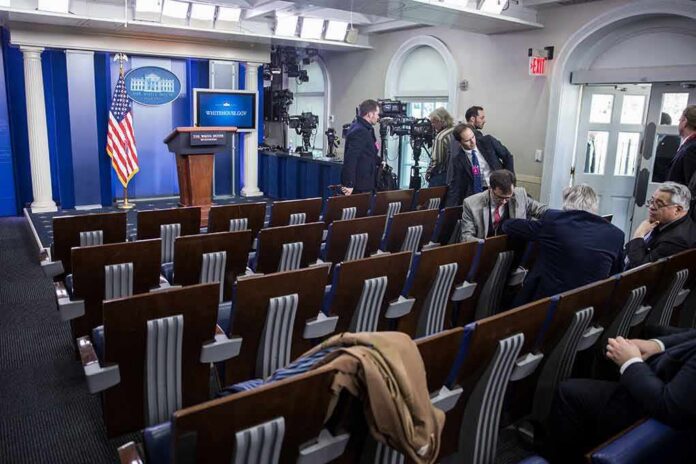
The Trump administration has signaled a wider gate. Press secretary Karoline Leavitt said the White House would speak to all media outlets and personalities, not only legacy organizations seated in the room. Reporting describes a “new media” seat and an application path for podcasters, bloggers, and independent creators who produce legitimate news content and meet criteria. Rotating occupants have included digital outlets and personality-driven shows.
Coverage of the policy says the new seat has gone to a mix of digital reporters and talk formats, including Breaking Points and the Ruthless Podcast, showing a real shift in who gets a question. Guidance shared in trade coverage states that applicants must show news production and clear standards, combining access with responsibility. That approach aims to widen the tent without turning briefings into a circus of influencers with no editorial guardrails.
What Conservatives Should Watch For Next
Conservatives want tough, honest questions that hold every official to account. The risk is gatekeeping that keeps out right-leaning or independent voices. The other risk is a free-for-all that swaps reporting for viral stunts. Rogan’s warning defends press standards; Sacks’s push defends broader access. The administration’s blend—inviting new media that do real news—tries to balance both aims while keeping the briefing room useful to citizens.
Joe Rogan Rebuffs White House Press Room Access for Podcasters: 'We Talk S—, We're Not Journalists'
• On The Joe Rogan Experience, the megahit host forcefully shut down David Sacks' proposal to seat prominent podcasters in the front row of the James S. Brady Briefing Room,…
— Newstro (@Newstro) November 14, 2026
The lesson is simple: standards and openness can coexist. The White House should keep credentials tied to work, not fame, and protect time for outlets that report facts. New media groups that publish original news, correct mistakes, and show sourcing should get a fair shot at a seat. That model serves limited government and transparency. It also respects taxpayers who expect answers on spending, borders, energy, and the Constitution—without legacy media acting as the only gate.
Sources:
foxnews.com, mediaite.com, medialist.com, local3news.com, netinfluencer.com, tradingview.com