
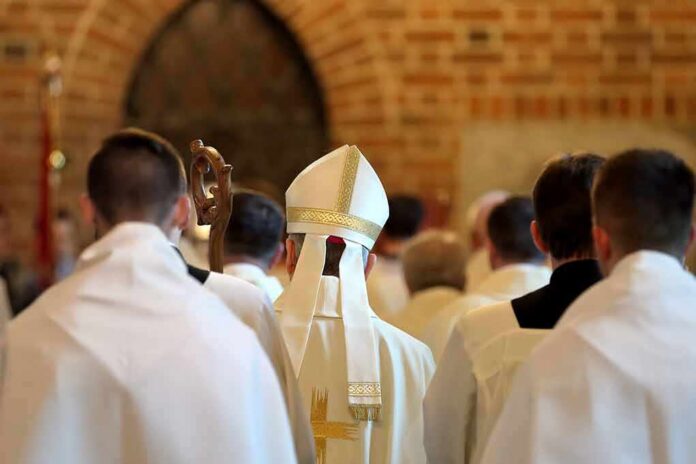
Italy’s Catholic bishops unveiled school materials that call the Qur’an “the revealed Word of God,” igniting a fight over faith, education, and national identity.
Story Highlights
- Italy’s bishops and a Vatican institute released 11 classroom sheets on Islam, including one on the Qur’an as “revealed Word of God.”
- Cardinal Matteo Zuppi framed religion class as cultural dialogue, not catechism, to counter ignorance about Islam.
- Critics warn the approach risks blurring core Christian doctrine and weakening Catholic identity in state schools.
- The rollout leaves open questions on how schools will apply the materials and how doctrine is balanced.
What Italy’s Bishops Released And Why It Matters
On October 21, 2026, Italy’s bishops conference and the Pontifical Institute for Arabic and Islamic Studies presented eleven curriculum sheets for use in schools, especially Catholic religion classes. The program covers Islamic beliefs, history, worship, community life, and interreligious topics. Vatican News reports one sheet treats “the Qur’an as the revealed Word of God,” while others map convergences and differences between Christians and Muslims. The aim, backers say, is to reduce ignorance and build social peace.
Cardinal Matteo Zuppi, the bishops’ conference president, described religion class as a workshop for culture and dialogue, not a place “to do catechism,” according to Avvenire. He argued that students face widespread ignorance about Islam and need tools to understand neighbors without fear. Supporters say joint authorship by Catholic and Muslim specialists reflects respect and accuracy about how Muslims describe their faith. They contend such clarity can lower tension in classrooms and towns.
The Flashpoint Phrase: “Revealed Word Of God”
The headline phrase fuels the backlash. LifeSiteNews highlighted the sheet on the Qur’an, reporting the program’s negotiated language and its focus on Islamic doctrine. Advocates of the project say the modules describe Islam’s self-understanding for literacy, not for worship. They point to another module that covers both convergences and real differences between the faiths. Still, without the full text, outsiders cannot check how clearly the sheets distinguish description from endorsement.
Vatican News lists the modules but does not publish each page in full. That gap makes it hard to judge tone, time balance, and where Catholic doctrine is taught alongside Islamic material. The bishops’ office says the sheets support teachers, yet reports do not state whether use is mandatory or optional. There is also no independent measure showing the program improves knowledge or reduces prejudice. These limits invite critics to define public reaction with the most provocative line.
Critics Say Catholic Identity Is At Risk
Named Catholic commentators argue the materials tilt too far toward praise and fail to confront militant currents or the plight of Christians in some Muslim-majority lands. They ask why a class tied to Catholic doctrine would rely on texts agreed with another religion’s scholars. They warn that treating the Qur’an as “Word of God” in a Catholic class confuses students about the Trinity and Christ’s divinity, the heart of the faith. These concerns track long-running debates in Italy.
Italy’s Catholic bishops promote Koran as ‘revealed Word of God’ in schools
Cdl. Matteo Zuppi presented the Islamic education program for state-school religion teachers, saying Catholic religion classes should serve as a ‘laboratory of culture and dialogue.’
Featured Image…— Buttercup (@Butterc98938313) October 26, 2026
Public pushback already surfaced. A local banner read, “Islam must not enter schools,” capturing fears that description will become promotion. Supporters reply that understanding a neighbor’s beliefs does not erase one’s own roots. They insist that clear teaching on differences appears in the plan. The deeper conflict is older: Who controls religion education in state schools, and how should public classrooms treat faith claims in a nation with Catholic history and growing religious diversity?
What Parents And Teachers Need To Watch Next
Parents should ask schools how the sheets will be used, which lessons present Islamic claims as beliefs, and where Catholic doctrine is taught with equal clarity. Teachers should seek written guidance that draws bright lines between explaining another faith and endorsing it. Policymakers should publish the full texts, author lists, and training notes. They should track classroom use and test whether students learn more about both religions, and whether Catholic identity remains clear and strong.
Bottom Line For Conservative Readers
This fight is about first principles: who forms children, what truths anchor a nation, and how far institutions go to please elite ideas about “dialogue.” The bishops say they want peace in a tense age. Many parents want clarity in a confusing time. Transparency can serve both. Publish the full curriculum. Show where the Church teaches Christ as Lord without apology. Make sure “dialogue” does not mean diluting doctrine. Demand facts, not slogans, inside every classroom.
Sources:
infovaticana.com, lifesitenews.com, avvenire.it, irc.chiesacattolica.it, ground.news