

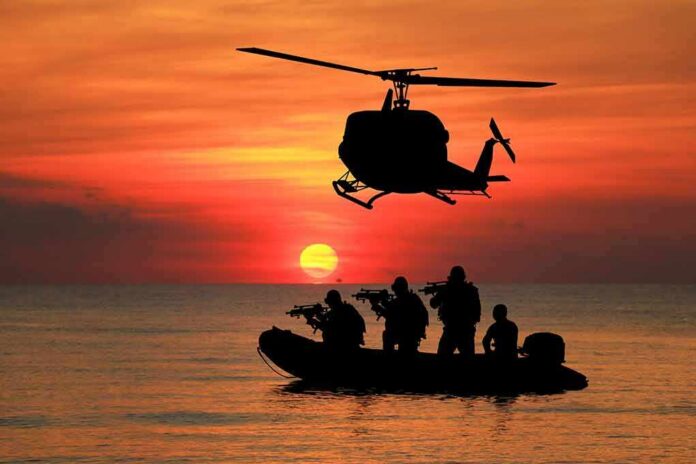
Former Navy SEALs say the “worst jobs” hit hard, but dark humor kept them mission-ready when sleep, cold, fear, and danger piled on.
Story Highlights
- Former SEALs describe brutal training and risky duties, from surf torture to parachute malfunctions.
- Operators say dark humor was a vital tool to push through fear, pain, and despair.
- A flying fish once knocked a teammate overboard at night, later retold as a comic lesson on risk.
- Jump-team work was called the scariest job until bullets started flying.
SEALs Describe Pain, Cold, and Sleep Loss—And Why They Joke About It
Former Navy SEALs describe Basic Underwater Demolition/SEAL training as a grind of cold, wet, sand, and no sleep. One former SEAL sniper recalled surf torture and relentless fatigue, and said humor helped him cope during the worst moments. Another veteran interview features a former SEAL who said dark humor “saved us from total despair,” underscoring why teams lean on jokes when stress spikes. These accounts show why even harsh jobs later become stories that bond teammates and teach younger troops.
A 2011 question-and-answer with a self-identified former SEAL shares a night boat run where a flying fish hit a teammate and knocked him off a small inflatable boat going about 15 to 20 knots. The operator said it was not funny in the moment but now makes him laugh every time. He also described long underwater waits in freezing water under a pier, showing how grim tasks often become tales with a sharp edge of humor. The details stress risk, skill, and teamwork.
Parachute Teams: Fear at Altitude and Why It Matters
Former SEAL Mike Day described jump-team work as the scariest job he held in the Navy until combat gunfire began, citing about 1,500 jumps and nine cutaways. Parachute malfunctions force instant action, clear thinking, and trust in gear. Veterans say gallows humor helped strip fear of its power so the team could act fast. These jump details highlight why elite units train relentlessly, joke to handle stress, and still treat every jump with respect for physics and fate.
Military research supports the coping role of humor. One study of service members and veterans linked greater use of humor with stronger resilience, while warning that style and context matter. An Army professional journal also describes dark humor as a long-standing way to manage tension and hold the line in hard conditions. These findings match the SEAL accounts: when cold, risk, and danger hit, a sharp joke can steady nerves so a unit can finish the job.
Hard Jobs, Simple Lessons: Solve the Problem, Back Your Teammate
The former SEAL accounts point to simple truths that fit American common sense. Training builds grit. Jokes beat fear. Teams handle the hard job in front of them and move on. That mindset has protected this country for decades. It speaks to personal duty over politics, and to unity over noise. These stories remind us that freedom depends on men and women who face chaos with skill, faith, and an untamed will to win.
Readers should note that some accounts come from interviews and personal recollections, not official logs. But the themes match across sources: cold water, lost sleep, shock events, and jump hazards push humans to the edge. Humor keeps a clear head in the storm. That is not a punchline. It is a plan for survival, and a lesson for anyone facing pressure at work, at home, or on the line: stay calm, stay ready, and back your team.
Sources:
thefrontlines.com, youtube.com, military.com