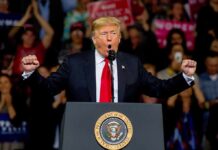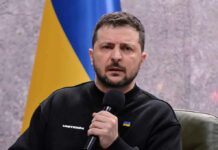

President Trump has declared he would be “honoured” to take over Cuba as the communist island nation faces a crushing energy crisis caused by an American oil blockade—marking the first effective blockade since the Cuban Missile Crisis and raising urgent questions about sovereignty, regime change, and the limits of American power projection.
Story Highlights
- Trump administration’s oil blockade has crippled Cuba’s electrical grid, leaving millions without power and 11,000 children waiting for medical procedures
- President Trump openly threatens “friendly takeover” of Cuba while regime change negotiations remain in early stages with fundamental disagreements
- Executive Order 14380 authorizes tariffs against any nation supplying oil to Cuba, weaponizing economic pressure to force political capitulation
- Crisis stems from U.S. intervention in Venezuela that removed Maduro and cut off Cuba’s primary oil supply, exposing communist regime’s vulnerability
Oil Blockade Triggers Humanitarian Emergency
President Trump signed Executive Order 14380 on January 30, 2026, declaring a national emergency and authorizing tariffs on any country supplying oil to Cuba. The blockade began in late January after U.S. forces removed Venezuelan President Nicolás Maduro from power, cutting off Cuba’s primary oil source. The Trump administration has actively blocked oil tankers heading to Cuba, targeting companies including Mexican state-owned Pemex. This represents the first effective blockade of Cuba since the Cuban Missile Crisis, demonstrating renewed American resolve to confront communist regimes in the Western Hemisphere.
Island-Wide Blackouts Paralyze Critical Services
Cuba’s entire electrical grid has collapsed multiple times since the blockade began, leaving millions without reliable electricity. The energy crisis has devastated transportation, healthcare, and education systems across the island. Fox News reports that 11,000 children are currently on waiting lists for surgeries and procedures at health clinics due to the cascading effects of power failures. Cuban-American activists in Miami argue that without political rights and guarantees, economic recovery remains impossible. The humanitarian crisis intensifies pressure on the communist regime to accept American terms or face complete economic collapse.
Trump Pushes Regime Change Through Strategic Pressure
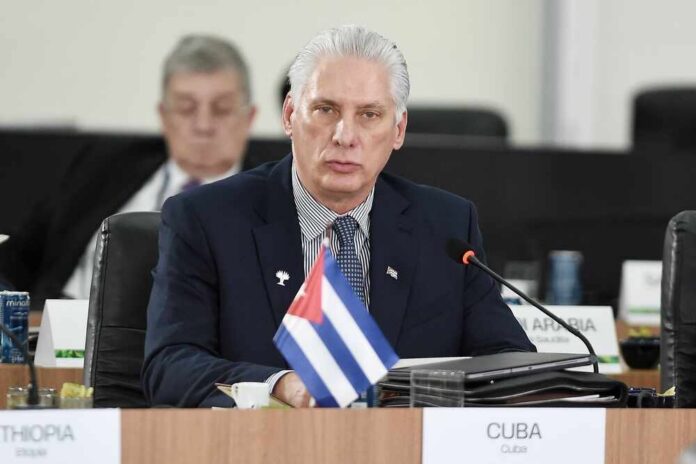
President Trump has repeatedly stated that “a deal would be very easily made” while characterizing potential regime change as “a friendly takeover of Cuba.” The administration has explicitly stated regime change as a goal by the end of 2026, with Secretary of State Marco Rubio—son of Cuban immigrants—championing the effort. Cuban President Miguel Díaz-Canel publicly confirmed diplomatic talks with Washington on March 13, though negotiations remain in “initial phases” with no major agreements reached. Cuba maintains that changes to its political system are off limits, creating fundamental incompatibility with American objectives.
The Trump administration holds significant leverage through its ability to impose tariffs and blockade oil supplies, leaving Cuba in a severely weakened negotiating position. Mexico faces pressure to halt humanitarian aid shipments but has maintained some independence despite American threats. Cuban authorities agreed to release 51 political prisoners, suggesting some willingness to make concessions under extreme economic duress. However, the communist regime’s refusal to alter its political system indicates negotiations may serve primarily as a pressure mechanism rather than genuine pathway to resolution acceptable to either side.
Constitutional Concerns Over Territorial Acquisition
Trump’s explicit threats to “take over” Cuba raise serious questions about territorial acquisition and the constitutional limits of executive power. While the administration frames regime change as necessary to end decades of communist oppression just 90 miles from American shores, the mechanism for such takeover remains unclear. The crisis highlights the tension between America’s traditional support for national sovereignty and the strategic imperative to eliminate hostile communist regimes in the Western Hemisphere. Conservative Cuban-Americans largely support regime change but remain divided over whether military intervention or continued economic pressure represents the proper path forward.