
The Supreme Court just drew a hard line against a federal gun ban that punished marijuana use more than real danger.
Quick Take
- The Supreme Court unanimously ruled that the government could not use 18 United States Code section 922(g)(3) to disarm an occasional marijuana user without more proof.[2]
- Justice Neil Gorsuch rejected the government’s drunkard analogy and said the historical comparison fell apart.[2]
- The ruling leaves open some questions about serious drug addiction and false answers on federal gun forms.[2]
- Gun-rights advocates see the decision as a major win, while gun-control groups are calling it narrow.[1][12]
What the Court Decided
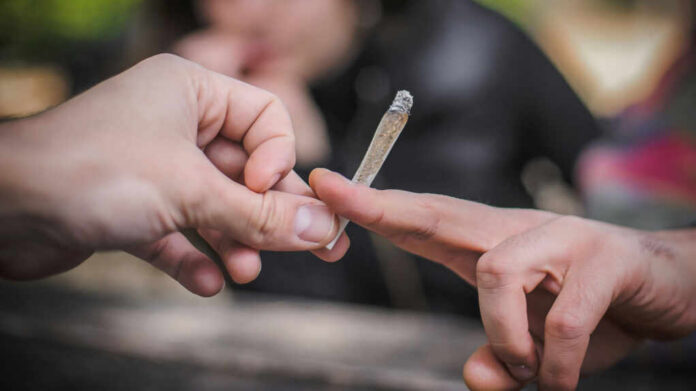
The Supreme Court ruled unanimously in United States v. Hemani that the federal government could not prosecute Ali Hemani under section 922(g)(3) for mere marijuana use alone.[2] The Court said that approach conflicted with the Second Amendment. It also said the government’s theory did not match the nation’s history of firearm regulation. That gives gun owners a clear warning to federal regulators: status alone is not enough.
The opinion landed as a sharp rebuke to the old drug-war habit of treating every marijuana user as a threat.[2] Justice Neil Gorsuch wrote that the government’s analogy to laws on habitual drunkards failed because those laws targeted people who were intoxicated or clearly dangerous, not ordinary users. The Court said, in effect, that the Constitution does not let Washington erase gun rights just because the government dislikes a lawful adult’s private conduct.
Why the Ruling Matters for Gun Rights
For conservatives, the decision fits a simple principle: rights do not disappear because bureaucrats want a broad federal shortcut. The Court held that the government had not shown the kind of historical tradition needed to justify this kind of disarmament.[2] That matters because section 922(g)(3) has long been used as a blunt tool. It reaches beyond violent criminals and sweeps in people whose only issue is marijuana use, even in states that allow it under local law.[15]
The ruling also confirms that federal marijuana law still creates a mess. Marijuana remains illegal under federal law, and that keeps tension alive between Washington and many states.[18] But the Court did not accept the idea that federal illegality alone was enough to strip away gun rights. That is an important distinction. The Court focused on constitutional limits, not on anti-drug sentiment or federal convenience.
What the Decision Does Not Change
The ruling was narrow, and the Court left some questions unanswered.[2] It did not say that every drug user gets full firearm protection in every case. It also did not erase other federal crimes, including false statements on federal firearm forms. The Court did not hold that a state medical marijuana card cancels federal law either. That means the fight is not over, especially where the government tries to prove addiction, intoxication, or other added danger.
That narrow scope explains the split in the media response. Some outlets and gun-control groups described the case as limited, not sweeping.[1][12] At the same time, the decision still cuts against a long-running federal habit of assuming marijuana use equals danger. For many readers, that is the core issue. The Court did not bless reckless behavior. It simply refused to let the government punish a constitutional right without the historical basis the Court now demands.
Why This Ruling Echoes Beyond One Case
This case will likely shape the next wave of Second Amendment fights. Lower courts are still sorting out how far the post-Bruen history test reaches, and this ruling gives gun-rights lawyers another strong example.[3][6] It also forces federal prosecutors to think harder before using broad status-based bans. For supporters of limited government, that is the right direction. The Constitution is supposed to restrain federal power, not bend every time Washington wants an easier path.
The bigger lesson is that the Court would not let anti-drug politics swallow a core civil right.[2] That will frustrate officials who prefer one-size-fits-all bans, but it should not surprise anyone who still believes the Bill of Rights means what it says. The government can keep making its public safety case in cases involving real danger. What it cannot do, after this ruling, is pretend that marijuana use by itself ends the Second Amendment.
Sources:
[1] Web – SCOTUS Unanimously Ruled That the Second Amendment Trumps Anti-Drug …
[2] Web – UNITED STATES v. HEMANI | Supreme Court – Cornell Law School
[3] Web – [PDF] 24-1234 United States v. Hemani (06/18/2026) – Supreme Court
[6] YouTube – Supreme Court says unlawful drug users may legally possess firearms
[12] YouTube – SCOTUS Strikes Down Marijuana Gun Ban | A Major Second Amendment …
[15] Web – Marijuana advocates light up Second Amendment fight at Supreme …
[18] Web – Supreme Court to hear arguments on legality of gun bans for …