

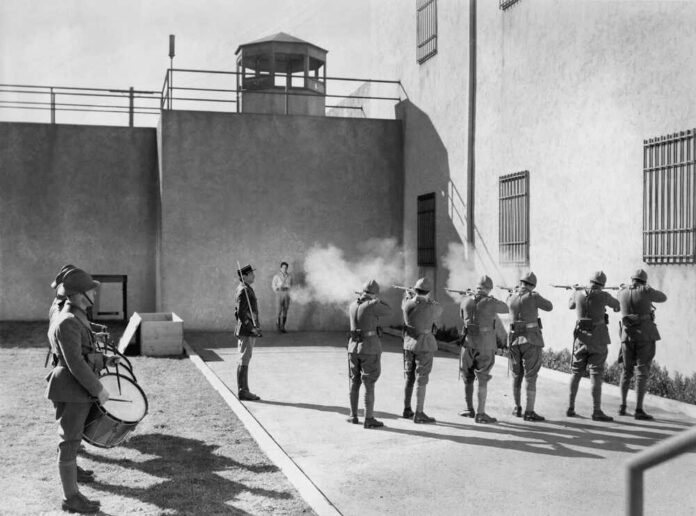
The Army has a step-by-step plan ready to carry out military executions within 150 days if President Trump gives the order—ending a 63-year standstill and igniting a fight over justice and deterrence.
Story Snapshot
- Internal Army plan sets 150-day window after presidential approval [16].
- Army says planning is routine; no execution order has been issued [16].
- Four inmates sit on military death row under the Uniform Code of Military Justice [5].
- Last military execution was in 1961, creating a long gap in practice [7].
What “Operation Resolute Justice” Actually Directs
ABC News reported the Army drafted an internal plan in February 2024 named “Operation Resolute Justice.” The plan tells officials to work with the Federal Bureau of Prisons to move condemned inmates from Fort Leavenworth, Kansas, to the federal execution site in Terre Haute, Indiana. It sets a target to complete approved executions within 150 days after the president signs off. The document lays out schedules, meeting checklists, and media access rules for any execution event [16].
An Army spokesperson, Cynthia Smith, said these preparations are not new. She said the service runs exercises for many missions, including executions, so it can act fast if directed by the White House. She also said the Army has not received a direct order from the president to carry out any execution. That means the plan is ready but idle unless the commander in chief authorizes action under current law [16].
The Law, The Authority, And Who Is On Death Row
The Uniform Code of Military Justice allows the death penalty for several serious crimes. Military courts can impose such sentences, but the president must approve an execution before it can happen. Current reporting lists four inmates on military death row. They are held at the U.S. Disciplinary Barracks at Fort Leavenworth while appeals and reviews run their course. These facts frame the legal lane in which any future action must move [5].
Army Regulation 190-55 is the playbook for carrying out an approved military execution. The updated regulation sets policy for custody, transport, and the execution process after presidential approval. It also details who does what across Army commands and how officials manage the public record before and after an execution. This regulation is the baseline for technique and timing if an order comes from the White House to proceed [8].
Why This Matters After 63 Years Without An Execution
The last military execution took place in 1961. That long gap has made many Americans think the military death penalty no longer exists. It does. The gap shows policy caution and legal churn, not a change in the statute. Supporters argue that enforcing lawful sentences can deter the worst crimes and honor victims, especially within the ranks. They also argue that delay weakens trust in military justice and erodes discipline for the most severe offenses [7].
Opponents focus on process risk and public transparency. They point to the lack of a public legal review of “Operation Resolute Justice,” and ask how appeals or stays would fit with the 150-day target. They also note that the Army has not publicly named the four inmates or detailed their crimes in this cycle of coverage. Those open items will likely shape court action, media debate, and the timing of any final decision if an order is signed [16].
How The Trump White House Could Move—And What To Watch
If President Trump authorizes an execution, the Army’s timeline begins. The service would coordinate with the Federal Bureau of Prisons for a transfer to Terre Haute, where recent federal executions have taken place. Officials would follow Army Regulation 190-55 for custody and procedures. Watch for a formal White House statement, a Department of Justice legal memo, and any court filings that seek to pause or block the process. Those steps would set the real calendar [8].
Conservatives should track three things right now. First, confirm the legal box is checked: the Uniform Code of Military Justice, the final court reviews, and the signed presidential approval. Second, demand clear facts on the inmates’ convictions and case status, so the public understands why the sentence stands. Third, push for tight execution protocols that protect due process and media access without turning justice into a spectacle. That approach defends order and respects the Constitution [5].
Bottom Line For Readers
The Army is ready to enforce lawful sentences if the president directs it. The plan is written, the regulation exists, and the authority is clear. The question is not whether the military can act, but when and under what safeguards. A transparent process that follows the law strengthens trust. If Washington delays again, it invites more doubt about equal justice and real deterrence inside the force. Clarity and courage now would close a decades-long loop [16].
Sources:
[5] Web – ABC: US Army prepares contingency plan for possible military …
[8] Web – No Military Executions Since 1961
[16] Web – Military Death Sentences – State Killings in the Steel City