
One resignation letter just turned the phrase “America First” into a live-fire test inside Trump’s own national security team.
Quick Take
- Joe Kent, the National Counterterrorism Center director and a top Tulsi Gabbard aide, resigned immediately and went public with a blistering letter about the Iran conflict.
- Kent said Iran posed no imminent threat to the United States and warned Trump not to repeat the Iraq-era pattern of manipulated intelligence and rushed war.
- He accused Israel and its U.S. lobby of pushing a disinformation campaign that boxed Washington into escalation.
- The White House offered no immediate public rebuttal, leaving Kent’s claims to ricochet through a divided “America First” coalition.
Kent’s Exit Wasn’t Quiet; It Was Designed to Force a Choice
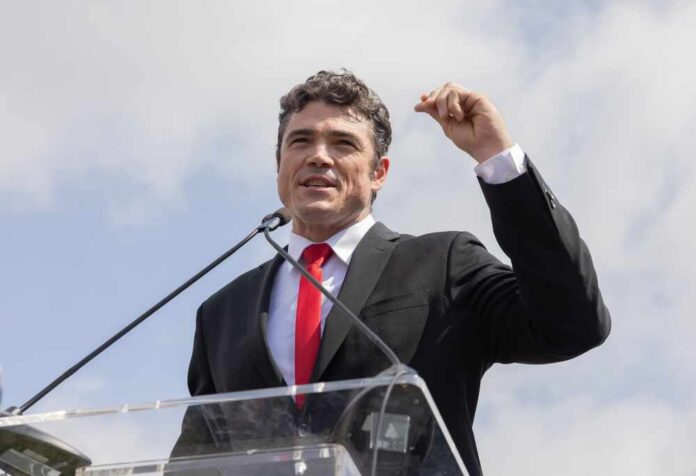
Joe Kent didn’t slip out a side door. He resigned effective immediately and released a public letter meant to land like a brick on the Resolute Desk. As director of the National Counterterrorism Center, Kent sat close enough to the machinery of threat assessment to claim authority, yet his argument cut against the impulse that drives most Washington war stories: act now, sort evidence later.
Kent’s central charge stayed simple and combustible: Iran did not present an imminent threat to the U.S., so initiating war made no strategic sense. He framed the conflict as another case of America volunteering to carry the costs of someone else’s priorities. That allegation matters because it doesn’t just criticize a policy decision; it questions the integrity of the decision-making process that produced it.
The Real Target Was the Pressure Pipeline, Not Just One President
Kent’s letter aimed beyond Trump’s signature. He described a pressure pipeline: foreign officials, U.S. media narratives, and lobbying muscle converging to create the impression of an emergency that demanded immediate force. The public has heard versions of that story before, and Kent deliberately invoked the Iraq War comparison to activate the country’s institutional memory. He signaled that “intelligence” can become theater when politics requires a villain on schedule.
He also injected personal grief into the argument, describing himself as a Gold Star spouse and tying his loss to what he called a war driven by Israeli interests. That detail changes the temperature. Readers can dispute his interpretation, but they can’t dismiss the authenticity of the moral stake he claims. Kent used that moral authority to warn conservatives that overseas adventures often start with emotional narratives and end with debt, casualties, and regret.
Tulsi Gabbard’s DNI Office Became the Fault Line
Kent served under Director of National Intelligence Tulsi Gabbard, whose political brand has long leaned anti-interventionist, even when that stance irritated party leadership. Reports of friction between Gabbard and the White House predated Kent’s resignation, and the Iran clash appears to have sharpened the internal split. When a president’s intelligence chief and counterterrorism director carry skepticism about escalation, the bureaucracy stops behaving like a single organism.
The administration’s defenders treated the dissent as media-driven drama. Vice President JD Vance publicly praised Gabbard as essential to Trump’s coalition, and Trump’s communications team pushed back on narratives of disunity. That may be true politically, but it doesn’t answer Kent’s substantive claim: whether the threat picture was strong enough to justify war. Silence from the White House and ODNI on the letter’s specifics created a vacuum that partisans will fill with whatever they already believe.
“No Imminent Threat” Is a Specific Claim With High Consequences
Kent’s “no imminent threat” language carries weight because imminence is the legal and moral hinge that separates preemption from panic. If his assessment matches internal intelligence, then escalation looks like a choice driven by politics, alliances, or perceived credibility rather than direct defense of the homeland. If his assessment conflicts with classified reporting, then his resignation raises another question: why didn’t leaders make the public case with clear, declassifiable evidence?
Common sense and conservative instincts align on one point: Washington should not spend American blood and treasure on vague warnings that never quite become clear proof. The Iraq-era lesson wasn’t merely that some intelligence was wrong; it was that institutions rewarded certainty theater and punished caution. Kent’s letter reads like a warning flare against that habit. Still, his accusations about Israel and lobbying remain allegations without public corroboration, and readers should separate his strategic argument from his attribution of motive.
What This Means for “America First” Voters Who Hate Endless Wars
Kent’s resignation exposes a tension the right has tried to manage for years: how to support a strong Israel relationship without letting U.S. policy drift into automatic military alignment. Many conservatives hold both views at once—support allies, defend the homeland, avoid quagmires—and the hard part is deciding which principle controls when they collide. Kent insists the collision already happened, and America lost control of the steering wheel.
The political risk for Trump is not only dissent; it’s the kind of dissent. Kent isn’t a street protester or a cable-news personality. He is a senior counterterrorism official with military and intelligence credentials who chose public rupture rather than private disagreement. If other officials share his assessment but stay quiet, his letter may become the reference point for future leaks, resignations, or congressional fights over authorities, funding, and the definition of “imminent.”
The Next Test: Whether the Administration Answers the Process Questions
Wars don’t merely demand firepower; they demand trust. Kent’s letter challenges the administration to show its work: the threat stream, the decision timeline, and the rationale for escalation. If officials respond with slogans, they will fuel the suspicion that the country got dragged into another conflict by messaging, not necessity. If they provide coherent evidence, they can re-anchor public consent and isolate Kent as an outlier.
The open loop is brutal and simple: either Kent walked away from a preventable war, or he walked away from a real threat the public hasn’t been shown. The country doesn’t need performative unity to resolve that; it needs clarity. Conservatives especially should demand that clarity, because “America First” isn’t a bumper sticker. It’s a promise that U.S. leaders will treat war as the last resort, not the default setting.
Sources:
Top Trump intel official resigns over Iran war: ‘No imminent threat’