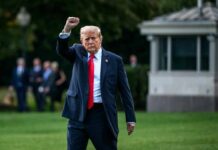


President Trump’s blistering takedown of UK Prime Minister Keir Starmer exposes Labour’s weakness, accusing him of joining the fight against Iran only after America has already won.
Story Highlights
- Trump mocks Starmer as “no Winston Churchill” for delaying UK base access during US-Israeli strikes on Iran.
- Labour MPs urge Starmer to “hold his nerve” amid Trump’s escalating public criticisms.
- Starmer refused offensive use of bases like Diego Garcia initially, approving only defensive support after Iranian retaliation.
- UK domestic polls slump for Labour as opposition attacks Starmer’s “dereliction of duty.”
- Tensions strain the historic US-UK special relationship under Trump’s decisive leadership.
Timeline of the Iran Conflict Escalation
In late February 2026, the United States and Israel launched initial strikes on Iran. UK Prime Minister Sir Keir Starmer declined access to British bases, such as Diego Garcia, for offensive operations. This decision prioritized what Starmer called the British national interest, drawing immediate fire from President Trump. Iranian retaliation with missiles and drones on March 2-3 forced the UK to approve limited defensive use of its bases. Trump’s frustration mounted over the delay.
Trump’s Direct Criticisms of Starmer
On March 4, 2026, during UK Prime Minister’s Questions, opposition leaders pressed Starmer on his Iran policy and Trump’s barbs. Trump stated he was “very disappointed” in the UK’s hesitation, explicitly saying, “This is not Winston Churchill.” By March 8, Trump escalated, accusing Starmer of trying to “join wars after we’ve already won,” while referencing late UK preparations like aircraft carrier deployments. Starmer defended his stance in Parliament, standing by the non-offensive approach.
Labour Internal Pressure and Opposition Attacks
Labour MPs rallied behind Starmer, telling him to “hold his nerve” against Trump’s attacks. This internal support aims to maintain party unity amid an anti-war base and domestic woes. Conservatives, including Chris Philp, labeled Starmer’s delays a “dereliction of duty,” especially regarding warship scrambles. Starmer hit back in the Sunday Mirror, accusing opposition of “undermining Britain” and calling for seriousness over games. The feud highlights Starmer’s balancing act between left-wing caution and alliance demands.
UK polls reflect Labour’s weakness, with Reform at 23% and Greens rising, compounded by by-election losses and defense cuts scrutiny. Starmer invokes Iraq 2003 lessons to justify caution, avoiding overcommitment that plagued Tony Blair.
Strains on the US-UK Special Relationship
The historic US-UK alliance, rooted in World War II, faces new tests under Trump 2.0. Past strains under Trump 1.0 involved Brexit, NATO spending, and Huawei. Starmer’s post-Brexit Labour government sought rapport but clashed over Iran. Trump’s demands for swift support contrast Starmer’s negotiation focus. Short-term risks include eroded trust and energy price hikes up to £500 from Iran chaos. Long-term, it may force Labour to rethink defense spending.
Broader impacts hit UK public with security threats and North Sea drilling halts. Military personnel face scrutiny over reactive posture, as seen in recent Cyprus warship scrambles. Trump’s strength projects American leadership, leaving hesitant allies sidelined—a reminder that decisive action secures freedom.
Sources:
Sky News Politics Latest: Migration, Starmer, Trump, Labour Party
ITV News: Trump accuses Starmer of trying to join Iran war after we’ve already won