

A Treasury crypto raid aimed at Iran is now being sold as proof that Washington can still hit hostile regimes where it hurts: their money.
Quick Take
- Treasury Secretary Scott Bessent said the United States seized about $1 billion in Iranian-linked crypto assets.[1][5]
- The seizure was presented as part of Operation Economic Fury, a broader pressure campaign against Iran.[1][5]
- Reporting says the effort included wallet freezes tied to the Islamic Revolutionary Guard Corps and the Central Bank of Iran.[1]
- The public record in the supplied research does not include the underlying legal filings or forensic package behind the claim.[1][2][4][5]
Operation Economic Fury Expands the Pressure Campaign
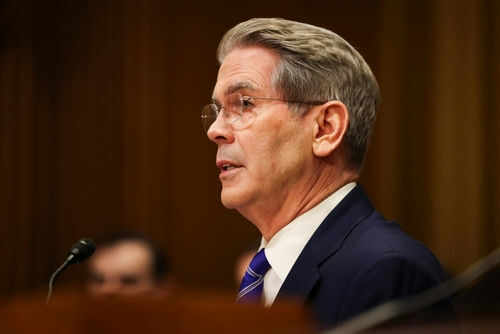
Treasury Secretary Scott Bessent told Fox Business that the United States had seized “about a billion dollars” in Iranian crypto and said federal authorities “just outright grabbed the wallets.”[5] The remarks were delivered at the Reagan National Economic Forum and tied directly to Operation Economic Fury, the administration’s named financial pressure campaign against Tehran.[1][5] That framing matters because it places the seizure inside a broader maximum-pressure strategy rather than a narrow, isolated asset case.[1][5]
Reporting in the supplied research says the campaign has targeted Iran’s revenue streams, sanctions-evasion networks, bank accounts, and even properties held abroad.[1][5] One article says Treasury’s effort “has crippled Tehran’s financial lifelines,” while another says the administration is working with European partners to seize villas, houses, and other assets linked to Iranian elites.[5] For readers who favor strong enforcement over diplomatic theater, that is the kind of hard-nosed action that signals deterrence instead of appeasement.[5]
What the Reporting Says About the Crypto Seizure
The supplied reporting says one major enforcement action came on April 24, 2026, when Tether froze $344 million in USDT across Tron addresses tied to the Islamic Revolutionary Guard Corps and the Central Bank of Iran.[1] The same reporting says blockchain analytics firm Chainalysis assisted in identifying the addresses and that the action aligned with updated Office of Foreign Assets Control designations.[1] A separate source says Treasury had already documented roughly $500 million in frozen assets before Bessent raised the total to roughly $1 billion.[1][4]
That arithmetic is where the public story gets less precise. One source says the billion-dollar figure appears to combine Treasury seizures with the Tether freeze, while another source describes the confirmed figures as closer to $500 million plus the separate $344 million freeze.[2][4] Bessent’s wording was “about a billion dollars,” which signals a rounded estimate rather than a line-by-line audit total.[1][5] The supplied research does not include the underlying seizure warrant, forfeiture complaint, or Treasury asset tally.[1][2][4][5]
Why the Iran Angle Is Driving the Debate
Iranian officials, according to the supplied reporting, have pushed the dispute into a broader diplomatic and blockade narrative.[3] Iran International reports that Tehran said no final understanding with Washington had been reached, that an illegal naval blockade should end, and that frozen assets had to be addressed before any preliminary deal.[3] That matters because it shows how quickly a crypto enforcement action can become part of a larger argument over negotiations, pressure, and regime survival.[3]
The central conservative takeaway is straightforward: the federal government appears to be using financial tools, stablecoin freezes, and sanctions coordination to choke off a hostile regime’s cash flow.[1][5] At the same time, the supplied record still leaves key questions unanswered about attribution, legal authority, and how Treasury calculated the “about $1 billion” figure.[1][2][4][5] Until those documents are public, the administration’s public case rests heavily on official statements and secondary reporting rather than the full legal record.[1][2][4][5]
Sources:
[1] Web – THE ESSEX FILES: Operation Economic Fury: How the Treasury’s $1B …
[2] Web – Treasury Seizes $1 Billion in Iran-Linked Crypto, Scott Bessent …
[3] Web – U.S. Seizes $1B in Iranian Crypto Under Operation Economic Fury
[4] Web – US seized $1B in Iranian crypto assets, Bessent says
[5] Web – Scott Bessent says US seized roughly $1B in Iranian … – Fox Business