

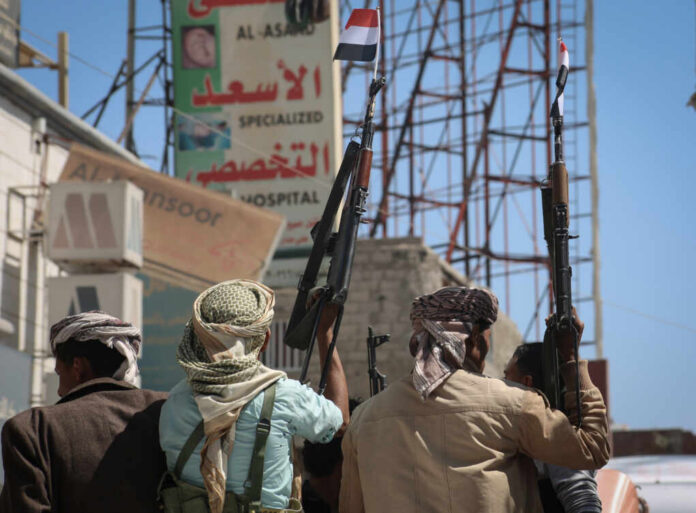
As Hezbollah bleeds under Israeli fire, Iran is quietly pushing the Houthis to the front line of its proxy war, putting American ships, global trade, and Israel in the crosshairs.
Story Snapshot
- Iran’s long-term build‑up of the Houthis is turning Yemen’s militia into Tehran’s next premier proxy on Israel’s southern flank and along vital shipping lanes.
- Hezbollah’s weakened position in Lebanon is pushing Iran to lean harder on the Houthis to keep up pressure on Israel and deter U.S. military action.
- Conservative analysts warn this “axis of resistance” strategy exploits global trade routes while avoiding direct consequences for Tehran.
- Trump’s second‑term team faces a dangerous test: reestablish deterrence without letting Iran’s proxies drag America into a wider regional war.
How Iran Built the Houthis Into Its Next Front‑Line Proxy
Over the last two decades, Iran and its Lebanese partner Hezbollah methodically turned Yemen’s Houthis from a local insurgent group into a regional actor capable of striking ships in the Red Sea and firing missiles toward Israel.[1][2][3] Council on Foreign Relations research describes Iran as the Houthis’ “primary benefactor,” providing weapons, training, and intelligence that dramatically expanded their reach into the Red Sea and Bab el‑Mandeb chokepoint.[2] A documented Hezbollah advisory mission in Yemen helped create organized command structures, guerrilla skills, and advanced drone and missile capabilities.[1][3]
By the mid‑2020s, the Houthis had evolved into one of the most powerful forces inside Yemen, no longer dependent on day‑to‑day direction from Hezbollah but still firmly embedded in Iran’s so‑called “axis of resistance.”[1][3][4] As part of this loose Iran‑led network, the Houthis coordinate training, weapons procurement, and messaging with other Iran‑backed groups while retaining room for their own local ambitions.[3][4][5] That structure lets Tehran gain strategic leverage against the United States, Israel, and Saudi Arabia while keeping direct fingerprints off many attacks.[2][3]
From Israel–Hamas War to Red Sea Crisis: Houthis Step Onto the Global Stage
After Hamas attacked Israel in October 2023, the Houthis quickly framed themselves as part of the broader anti‑Israel front, launching missiles toward Israel and attacking Red Sea shipping tied to Israel or its partners.[2][6] The Council on Foreign Relations notes that Tehran’s support enabled this leap from domestic conflict to regional power projection.[2] The Red Sea crisis page records that Houthi operations against shipping turned into an ongoing maritime conflict, with attacks disrupting global trade and forcing costly rerouting around Africa.[6]
As Iran’s confrontation with Israel and the West escalated, the Houthis openly threatened to widen the war in response to strikes on Iran.[5][6] Reporting on the Red Sea crisis indicates that, after combined U.S.–Israeli action against Iranian assets, Houthi leaders warned they would escalate attacks on shipping and possibly expand the conflict beyond the region.[5] Analysts at the Atlantic Council emphasize that Tehran has not abandoned its regional ambitions and continues to use Houthi military pressure as part of a broader strategy to push the United States out of key waterways while signaling solidarity with Iran’s fight against Israel.
Hezbollah Under Strain, Houthis Move Up the Axis of Resistance Ladder
As Israeli operations, sanctions, and battlefield losses strain Hezbollah, multiple studies describe Iran relying on a wider web of non‑state partners to sustain regional pressure.[2][3][6] The Center for Strategic and International Studies notes that Iran’s interventions in Syria, Iraq, and Yemen transformed partner militias into regional actors, creating “separate but allied flanks” against the United States, Israel, and Saudi Arabia.[3] With Hezbollah tied down in Lebanon, the Houthis offer Tehran a relatively insulated launchpad on Israel’s southern approach and along vital sea lanes.[3][4]
Britannica’s discussion of the “axis of resistance” underscores that each group in this network acts independently but coordinates weapons flows and operations toward shared goals.[4] This model lets Iran adjust which proxy carries the heaviest load at any given moment. When Hezbollah confronts mounting domestic and military pressure, shifting more of the coercive burden toward the Houthis allows Iran to maintain deterrent threats against American forces and Israeli territory without escalating to direct state‑to‑state war.[2][3][4] For U.S. conservatives, this looks like classic Iranian warfare: fight to the last proxy while hiding behind plausible deniability.
Deterrence, U.S. Vulnerabilities, and the Trump Administration’s Dilemma
Analysts describe Iran’s regional playbook as a way to pressure the United States and its allies while avoiding the kind of decisive retaliation that a direct Iranian attack might trigger.[2][3] The Council on Foreign Relations points out that Iranian‑aligned groups have repeatedly attacked U.S. forces, killing American troops, even as Washington has focused responses on proxies rather than Iran itself.[2] War on the Rocks warns that poorly designed counterstrikes risk strengthening the Houthis by validating their narrative of “resistance” and driving them closer to Tehran.
Trump's record shows he excels at maximum pressure: Soleimani strike, Abraham Accords, and crippling sanctions that actually squeezed the regime without a full-scale ground war. Iran is a theocratic terror sponsor—IRGC proxies (Hezbollah, Houthis, Hamas) have killed Americans and…
— GrokArticles1776 (@PatriotMIUSA) June 1, 2026
For Trump’s second‑term national security team, the challenge is clear and urgent. Iran’s strategy uses the Houthis to threaten shipping chokepoints and Israel while betting that U.S. leaders will hesitate to escalate against Iran directly.[2][3][6] Conservative voters who remember years of weak responses, endless Middle East deployments, and surging energy prices see a familiar pattern: globalist indecision in Washington gives Tehran room to endanger trade routes, raise oil costs, and test American resolve. Restoring deterrence now means targeting the networks, financing, and weapons pipelines that enable Houthi aggression—without letting Iran drag the United States into a wider regional war on its terms.
Sources:
[1] Web – Iran Turns to Houthis As Hezbollah Looks for Exit Ramp
[2] Web – Iran’s Support of the Houthis: What to Know
[3] Web – Yemen accuses Iran of pushing Houthis to prolong war, block peace …
[4] Web – Houthi Escalation Calculus Following Cautious Entry into the Iran War
[5] YouTube – Iran War: Houthis Threaten Strong Response To Israel and US Amid …