
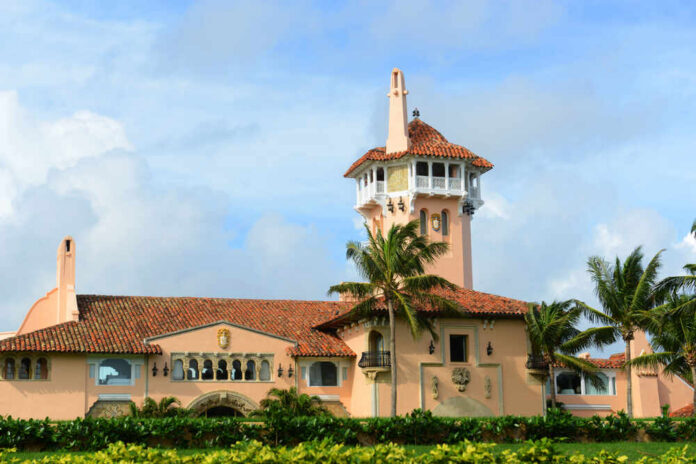
A federal no-fly bubble around Mar-a-Lago is reshaping life for tens of thousands of Palm Beach County residents, raising hard questions about how far Washington should go to protect one man’s home at everyone else’s expense.
Story Snapshot
- Around-the-clock no-fly rules over Mar-a-Lago are forcing loud jet traffic over nearby neighborhoods, affecting tens of thousands of residents.[2][3]
- The Federal Aviation Administration (FAA) acted at the request of the United States Secret Service, citing permanent security for Trump’s private residence.[2][4]
- Noise complaints surged from just dozens to hundreds in weeks, as planes now pass over historic communities and schools every 90 seconds.[2][3]
- Local leaders are demanding transparency and relief, pressing federal agencies to justify why constant restrictions are necessary and whether less intrusive options exist.[1][2]
How Mar-a-Lago’s No-Fly Zone Took Shape
On October 20, 2025, the Federal Aviation Administration, acting at the request of the United States Secret Service, imposed a one–nautical mile, twenty‑four hour no‑fly zone around Mar-a-Lago, designating it as a permanently secured non‑governmental residence of President Donald Trump.[2][4] Under these rules, aircraft taking off and landing at Palm Beach International Airport must bend away from the club and instead fly northeast over residential neighborhoods, replacing a more direct path that had previously been approved after a full environmental review.[2] Federal officials have signaled the restrictions will run through at least October 2026, with the possibility of extensions beyond that date.[1]
Representative Lois Frankel, who represents the area as a Democrat, confirmed in a public memo that the United States Secret Service has also requested similar twenty‑four hour flight restrictions around Trump Tower in New York, but not around other Trump properties that are not formally designated non‑governmental residences.[2] Her memo explains that, unlike past temporary limits tied to a presidential visit schedule, the Palm Beach rule now applies continuously whether or not Trump is physically at Mar-a-Lago.[2] City and county officials say they were not meaningfully consulted before the year‑long shift in routing went into effect, and they are now demanding detailed criteria for how the decision was made and how long it will last.[1][2]
Noise, Quality of Life, and Who Bears the Burden
The new routes dramatically increased the number of people living under busy departure and arrival paths, concentrating noise and fumes over neighborhoods that had previously been spared regular jet traffic.[2][3] Federal summaries cited by Representative Frankel state that the old path affected about 2,200 homes and 5,000 residents, while the new routing affects over 11,000 homes, 21,000 residents, at least five schools, and many local businesses.[2] Flights can pass overhead as often as every ninety seconds during heavy periods, turning previously quiet streets into corridors of constant engine roar, vibration, and exhaust.[2] Local reporting notes that several of these impacted areas, including districts such as Flamingo Park and El Cid, are historic communities with longtime homeowners now suddenly facing sleepless nights and fears about property values.[1][2]
Palm Beach County’s own airport complaint line reflects how quickly frustration boiled over once the flight paths shifted to avoid Mar-a-Lago.[3] According to data described by local public radio, noise complaints to the Department of Airports jumped from just 58 in the first ten months of 2025 to more than 600 in the short window between October 20 and the first week of January after the restrictions took hold.[3] Residents have been documenting disturbances, citing increased noise, air pollution, and concerns about safety and home prices in their formal complaints to county and federal offices.[2][3] While aviation officials have not yet published a detailed acoustic study breaking down each decibel of added noise, the complaint record and neighborhood maps provide clear evidence that the burdens of securing Mar-a-Lago are being pushed onto ordinary families who live miles away.[2][3]
Security Rationale, Transparency Gaps, and What Comes Next
United States Secret Service officials have told elected representatives that heightened global tensions and the need to secure Trump’s designated residences drove their request for a constant protective bubble, and that they view a one–nautical mile shield around Mar-a-Lago as necessary to defend a high‑value target.[2][3] The Federal Aviation Administration retains final authority over how that protective request is translated into airspace rules, and in this case chose an around‑the‑clock, year‑long no‑fly zone that forces traffic over neighborhoods rather than allowing covered routes above the property.[1][2] However, the agencies have not released the underlying threat assessment, alternative‑route analysis, or a public, line‑by‑line explanation of why narrower or more flexible options were rejected, leaving residents and local officials to weigh serious quality‑of‑life costs against a security justification they cannot fully see or test.[1][2]
City leaders, county commissioners, and members of Congress are now pressing for changes that would preserve legitimate presidential security while restoring some measure of relief to affected neighborhoods.[1][2][3] West Palm Beach’s commission president has publicly demanded answers, and the city’s mayor has sent formal letters urging transparency from both the Federal Aviation Administration and the United States Secret Service, asking for clear criteria, mitigation plans, and a path to reduce the impact on families under the new routes.[1] Palm Beach County leaders have taken their case directly to Secret Service officials, while citizens’ committees meet with airport management seeking a return to safer, quieter flight patterns that share the burdens more fairly.[2][3] For conservatives who care about both strong national security and limited, accountable government, the Mar-a-Lago airspace fight embodies a familiar challenge: how to protect a high‑profile target without letting faceless bureaucracies quietly shift the cost onto communities that never had a voice in the decision.
Sources:
[1] Web – Trump cleared skies above Mar-a-Lago. His rich neighbors paid the …
[2] Web – New Mar-a-Lago flight rules avoid historic neighborhoods
[4] Web – Noise complaints to Palm Beach County airport skyrocket after …