
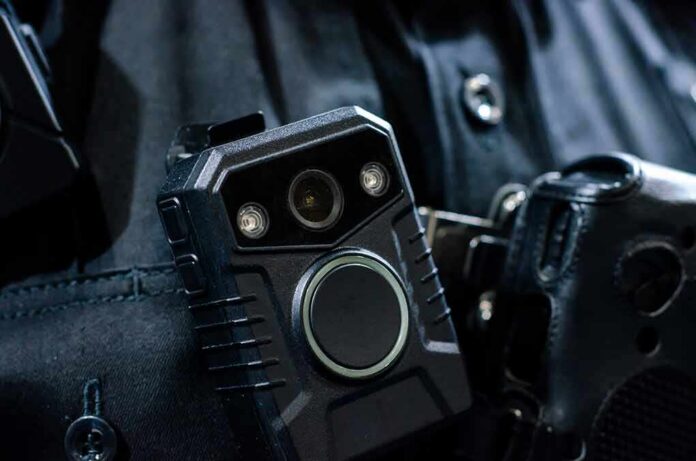
Homeland Security rejected automatic body-camera activation for immigration agents, warning it could record informants, victims, and peaceful protests, and create false recordings during routine movement.
Story Highlights
- Department of Homeland Security said auto-activation risks privacy and evidence by capturing sensitive interactions.
- Government Accountability Office urged automatic triggers to prevent missed footage and improve reviews.
- Immigration and Customs Enforcement policy already requires activation during enforcement with a 30-second buffer.
- Watchdog said gaps in guidance and manual activation create risks of missing key incidents.
DHS explains why it rejected automatic activation
Department of Homeland Security officials told the Government Accountability Office that automatic triggers could start recordings at the wrong times. Officials warned that cameras might capture talks with sources, crime victims, or people using First Amendment rights, and might also switch on during routine movement. The department said those risks outweigh benefits. The statement came as a formal response to the federal watchdog’s recommendation for automated activation on Immigration and Customs Enforcement cameras.
Homeland Security framed the choice as a balance between transparency and constitutional rights. The department said auto-activation could record in places where filming is limited by policy or law. It also cited concerns about the chain of evidence. False or inadvertent clips can confuse what happened. Officials said manual control, with clear rules and audits, better protects victims and peaceful protesters while still recording enforcement actions that matter most.
What ICE policy already requires on body cameras
Immigration and Customs Enforcement has a standing body-camera policy. The directive requires officers to turn cameras on at the start of an enforcement activity or as soon as it is safe to do so. The cameras must also keep a pre-event buffer of at least 30 seconds before activation. The policy aims to catch the lead-up to an encounter while letting officers delay activation if safety demands it. These rules guide recordings during arrests, searches, and other actions.
The department said this framework offers a strong alternative to always-on triggers. The buffer can capture context. The activation rule covers the start of the action. The safety caveat keeps focus on officer judgment in fast-moving moments. Supporters argue this approach respects privacy, avoids sweeping up bystanders, and still documents force and arrests. That mix responds to valid conservative concerns about government overreach and people’s rights in public spaces.
What the watchdog says is still missing
The Government Accountability Office reached a different view. The watchdog said Immigration and Customs Enforcement lacks reliable controls to ensure cameras are on when required. The report warned that missed or late recordings make incident reviews harder and can reduce public confidence. It also found that many offices do not have specific, local guidance to tell personnel when to record and when not to record in their settings, increasing the risk of missed footage.
The watchdog also reported that personnel said manual activation can be hard at critical moments. Officers may be dealing with threats or securing people. In those seconds, pushing a button can fall behind other tasks. The office therefore recommended adding automated activation controls. Triggers like weapon draw or defined events can capture what manual steps may miss, while still allowing privacy limits through well-written exceptions and redaction after the fact.
How to square transparency with privacy and safety
Both sides raise real issues. Automatic triggers can help catch fast events, but they can also sweep in private talks or peaceful protest activity. A practical path is to tighten the existing policy, with clear, office-level guidance and tough audits, while testing narrow triggers that protect rights. Examples include weapon-draw activation, short buffers, and fast mute options for victims and sources. That approach would keep evidence strong and guard against recording law-abiding Americans.
🚨 ICE REJECTS AUTOMATIC BODY CAMERA ACTIVATION DESPITE ACCOUNTABILITY PUSH
WASHINGTON, UNITED STATES – More disputed enforcement encounters are likely to hinge on competing accounts rather than video evidence. ICE has effectively decided that the risk of recording too much… pic.twitter.com/KEJ5nDWfzl
— The Content Factory (@tcf_updates) October 15, 2026
Immigration and Customs Enforcement leaders also said the national rollout of cameras is on track. Officials have described a full deployment aimed at documenting key encounters while shielding sensitive information from broad release when it could harm an investigation or privacy. That stance matches core conservative priorities: back the badge, protect victims, and defend the Constitution. The next step is proving the policy works with clear guidance, dependable activation, and accountable reviews.
Sources:
washingtontimes.com, news.bloomberglaw.com, washingtonpost.com, ice.gov