
President Trump publicly praised Japan for supporting American efforts against Iran while openly contrasting Tokyo’s cooperation with NATO’s reluctance, marking a significant shift in how the Trump administration navigates crucial Pacific alliances amid Middle Eastern conflict.
Story Highlights
- Trump commended Japan for “stepping up to the plate” on Iran, explicitly contrasting Japanese support with NATO’s hesitancy during White House bilateral meeting
- Japan faces imminent energy crisis with 70% of oil imports threatened by Iran’s Strait of Hormuz closure, pressuring Tokyo despite constitutional military restrictions
- U.S. launched strikes against Iran without consulting allies like Japan, creating diplomatic friction even as Trump seeks burden-sharing from Pacific partners
- Meeting yielded $40 billion reactor project announcement while Japan remains noncommittal on military support, citing constitutional limits on offensive operations
Trump Leverages Alliance to Secure Japanese Support
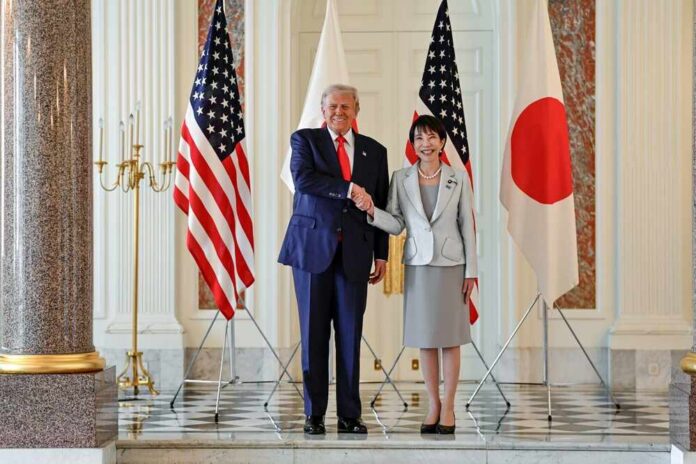
President Donald Trump met with Japanese Prime Minister Sanae Takaichi at the White House on March 19, 2026, publicly applauding Japan’s response to the Iran crisis while notably criticizing NATO allies. Trump stated Japan is “stepping up to the plate” unlike NATO, leveraging both the 45,000 U.S. troops stationed in Japan and Tokyo’s vulnerability to energy disruptions. The meeting focused on Iran’s nuclear ambitions, attacks on neighbors, and closure of the Strait of Hormuz, through which Japan imports over 70% of its oil and 6% of its LNG.
Japan Navigates Constitutional Limits Amid Energy Crisis
Prime Minister Takaichi condemned Iran’s actions, stating nuclear weapons development “must never be allowed” and affirming Japanese Foreign Minister Migi’s diplomatic engagement with Iranian counterparts. However, Japan’s post-war Constitution restricts offensive military operations, limiting Tokyo to defensive roles and diplomacy. Japan is “vigorously examining” the legality of dispatching escort vessels or mine sweepers, but faces imminent crude oil shortages by March 20, 2026, risking industrial shutdowns and consumer blackouts. This constitutional constraint creates a fundamental challenge for Trump’s expectations of tangible military support.
Unilateral U.S. Action Strains Allied Coordination
The Trump administration launched strikes against Iran in early March 2026 without consulting allies including Japan, creating frustration among partners now expected to share burdens. Former Ambassador Rahm Emanuel criticized this approach, noting allies like Japan are “bearing the brunt” while receiving no clear U.S. endgame guidance or economic relief plans. Trump denied deploying additional U.S. troops and claimed Iran is “close to demolished,” yet the Strait of Hormuz remains impassable, contradicting his assessment. This unilateral decision-making mirrors concerns about potential Taiwan scenarios where consultation might again be bypassed.
Strategic Implications for Conservative Foreign Policy
Trump’s approach reflects conservative principles of alliance burden-sharing rather than American taxpayer-funded global policing, a welcome shift from globalist overreach. The President rightfully expects allies dependent on American military protection to contribute meaningfully when their own vital interests are threatened. Japan’s energy vulnerability directly stems from Iran’s aggression, making Tokyo’s involvement both logical and necessary. However, the administration’s failure to consult before military action risks weakening the alliances needed to counter China’s regional ambitions. The $40 billion reactor project announcement and Takaichi’s gift of 250 cherry trees demonstrate mutual commitment, but substantive military coordination requires upfront communication.
The meeting yielded praise but limited concrete commitments, with Japan’s constitutional restrictions and U.S. unilateralism creating ongoing diplomatic challenges. Trump’s strategy of leveraging personal rapport with Takaichi and highlighting shared interests may yield results, but allies across the Pacific and Atlantic are watching how consultation failures impact their own security calculations. This demonstrates the delicate balance between demanding fair burden-sharing and maintaining the trust required for effective alliance management against adversaries like Iran and China.
Sources:
From cherry blossoms to crisis: Iran imperils Trump-Japan summit – Politico