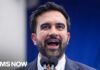


When playing a movie soundtrack on a city sidewalk can get you handcuffed, every American’s freedoms are on the line.
Story Snapshot
- D.C. has agreed to pay a settlement after police detained a man for playing the Darth Vader theme at National Guard troops.
- The American Civil Liberties Union (ACLU) says his First and Fourth Amendment rights were violated when officers handcuffed him with no charges filed.[3]
- The case shows how local governments still clamp down on peaceful protest, even when it is just music and video.[3]
- The National Guard sergeant who called the police still faces an ongoing lawsuit backed by federal lawyers.[2]
Police Payout Over a Protest Song Raises Big Freedom Questions
Sam O’Hara is a 35-year-old Washington resident who spent months protesting National Guard patrols that followed President Trump’s August deployment to the city.[3] He did not block roads or shout at troops. He simply walked a short distance behind them, played the “Imperial March” from Star Wars on his phone, and filmed the scene for TikTok.[3] His clips went viral, drawing millions of views and turning his protest into a small but sharp reminder of government power on city streets.[1]
On September 11, 2025, O’Hara followed guard members near 14th and Q Streets Northwest, again playing the Darth Vader theme and recording from several feet away.[3] An Ohio National Guard sergeant named Devon Beck turned around, warned he would call police to “handle” O’Hara if he did not stop, and then followed through.[3] Metropolitan Police Department officers arrived, tightly handcuffed O’Hara, and detained him for about 15 to 20 minutes, saying he was “harassing the National Guard,” even though they told him he was not under arrest.[4]
ACLU Lawsuit: Music as Protected Speech, Detention as Unlawful Seizure
Lawyers from the Washington chapter of the American Civil Liberties Union filed a federal lawsuit claiming that both the National Guard sergeant and four city police officers broke the law.[3] They argue that recording troops in public while playing a song is peaceful political speech, which the First Amendment clearly protects.[3] They also say the tight handcuffs and detention with no charges amount to a baseless seizure barred by the Fourth Amendment and by District of Columbia rules against false arrest.[3]
The complaint notes that O’Hara kept a reasonable distance and used a volume that was “noticeable but not overwhelming,” undercutting any claim that he was blocking or threatening the troops.[4] No property was damaged, and no one was harmed. Yet he was restrained, stopped from filming, and held for nearly twenty minutes.[1] Afterward, officers released him without charges, which strongly suggests they lacked proof of any real crime and used detention mainly to shut down his protest.[2]
D.C. Settlement Leaves Many Accountability Questions Open
In June 2026, the District of Columbia agreed to a settlement, with city officials promising to compensate O’Hara in exchange for being dropped from the case.[2] The amount is kept secret at O’Hara’s request, but the ACLU says he is satisfied with the figure.[2] This payout does not come with a court ruling that police acted illegally, yet city leaders chose to spend taxpayer money rather than defend the officers’ conduct all the way through trial.[2]
The settlement applies only to the actions of D.C. police, not to the Ohio National Guard sergeant who called them.[1] The lawsuit against Sergeant Beck continues, and he is represented by lawyers from the United States Department of Justice.[2] That means federal attorneys are still arguing that a soldier can summon police to stop a citizen from peacefully filming and mocking the Guard with a song. The Metropolitan Police Department has not publicly explained why the handcuffs were needed or what threat they believed O’Hara posed.[2]
What This Means for Everyday Patriots and Street Protest
This case fits a wider pattern in Washington, D.C., where music, comedy, and viral clips have become normal tools of protest.[13] The District’s own code says people have a right to hold peaceful First Amendment gatherings on sidewalks and streets.[19] Groups have used go-go music and other sounds to push back on heavy-handed rules, and courts have long held that even simple acts, like wearing an armband, can count as protected speech.[20] O’Hara’s Darth Vader soundtrack sits squarely in that tradition.
For conservatives, the lesson is simple and serious. If city police can cuff a man for a sarcastic song today, they can silence gun owners, parents at school board meetings, or church groups tomorrow. Free speech does not belong only to the left or to approved causes. It belongs to every citizen who wants to question government power, including Trump supporters who demand that local officials respect the Constitution instead of treating peaceful dissent as a crime.[14]
Sources:
[1] Web – ACLU Wins Settlement for D.C. Resident Detained for Playing Darth …
[2] Web – “D.C. Police Agree To Compensate District Resident Handcuffed for …
[3] Web – D.C. settles lawsuit over arrest for ‘Imperial March’ protest – …
[4] YouTube – DC police reach settlement over Imperial march music lawsuit
[13] Web – D.C. Settles Suit With Protester Arrested After Playing ‘Star Wars …
[14] Web – Washington, D.C. has reached a settlement agreement with Sam O …
[19] Web – The First Amendment in Flux | ACS – American Constitution Society
[20] Web – An inspiring day at the Artists United For Our Freedoms activation …