

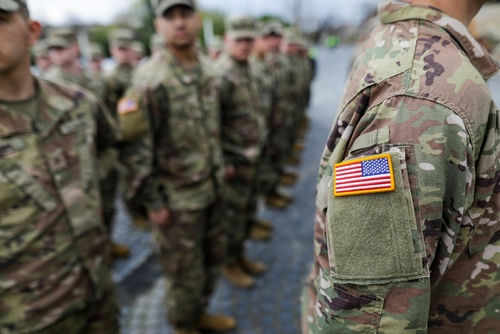
A soldier’s alleged promise on Discord to “kill every single Jew” inside a synagogue is a brutal reminder that America’s institutions are still struggling to detect and stop online radicalization before it turns into real-world terror.
Quick Take
- Federal prosecutors say a 22-year-old active-duty U.S. soldier at Fort Polk was arrested after alleged Discord threats targeting a synagogue.
- The FBI received a tip in February and later relied on Discord audio messages described in court documents.
- The charge filed is transmitting a threat in interstate commerce, a common federal tool for intervening before violence occurs.
- Officials framed the case as a direct test of religious liberty protections, not just a routine criminal matter.
What authorities say happened—and why the timeline matters
Federal authorities say Jakob Marcouiller, 22, an active-duty soldier stationed at Fort Polk in Louisiana, was arrested Thursday after investigators linked him to threats about attacking a synagogue. Court documents described Discord messages and audio in which he allegedly outlined an intent to carry out a mass shooting and claimed he would “kill every single Jew” inside. The FBI’s National Threat Operations Center reportedly received a tip in February, triggering the investigation.
The timing is central to what makes the case significant. Investigators did not respond to a single impulsive remark made in passing; they pursued a lead that arrived months earlier and then moved toward an arrest after gathering additional evidence. That sequence underscores how counter-threat work often functions: tips, preservation of online communications, and then a rapid step in once law enforcement believes intent and credibility are high enough to justify federal charges.
The federal charge: stopping violence before it happens
Prosecutors charged Marcouiller with transmitting a threat in interstate commerce, a statute often used when threats are made through online platforms that cross state lines. From a public-safety perspective, that matters because it allows law enforcement to intervene before an attack occurs, rather than relying on after-the-fact penalties. The case also highlights how digital communications—audio, chat logs, and user reports—can become the backbone of a federal criminal filing.
U.S. Attorney Zachary A. Keller, speaking for the Western District of Louisiana, connected the alleged threats directly to constitutional protections, saying threats against synagogues and Jewish Americans are threats to religious freedom promised to everyone. That framing is important in a country where political fights regularly spill into culture-war trench lines. Defending the right of Americans to worship without intimidation is not a partisan project; it is a foundational obligation of a constitutional republic.
The bigger vulnerability: online radicalization and institutional blind spots
The reporting describes rhetoric tied to antisemitic and white-supremacist themes, delivered in a social-media-style environment where peers can cheer, challenge, or ignore escalating statements. Discord, like other platforms, can function as a private clubhouse for grievance and extremism, making early detection difficult unless a participant reports it. When a tip does come in, government agencies face a delicate balance: act too slowly and risk tragedy, act too quickly and risk trampling due process.
For conservatives who already distrust bureaucracies, the uncomfortable takeaway is that institutions often appear reactive—moving only after a tip, a leak, or a near-miss. For liberals focused on hate and discrimination, the takeaway is that Jewish communities remain targets even when national attention is directed elsewhere. Both sides can see the same structural problem: a government that is large, expensive, and yet often fails at basic competencies like prevention, accountability, and clear communication with the public.
Military readiness, screening, and the trust problem at home
The suspect’s military status adds a layer that goes beyond a typical online-threat prosecution. The U.S. armed forces depend on discipline, lawful conduct, and public confidence. When an active-duty service member is accused of planning violence against civilians—especially a religious minority—it raises questions about screening, supervision, and the pathways that allow radical ideas to grow unchecked. The available reporting does not detail prior warning signs inside the unit, limiting firm conclusions.
Soldier told Discord chat he planned to target Jewish worshipers, feds say — via @kyle_rempfer https://t.co/Y9MVKAV3Qh
— Jeff_Schogol (@JSchogol73030) April 30, 2026
Still, the arrest also shows a key point that often gets lost in political noise: enforcement can work when agencies act on credible information and prioritize stopping harm over waiting for perfect certainty. The next test will be transparency and due process—what evidence is presented, what the defense argues, and whether the government can prove the case beyond a reasonable doubt. In the meantime, communities of faith are left to weigh security costs against the basic American expectation of open worship.
Sources:
Soldier told Discord chat he planned to target Jewish worshipers, feds say
US soldier charged for threatening to kill every single Jew inside a synagogue