

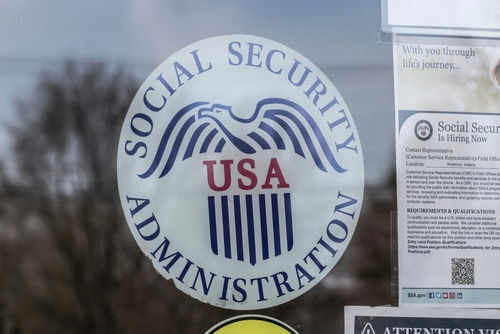
A whistleblower complaint alleges a DOGE-linked engineer walked out of the Social Security Administration with databases tied to more than 500 million Americans—on a simple thumb drive.
Quick Take
- A former DOGE software engineer is accused of taking two restricted SSA databases, including Social Security numbers and other identifying details.
- The alleged theft centers on “Numident” and the “Master Death File,” records covering both living and deceased Americans.
- The SSA inspector general is investigating, while an SSA spokesperson publicly denied the report as “fake news.”
- The allegation lands amid earlier disputes over DOGE access to SSA systems, including a judge’s “fishing expedition” criticism and prior claims of mishandled data.
What the whistleblower says was taken—and why it matters
The complaint described by TechCrunch, citing The Washington Post, accuses an unnamed former DOGE software engineer of copying two restricted Social Security Administration datasets: “Numident” and the “Master Death File.” The records include Social Security numbers, birth information, citizenship status, race and ethnicity fields, and parents’ names. The whistleblower says the engineer stored the data on a thumb drive and later boasted of having had “God-level” access.
The gravity of the claim is not just the volume—more than 500 million records across the living and the dead—but the nature of the access. External hacks typically leave forensic trails and trigger automated alarms. Insider removal, if confirmed, raises a simpler and more troubling question: how could an individual allegedly walk out with sensitive databases in the first place, and what controls failed to stop it?
SSA denies the theft as investigators keep quiet
As of March 10, 2026, the SSA’s inspector general was reported to be investigating the whistleblower complaint, with no public indication of an arrest, data recovery, or a final finding. The inspector general’s office did not respond to comment requests. Meanwhile, an SSA spokesperson dismissed the story as “fake news to scare seniors,” creating a stark contradiction that cannot be resolved from public reporting alone.
That public split matters for ordinary Americans because it creates two competing realities: either a massive, sensitive dataset walked out the door, or the agency is correct that the allegation is false. With the alleged engineer unnamed and the underlying complaint not fully public, we should treat key details as unproven allegations pending the inspector general’s work. At the same time, the claim fits a broader pattern of controversy around access and data handling.
How DOGE’s SSA footprint became a recurring data-security flashpoint
DOGE, led by Elon Musk under the Trump administration, was created to push government efficiency, and technical staff were placed inside the SSA after President Trump took office in January 2025. SSA employees were not always given clear explanations of the DOGE team’s roles, even as these staff obtained broad system access. That kind of ambiguity is a management problem in any organization handling sensitive data, public or private.
The current allegation also follows earlier, separate warnings: a whistleblower previously claimed DOGE uploaded hundreds of millions of SSA records to a vulnerable cloud server. A federal judge later blocked DOGE from SSA systems, reportedly describing the effort as a “fishing expedition” for fraud. In January 2026, a separate legal dispute alleged DOGE members accessed or shared off-limits Social Security numbers to support an advocacy group tied to election litigation.
What’s verifiable right now—and what remains unproven
Several core points are clear: the allegation involves an insider, the alleged data includes highly identifying fields, and the inspector general is reported to be investigating. Also clear is that the SSA is disputing the reporting in unusually blunt terms. What is not established is whether the data was actually exfiltrated, whether it was used, sold, or disclosed, or whether it remains solely an allegation based on workplace statements.
That limitation should not be mistaken for a minor issue. If the whistleblower’s complaint is substantiated, the potential harm is obvious: identity theft, benefits fraud, and a new wave of scams aimed at seniors—precisely the group the SSA spokesperson referenced when denying the story. If the complaint is not substantiated, then the episode still exposes a trust gap: millions of citizens no longer assume federal agencies can secure sensitive records.
Why conservatives should focus on oversight, not bureaucracy-building
Conservatives have long argued that Washington’s power needs firm guardrails—especially when agencies collect personal data on nearly everyone. This controversy, whether it ends in confirmation or refutation, reinforces the basic point that concentrated data combined with unclear access rules invites abuse. The answer is not reflexive expansion of government, but transparent accountability: tight permissioning, audit logs that actually get reviewed, and consequences for violations regardless of political connections.
Wasn't that the whole point? To sell our data? Get real.
Whistleblower Claims Frmr DOGE Staffer Kept Private Data https://t.co/Q2kPQBo2Be
— WestworldEmployee7 (@WestworldEmp7) March 11, 2026
For now, the inspector general’s findings will be the hinge. If the SSA can disprove the allegation, it should do so with verifiable facts rather than slogans. If the theft occurred, Americans deserve immediate disclosure of scope and remedial steps. Either way, the lesson is straightforward: “efficiency” reforms that touch sensitive databases must be paired with strict constitutional-minded oversight—because the public is the one left holding the risk.
Sources:
DOGE employee stole Social Security data and put it on a thumb drive, report says
Trump admin acknowledges DOGE employees accessed and shared Social Security data
Breach Roundup: DOGE Uploaded Social Security Data to Cloud