
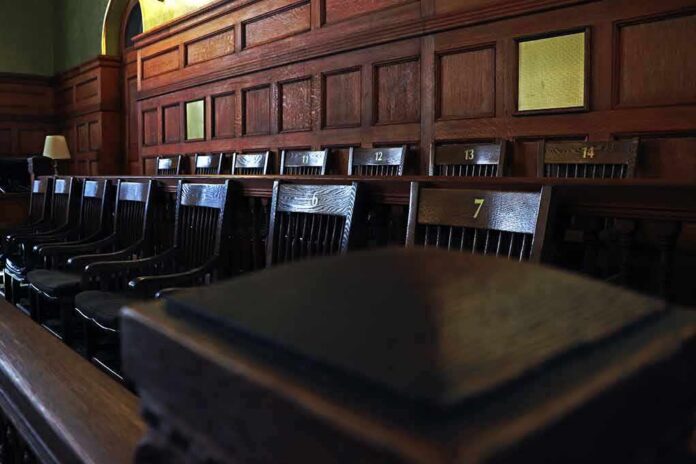
A push to probe and publicly expose a lone juror’s holdout vote now threatens the privacy and independence of every American jury.
Story Highlights
- The defense asked the judge to investigate the holdout juror’s background and phone data.
- A note from the foreperson said the juror admitted doubt but refused to apply the law.
- Critics say media and legal scrutiny look like a smear and possible doxxing.
- The juror denies lying in jury selection and says he disclosed past arrests.
Defense Seeks Court Inquiry Into Holdout Juror’s Conduct
Defense lawyer Kevin Reddington filed a motion asking Judge William Sullivan to investigate the lone holdout juror after the Lindsay Clancy murder trial ended in a mistrial. The filing sought information about the juror’s mobile phone use, potential outside contacts, and whether his jury questionnaire answers were truthful. Reports said the request followed media stories about the juror’s past and his role blocking a unanimous verdict, which the defense argues warrants scrutiny under court rules.
Judge Sullivan earlier declined to remove the juror during deliberations, saying he could not side with one or eleven jurors. The court reminded the panel to follow the instructions, then allowed talks to continue until the deadlock held. The defense later appealed on an emergency basis without success. The mistrial stood, and the dispute shifted to post-trial steps, including whether a retrial is proper and if juror misconduct standards allow deeper inquiry in this case.
Foreperson Note Describes Admission Of Doubt, Then Standoff
During day six of deliberations, the jury foreperson sent an unusual note to the judge saying the holdout had acknowledged doubt but refused to apply the law to the verdict. The message triggered a defense request to remove the juror, which the judge denied. After the mistrial, several jurors told outlets the holdout could not cite evidence for his vote and resisted the panel’s review of testimony. These accounts shaped the public debate over whether this was defiance or protected dissent.
Legal standards warn that stubborn disagreement is not misconduct by itself. Courts usually look for clear proof of concealed facts, outside influence, or a disqualifying bias before disturbing deliberations. Case law and practice guides say purposeful dishonesty in jury selection, or outside evidence entering the jury room, can justify relief. But intrajury debates over evidence and law usually remain off limits to inquiry, even when tempers run high.
Media Exposure, Privacy Fights, And A Governor’s Offer
Media coverage of the holdout’s identity and past records drew sharp criticism from conservatives and press watchdogs. Commentators accused outlets of doxxing and running a smear meant to punish a lawful holdout vote. Florida Governor Ron DeSantis said legacy media crossed a line and offered the juror “asylum” if harassment escalated. Supporters argue juror privacy protects the system from mob pressure, especially in emotional trials that carry national attention.
LINDSAY CLANCY JUROR FACES SCRUTINY AFTER MISTRIAL
The holdout juror has retained an attorney amid public backlash, while Clancy’s defense seeks a court review of his questionnaire and alleged cellphone use during deliberations.#WashingtonEye pic.twitter.com/rfhnaFJIHd
— Washington Eye (@washington_EY) September 21, 2026
The holdout juror later denied lying during jury selection. In a recorded interview, he said he is a United States citizen who truthfully disclosed prior arrests on his questionnaire and was questioned by prosecutors before selection. His account challenges claims of concealment, which matter under the legal test for opening juror inquiries. If answers were accurate and no outside influence occurred, courts are slow to pry into deliberations or punish an unpopular vote.
What The Law Requires Before Probing A Juror
Courts demand specific showings before ordering juror probes. Materials on juror misconduct say a party must show a dishonest answer to a material question in selection and that a true answer would support a challenge for cause. Other grounds include exposure to outside evidence or communications. Without such proof, judges avoid intruding on deliberations to protect the independence that allows jurors to vote their conscience under the law.
This clash now tests two core values. One side seeks to confirm that every juror followed instructions and the rules. The other warns that digging through a citizen’s phone and life because he held out invites public shaming and chills future jurors. The justice system needs both accountability and privacy. The line the judge draws will shape how free jurors feel to vote their oath when a case becomes a national flashpoint.
Sources:
redstate.com, nytimes.com, masslive.com, abcnews.com, cbsnews.com, foxnews.com, usatoday.com, tmz.com, dailywire.com, megynkelly.com, nypost.com, bostonglobe.com, thepostmillennial.com