

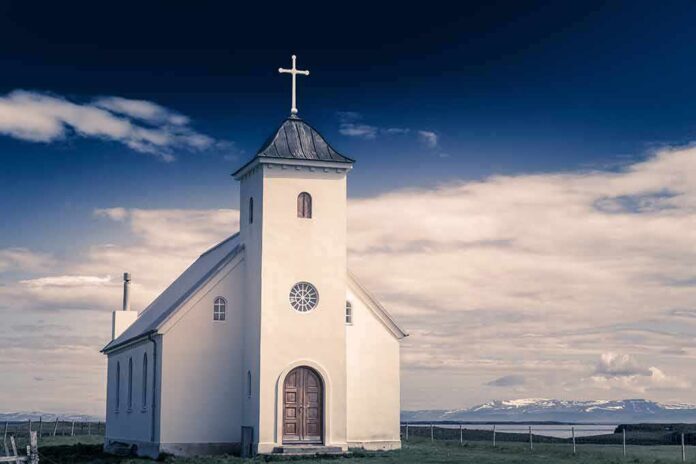
A Wyoming tribe moved to push a Christian church off reservation land after a sermon condemned its ceremonies as “idol worship.”
Story Highlights
- A Northern Arapaho policy now requires authorization for recurring outside ministries on reservation lands.
- The church refuses to leave its privately owned parcel and says it will seek relief in federal court.
- The sermon targeting the Sundance and sacred pipe fell on the ceremony’s final day, fueling outrage.
- No formal eviction order is documented in the available public record so far.
What Sparked The Showdown In Wind River
On July 5, Pastor Sarah Lucas preached that Northern Arapaho ceremonies, including the Sundance and the sacred pipe, were “idol worship.” The timing hit hardest because it was the final day of the tribe’s Sundance. The remarks drew swift protests and a demand that the church stop its activities on the reservation. Contemporaneous reports describe weekly demonstrations outside the church and a public outcry that has not cooled since that day.
Northern Arapaho leaders met with the church days later and told the pastors their ministry was no longer welcome on the reservation. Reports place that meeting on July 10 at the Wind River Hotel and Casino. Church leaders did not agree to depart. Instead, they said they would continue services and aid programs while speaking with lawyers about next steps. Tensions around the building rose as protests continued through the summer.
Tribal Leaders Assert Sovereignty, Church Cites Property And Free Exercise
The Northern Arapaho Business Council announced a policy requiring outside organizations to consult with, and receive authorization from, the tribe before running recurring ministries or organized activities on lands under tribal jurisdiction. The council said the church had no such authorization on record. Tribal leaders framed the move as protection of people, culture, and sovereign authority, not a ban on private worship or belief by anyone on the reservation.
Foundations for Nations replied that it owns the church parcel and cannot be removed in the manner demanded. Church leaders said they would not apologize for biblical teaching on idolatry, though they regretted how the sermon came across. They stated they would seek federal court relief to defend their constitutional right to preach the Gospel and to keep serving the community with food, housing help, and youth programs on their private land.
Key Facts That Shape The Legal Path Ahead
Public reporting does not show a completed eviction order or court judgment. The record shows the tribe’s policy statement, meeting accounts, and protest activity. Jurisdiction over a privately owned parcel inside reservation boundaries is a central point of dispute, and it is not fully resolved in the documents summarized so far. That gap means the fight is likely headed to court to define who can regulate which activities on that piece of ground.
The timeline matters. The sermon’s delivery on the Sundance’s final day amplified hurt among tribal citizens, and the council then moved quickly to formalize consultation rules for recurring ministries. The church’s refusal to leave, coupled with claims of harassment and weekly protests, has kept public pressure high. Both sides claim a rights-based ground: the tribe on sovereign control over organized activities, and the church on free exercise and private property claims.
Why It Matters To Faith, Family, And Freedom
Americans care when speech from the pulpit becomes a pretext to block a ministry. They also respect a tribe’s right to guard its ceremonies. This clash puts those principles head to head. If a government body can decide which recurring ministries may operate because of their message, free exercise risks becoming permission-based. If private land inside a reservation is treated as if speech there needs preclearance, property rights and religious liberty take a real hit.
Conservatives should track three questions. First, can a tribe regulate recurring outside activities without targeting beliefs or sermons? Second, does private ownership inside a reservation change the answer? Third, can both sides protect people and culture without muzzling a church? Courts will likely set the guardrails. Until then, clear rules, peaceful speech, and equal treatment—not viewpoint tests—are the surest way to lower the temperature and protect everyone’s rights.
Sources:
youtube.com, newsweek.com, wyomingnews.com, county10.com, cowboystatedaily.com, apnews.com