

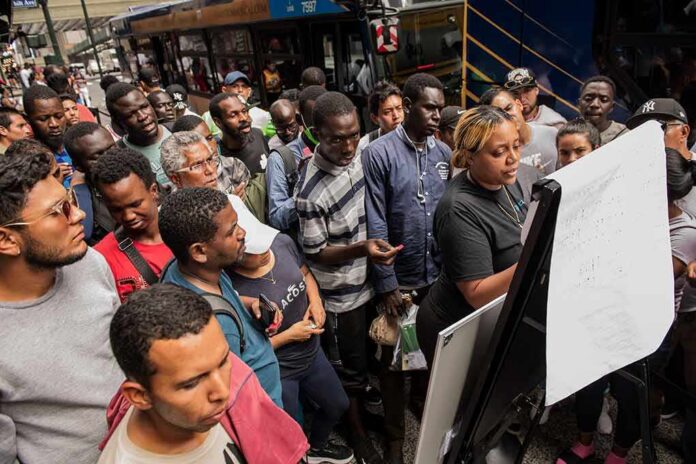
Nearly half of New York City bus riders are skipping the fare, draining millions from transit and rewarding a reckless “free bus” message that treats working taxpayers like a bottomless piggy bank.
Story Highlights
- MTA data show bus fare evasion near 50% in early 2026, triggering enforcement pilots.
- Transit leaders reported tens of millions below budget from bus fareboxes in the first half of 2026.
- MTA’s chair linked rising evasion to the mayor’s “free bus” rhetoric; Mamdani pushed back.
- Independent estimate says truly free buses would strip about $1.1 billion a year in revenue.
MTA Data Show Widespread Nonpayment on Buses
Transit officials reported that almost half of riders on local buses did not pay this year. CBS New York said fare evasion hit 48.2% in the first quarter of 2026. The Metropolitan Transportation Authority started checking fares on board using new validators. Staff issued tickets during pilot sweeps on busy routes. Leaders framed evasion as a systemwide problem, not a few bad actors. They warned that lost fares weaken service and shift the cost onto families who already pay taxes.
Public reports also pointed to a sharp budget gap tied to bus fareboxes. An Audacy review said bus fare collections ran tens of millions below plan during the first six months of 2026. The shortfall landed even as the agency budget counted on better compliance this year. The losses confirm the scale of the problem on the ground. Riders who pay now cover people who do not, or the agency cuts elsewhere. Either way, regular New Yorkers get squeezed again.
Political Rhetoric Meets Real-World Behavior
The city’s debate turned hotter after the transit chairman linked higher evasion to “free bus” talk. The New York Daily News reported that MTA Chair Janno Lieber said the mayor’s message played a role. Mayor Zohran Mamdani pushed back on that claim. He has long promoted free buses as a goal. The data show fare evasion was already high before this clash. That means the rhetoric link is not proven, but leaders warn messages still shape norms on paying fares.
Supporters of free buses argue low-income riders need relief. That view is not new. But there is a price tag. A Fox News report cited an Independent Budget Office estimate that free buses could remove about $1.1 billion in fare revenue each year. Unless Albany and City Hall replace that money, the loss would fall on riders through worse service, or on taxpayers through higher subsidies. That tradeoff is real, not a talking point.
Enforcement Pilots Aim to Restore Basic Rules
MTA teams rolled out onboard checks and handheld validators. Inspectors asked riders to tap a valid pass and wrote summonses when they could not. Agency leaders called it a “proof of payment” model. The goal is simple: make paying the norm again and close revenue leaks that hurt service. While some activists attack enforcement as unfair, widespread nonpayment is unfair to every honest rider who taps in and to the families funding transit through taxes.
NYC bus ridership fell nearly 8% in June compared to same month last year. During Mamdani’s first 6 months in office, bus fare revenue fell by $31 million compared to the 1st half of 2025. Estimates show nearly half of bus riders now skip the $3 fare! https://t.co/osaq4dXUFh
— Foxy Maven (@FoxyMaven) August 15, 2026
Conservatives see a pattern here. When leaders promise “free,” people hear “someone else pays.” The result is less order, weaker services, and bigger bills for the middle class. The facts show a large share of riders not paying and a budget hit in the tens of millions so far this year. The city needs clear rules, not slogans. Enforce payment, target chronic evaders, and protect the taxpayers and riders who play by the rules.
What Comes Next for Riders and Taxpayers
Transit leaders face a hard choice. They can keep tightening checks, restore a culture of paying, and protect service. Or they can chase a “free” system that costs over a billion dollars a year to backfill. The mayor’s push for free buses is a political choice, but the math does not bend. Families already struggle with inflation, taxes, and energy costs. They should not bankroll fare skipping. Pay the fare. Enforce the rules. Keep buses safe and running on time.
Sources:
politicsny.com, nydailynews.com, cbsnews.com, nypost.com