
As Washington rushes toward a risky Iran peace deal, Mike Pence is warning that America may be walking away before the job is truly done.[1]
Story Snapshot
- Mike Pence says the United States would be “better off” letting our armed forces finish the job against Iran’s regime instead of locking in a weak peace.[1]
- A tentative deal would end the war, reopen the Strait of Hormuz, and give Iran sanctions relief in exchange for promises on nuclear material.
- Pence argues Iran only understands strength and that U.S. strikes have already “decimated” key military and nuclear capabilities.[1][5]
- War fatigue at home is real, but experts warn past “maximum pressure” half-measures helped Iran’s hardliners, not the Iranian people.
Pence’s “Finish the Job” Warning on Iran
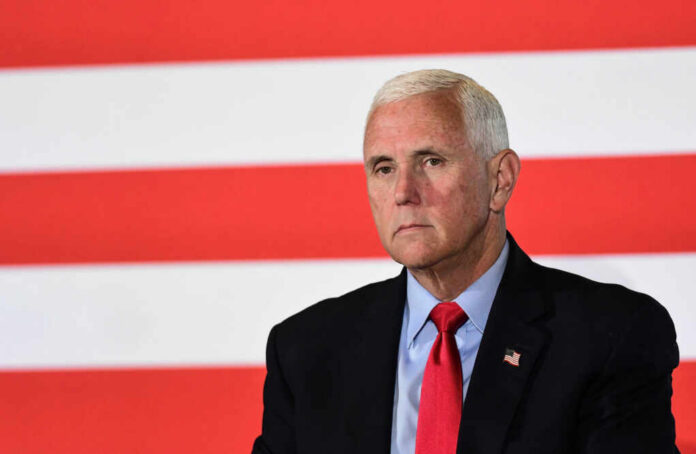
Former Vice President Mike Pence is not backing away from hard truth about Iran. In multiple TV hits and social posts, he has praised recent U.S. and Israeli strikes that shredded Iran’s ability to project force and pursue nuclear weapons, calling Operation Epic Fury a “brilliant campaign” and saying “we’ve got to finish the job.”[1][5] Pence’s concern is simple: if Washington declares victory too soon and rushes into a treaty, the same radical regime that held Americans hostage and armed terrorists for decades will regroup and try again.
In a recent interview, Pence said America would be “better off allowing the armed forces of the United States to finish the job” in Iran, instead of locking in a shaky deal that could let the regime claim victory.[1] He has tied that view to years of policy arguing Iran must never be allowed a nuclear weapon and that U.S. strategy should deny Tehran every path to that outcome, not just kick the can down the road.[2] For readers who remember the failed “trust but verify” Iran deal of the Obama years, Pence’s warning sounds familiar and urgent.
What the New Iran Deal Would Actually Do
At the same time Pence is urging strength, the Trump administration’s diplomats have assembled a tentative framework to halt fighting. National Public Radio reports that U.S. and Iranian negotiators have reached an initial agreement to end the war, extend a ceasefire for 60 days, and reopen the vital Strait of Hormuz to global shipping. Reuters says a draft would free frozen Iranian funds, ease some oil sanctions, and set a window for more talks about Iran’s nuclear program. Supporters say this could calm oil prices and reduce risk for U.S. troops.
Some of the reported terms aim to look tough on paper. The Associated Press and other outlets describe language that would require removal and destruction of key nuclear materials and steps to dismantle parts of Iran’s nuclear program. A senior U.S. official told Time that Iran could keep civilian nuclear power but not the ability to flip quickly from energy to weapons, with verification tools to be ironed out later. In theory, that sounds like a targeted way to stop a bomb without endless war. But the details, and the enforcement, will decide whether this is real restraint or another paper promise.
Strength, Diplomacy, and the Risk of Stopping Halfway
Pence’s critics point to a key fact: U.S. and Iranian forces have already stopped active hostilities after brutal months of fighting. CNBC reports the ceasefire and draft deal have cooled the conflict and given markets hope that the Strait of Hormuz will remain open, avoiding another shock to gasoline prices and retirement accounts. Many Americans, including conservatives, are tired of Middle East wars that drag on while Washington ignores the border, inflation, and broken cities. One major study notes that war fatigue now cuts across party lines, sharply limiting support for long, open-ended conflicts overseas.
But analysts who study Iran warn that past “maximum pressure” efforts were badly handled and that half-steps can backfire. A military analysis from West Point’s Modern War Institute argues that years of sanctions and sporadic strikes, without a clear endgame, helped hardline factions gain power inside Iran. Council on Foreign Relations experts say the United States itself has sometimes struggled to define its true objective in this war beyond destroying conventional Iranian forces. Those lessons cut both ways. They show how dangerous it is to fight without a plan, and how risky it can be to pause pressure just as the enemy is reeling.
What Conservatives Should Watch in the Coming Weeks
For constitution-minded readers who care about strong defense and limited government, several questions matter more than slogans. First, does this deal truly destroy Iran’s nuclear weapons path, or only delay it in exchange for cash and sanctions relief? Second, what is the enforcement trigger if Iran cheats? Right now, public reporting mentions inspections and phased steps, but not a detailed snapback plan that Iran’s rulers would actually fear. Third, how will Congress assert its role, as our Founders intended, in war and treaty decisions that could define security for a generation?
Mike Pence on the Iran peace deal: "It's my view that we would be better off allowing the armed forces of the United States to finish the job and give the people of Iran a real shot at freedom." pic.twitter.com/wZRGKg3yRr
— TheBlaze (@theblaze) June 16, 2026
Finally, conservatives should watch how the left uses this moment. Progressive voices already frame any firm stand against Tehran as “escalation” while ignoring Iran’s decades of terrorism and attacks on Israel.[3][8] If the deal holds, they will claim diplomacy proves we never needed hard power. If it fails, they will try to blame Trump and hawks like Pence for ever confronting Iran at all. The real challenge is to demand a strategy that matches our values: peace through strength, honest debate at home, and no more blank checks for endless war or for terror states that hate America.
Sources:
[1] YouTube – Former VP Mike Pence Says We’d be Better Off if U.S. Armed Forces …
[2] YouTube – Pence on best US war strategy in Iran: ‘Finish the job once and for …
[3] Web – Remarks by President Trump on Iran Strategy – The White House
[5] Web – Pence on best US war strategy in Iran: ‘Finish the job once and for …
[8] Web – Former Vice President Mike Pence cast doubt on the possibility of a …