
Trump just shut down talk of a U.S. payout to Iran, and that will anger anyone worried about new foreign giveaways.
Quick Take
- Trump said the United States has **no obligation** to invest money in Iran.
- He said the U.S. is “not investing any money” in Iran after the deal talks.
- He tied the deal to one main goal: keeping Iran from getting a nuclear weapon.
- Reporting also shows the framework is still focused on a ceasefire, shipping, and later talks.
Trump Rejects The $300 Billion Talk
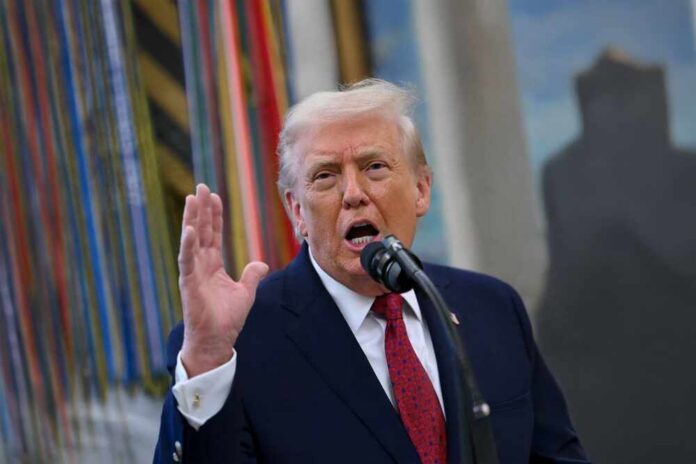
President Donald Trump said the United States has “no obligation” to invest in Iran, pushing back on claims that Washington was preparing a huge reconstruction fund.[1][2] He made the remarks after meeting Qatar’s emir on the sidelines of the Group of Seven summit in France. Trump also said, “We are not investing any money” in Iran, which undercuts the idea of a U.S.-backed payout.
That statement matters because the rumors around the deal had grown fast. Some reports and social posts claimed the agreement could open the door to hundreds of billions of dollars in aid, frozen funds, or investment support. Trump’s public response was blunt. He called the payout story fake and said his administration would not hand Iran money just because talks were taking place.[2][6]
What The Framework Actually Covers
The reported U.S.-Iran framework is centered on ending hostilities, reopening the Strait of Hormuz, and extending the ceasefire for 60 days.[1][4] Reports say the deal is still not a final peace treaty, and key issues remain unsettled. Those issues include Iran’s nuclear program, sanctions relief, and the handling of frozen assets. That means the public headline is simple, but the real terms are still under debate.[5]
Trump said the main goal is to stop Iran from getting a nuclear weapon.[1][2] He also said Iran would face severe consequences if it broke that promise. At the same time, other reporting says the framework may still include talks on sanctions relief and asset access. That is not the same thing as a U.S. investment pledge, but it does show why confusion spread so quickly.[5]
Why Conservatives Are Watching Closely
For many Americans, the concern is not just Iran. It is the pattern of Washington floating expensive foreign commitments while families at home deal with inflation, higher energy bills, and years of reckless spending. The Strait of Hormuz matters because it affects global oil flow and gas prices, which can hit every household. If the deal lowers risk in the region, that is a real gain. If it turns into another open-ended cash promise, that would be a different story.
President Trump batted down fake news reports that the U.S. government would be creating a $300 BILLION investment fund to rebuild Iran, or have anything to do with such an absurd idea.
Trump told reporters at the G7 summit in France: “We are not investing any money in Iran, by… pic.twitter.com/Rys6RBdwcT
— Ben Hart (@BenHart_Freedom) June 16, 2026
The current record shows a narrower picture than the rumor mill suggests. Trump has said the United States will not invest money in Iran, and the reporting around the framework focuses on ceasefire terms, shipping access, and nuclear limits.[1][2] Other accounts still leave room for sanctions talks, oil waivers, or frozen-asset questions, so the final text will matter more than the spin. For now, the clearest point is that Trump is publicly drawing a hard line against a direct U.S. investment pledge.[5]
Sources:
[1] Web – Trump says US has ‘no obligation’ to invest in Iran
[2] Web – U.S. and Iran reach initial deal to end war, reopen Strait of …
[4] Web – 2025–2026 Iran–United States negotiations
[5] YouTube – ‘Iran has tremendous leverage’: The issues with Trump’s …
[6] Web – U.S. and Iran Reach Framework for Peace