

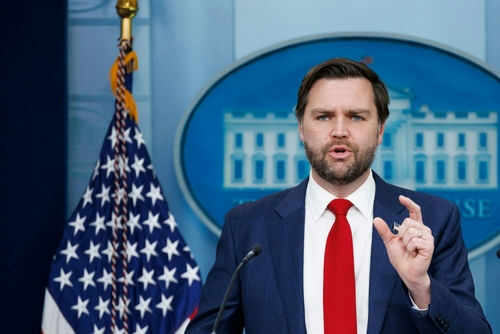
A vice president joking that Joy Behar is “tougher than the Iranians” is now the public face of America’s most serious war-and-peace talks in decades.
Story Snapshot
- JD Vance says surviving Joy Behar on “The View” proves he can handle Iran talks, brushing off critics of his experience.
- Vance insists the emerging U.S.–Iran memorandum is limited, phased, and keeps firm red lines on Iran’s nuclear weapons program.
- Earlier marathon talks in Pakistan collapsed with no deal, raising doubts about how much control Vance really has at the table.
- Conservatives must watch closely that any final deal protects American strength, energy security, and Israel instead of repeating past weak Iran agreements.
Vance Turns ‘The View’ Clash Into Defense of His Negotiation Chops
Vice President JD Vance is trying to turn a rough daytime-TV interview into proof that he can stare down Iran’s regime. At a White House briefing, Vance joked that Joy Behar on “The View” was “way tougher than the Iranians,” after spending more than an hour being grilled on air about Trump-era policies and his new book.[1][2] He framed that experience as “very hostile negotiations,” and said it answers progressives who claim he lacks high-stakes diplomatic experience.[1][2]
Vance’s message to critics is simple: if he can survive a hostile liberal panel, he can survive Tehran’s negotiators. He told reporters Americans should trust him with world peace talks because he had just handled that kind of pressure on national television.[2] For a base tired of left-wing media bullying, his crack about Behar plays as a jab at coastal elites. But it also shows how political and media optics are now tightly tied to serious war-and-peace decisions.
Inside the Iran Deal: Digital Signatures, Short Text, and Hard Red Lines
Behind the jokes, Vance is selling a very specific story about the new Iran memorandum of understanding. He has said the agreement to extend the U.S.–Iran ceasefire was already “digitally” signed by leaders, even as the White House plans a formal signing ceremony later in the week.[1][3][5] He stresses that, so far, no money has moved to Iran, and that there will be no cash transfers simply for “signing a deal or attending a meeting.”[1][3]
Vance describes the document as only about a page and a half long and “very general,” with the real fights still to come in a 60‑day “technical negotiation” phase.[2][4][7] Officials say that period is meant to hash out details on nuclear restrictions, the Strait of Hormuz, and sanctions relief.[3][7][17] According to reporting, the U.S. side has demanded that Iran dismantle key nuclear sites and hand over enriched uranium, in exchange for phased sanctions relief and the reopening of oil shipments.[17] That structure reflects a classic Trump “deal to make a deal” approach, with pressure first and detailed bargaining later.[19]
From Failed Pakistan Talks to ‘Digitally Signed’ Peace
Just weeks before talking about a “digitally” signed pact, Vance was standing in Islamabad admitting that 21 hours of negotiations with Iran had ended with no agreement. In that round, he said the U.S. offered its “final and best” proposal but could not get Iran to commit to abandoning its nuclear weapons ambitions.[10][13] He told reporters, “we just could not get to a situation where the Iranians were willing to accept our terms,” and left the future of a two‑week ceasefire in doubt.[10][13]
Those Pakistan talks were the highest‑level direct encounter with Iran in nearly fifty years, and Vance led the U.S. team alongside Trump envoys Steve Witkoff and Jared Kushner.[9][10][11] Coverage from outlets like CNN, the New York Times, and the BBC framed the mission as risky for Vance politically: he opposed a wider war, but he was also tasked with enforcing Trump’s hard red lines against an Iranian bomb.[9][10][11] When the talks collapsed, critics questioned whether a vice president without a career diplomatic background was the right figure to front such complex negotiations.[1][10][11]
Is Vance a Skilled Negotiator or Just the Face of the Deal?
Supporters argue that Vance’s media savvy and “America First” instincts make him well suited to defend U.S. interests in public while pushing Iran hard in private. His statements stress that Iran must never obtain a nuclear weapon and that any relief comes only after verifiable steps, which echoes long-standing conservative concerns about past weak deals.[1][3][12][19] He also presents the agreement as a win for American workers, saying a secure Strait of Hormuz and lower risk of war will help the U.S. economy.[3][7]
But skeptics point out that earlier back-channel talks with Iran were mainly handled by other Trump envoys, and that Vance was often on the sidelines until the war worsened.[9][11][17] Critics overseas note that Iran has a long history of hard bargaining and delay, while U.S. leaders sometimes oversell progress for political reasons.[17][19] That pattern means conservatives should pay close attention: any final text must be tough on terror funding, airtight on nuclear inspections, and enforceable without sending one more American dollar or soldier to prop up an enemy regime.
Sources:
[1] YouTube – Vance says ‘The View’s’ Behar ‘tougher’ than Iran deal negotiations …
[2] Web – Vance says Iran agreement has been digitally signed, but remains …
[3] Web – Vance says US-Iran MOU is a ‘very general document’
[4] Web – Trump, Vance, Iranian official sign US-Iran peace memo – The Hill
[5] Web – Vice President JD Vance says the MoU between the US and Iran is …
[7] YouTube – Top Iranian negotiator claims ‘FLAG OF VICTORY’ with US deal
[9] Web – Vice President JD Vance said the U.S. is “trying to push” mediators …
[10] Web – How Vance is navigating peace talks with Iran — and his own … – CNN
[11] Web – 21 Hours in Pakistan: How Vance Tried and Failed to End a War He …
[12] Web – JD Vance takes on a perilous mission – could it backfire? – BBC
[13] YouTube – Vance says U.S. has been ‘as clear as possible’ with Iran …
[17] Web – JD Vance is leading the most important US-Iran talks in decades
[19] Web – Iran’s Strategic Options: Rethinking Negotiation with America