

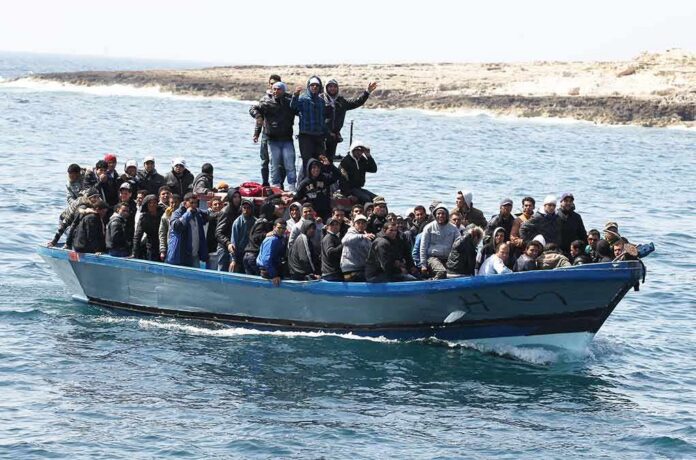
A crowded Spanish beach saw 62 migrants jump from a speeding boat and rush ashore at midday, sending families scrambling to leave.
Story Highlights
- Video shows a black boat unloading 62 migrants at Cala del Barco near Cartagena around 1 p.m.
- Tourists grabbed belongings and left as the group reached the sand in broad daylight.
- Reports say the group included 45 men, 15 minors, and 2 women, later seen by the Red Cross and police.
- The boat turned back to sea, echoing tactics seen amid wider pressure linked to the Ceuta surge.
Daylight Landing Caught On Camera At Spanish Resort Cove
Witness footage and aligned reports state a black inflatable boat approached Cala del Barco, a small cove near La Manga Club outside Cartagena, around 1 p.m. on Wednesday. Dozens of people leapt overboard and waded to shore as beachgoers gathered their bags and moved off the sand. Several outlets describe tourists leaving quickly as the group reached the beach. The scene unfolded in bright daylight at a busy hour, making the arrival highly visible to families on holiday.
Multiple reports fix the headcount at 62 people aboard the vessel. Coverage describes a fast approach, a rapid offload, and then the boat turning back out to sea after the landing. Still images and clips shared by media show the group fanning out from the waterline, with startled vacationers stepping away from the surf. The consistency across outlets on time, place, and the boat’s actions points to a single episode recorded from more than one angle that afternoon.
Authorities Contact And Reported Demographics
Follow-up reporting says authorities located the 62 individuals after the beach landing. Accounts state they were seen by the Red Cross and handed over to police for processing. One syndicated summary lists a breakdown of 45 adult men, 15 minors, and two adult women. Other outlets describe the arrivals as mostly young North African men, with women and minors included. Nationality has been described as presumed in some stories but has not been officially confirmed in the reporting cited.
Tourist reactions in coverage range from brief panic to quick, orderly exits as belongings were packed up. Several outlets highlight that families moved away from the immediate area once the group reached the shore. The public setting and timing amplified the impact, even though the landing involved a single boat. Video-based stories like this tend to spread quickly across platforms because they show a visible breach of a peaceful space, which drives concern about border control and public safety.
Pattern Mirrors Wider Strain Linked To Ceuta Crisis
This beach landing comes amid a broader migration surge that has focused global attention on Spain’s borders. In recent weeks, tens of thousands crossed into Spain’s North African enclave of Ceuta in a short span, overwhelming local capacity and testing European border policy. Media coverage and official briefings have described a mix of drivers, including court rulings and diplomatic friction, that complicated rapid returns. The Cartagena episode slots into that charged context, even though it is a smaller, local event.
Reports emphasize that small, fast maritime arrivals can evade patrols and create brief, high-profile shocks when they happen in front of the public. The boat at Cala del Barco reportedly turned back to sea after dropping its passengers, a tactic seen in other coastal arrivals. Such moments fuel calls across Europe for tighter maritime surveillance, faster identification, and stronger penalties for smuggling networks. Spain’s current posture will draw scrutiny as summer travel crowds share shoreline space with a stressed border environment.
Why This Matters To American Readers
American families know this story well: when borders look porous, public trust falls. The scene in Spain shows how fast a peaceful afternoon can change when unlawful entry moves from the shadows to a public beach. Strong borders protect safety, tourism, and local economies. For conservatives, the lesson is simple. Nations must control who comes and when. That means clear rules, firm enforcement, and help for police and rescue teams so families are not left to sort chaos on their own.
Europe’s struggles also remind Washington that weak policies invite repeat crises. President Trump’s administration has pushed for tougher measures at America’s borders, faster removals under the law, and action against smuggling groups. Spain’s daylight landing underscores why those tools matter. Order at the border is not cruel; it is a duty to citizens and legal immigrants. When leaders send a clear signal and back it with resources, beaches stay safe, and families keep their peace.
What We Know And What Comes Next
Based on aligned media accounts, the landing happened at Cala del Barco near Cartagena around midday, involved 62 people, and ended with police contact and Red Cross checks. The group’s exact nationalities were not confirmed in the cited reporting, but several outlets described most as young North African men. Authorities will decide next steps under Spanish law, which may include age assessment for minors and asylum screening. Local residents and visitors will expect a stronger shoreline response as summer continues.
Spain’s leaders face pressure to shut down beach drop-offs and restore a sense of order after the Ceuta shock. That will likely mean tighter patrols, more coordination with Morocco, and faster action against boats used for unlawful entry. The Cartagena footage shows why clear, swift enforcement is not optional. It is the first line of defense for public spaces, family safety, and the rule of law that holds free societies together.
Sources:
zerohedge.com, gbnews.com, rt.com, nine.com.au, ynetnews.com, reuters.com