
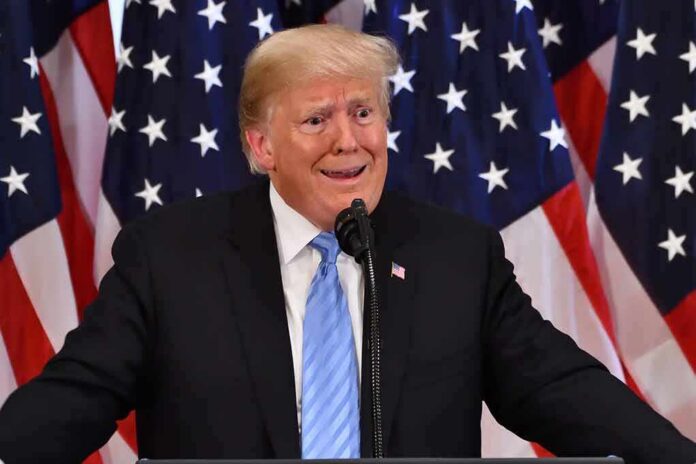
President Trump voted by mail in Florida while pushing stricter rules on mail ballots nationwide, putting election integrity back at center stage.
Story Highlights
- Trump again used a Florida mail ballot as his administration seeks tighter mail-vote rules.
- He has called mail ballots “corrupt” and pushed to curb them through policy and court appeals.
- Critics cite studies saying proven mail-ballot fraud is rare, challenging claims of widespread abuse.
- The clash underscores a core fight: access and convenience versus chain-of-custody and verification.
Trump Votes by Mail While Advancing Tighter Standards
President Trump requested and returned a mail ballot in Florida’s Republican primary, according to reporting on Palm Beach County records. He has done so before in Florida elections, even as he argues that mail voting needs stronger checks to protect confidence in the result. The White House and campaign have framed the issue as election integrity, not convenience. They say states must fix loose verification, weak signature checks, and gaps in ballot tracking that can invite error or abuse.
Trump has also used national policy tools to press the case. Reporting describes an executive-order effort and related federal actions seeking tighter rules for mail ballots and better data collection on election processes. Those moves spurred lawsuits, with multiple courts limiting the reach of new restrictions. The administration pursued emergency relief before the Supreme Court to keep parts of the policy alive as litigation continues, showing how fierce this legal and political fight has become.
Rhetoric, Record, and the Core Integrity Debate
Trump has called mail-in ballots “inherently corrupt” and urged states to curb or even end their use in favor of in-person voting with identification. He argues that chain-of-custody risks and signature mismatches create doubt that erodes trust in close races. At the same time, his personal mail voting allows critics to argue there is a contradiction. Supporters answer that a voter can follow current rules while still pushing reforms to close holes that bad actors could exploit.
Conservatives point to proven absentee-ballot fraud cases across decades to show the risk is real, even if not large. They argue small numbers matter when elections come down to hundreds or thousands of votes. They also warn that mail voting scales the system in ways that stretch verification steps and invite process errors. That, they say, fuels distrust that harms civic unity unless states adopt tighter identification, cleaner voter rolls, and robust tracking from mailbox to counting room.
What the Research Says and Where the Gaps Remain
Major studies and news reviews cited by Trump’s critics say documented mail-ballot fraud is rare. Brookings estimates about four cases per ten million mail votes across recent national cycles. The University of California, Los Angeles Voting Rights Project labels mass fraud claims “virtually nonexistent,” and Reuters highlights only a handful of Oregon cases over many years. These findings push back on broad claims of systemic corruption in the mail-ballot process.
This evidence base, however, does not settle every integrity concern. Rare does not mean impossible, and even limited fraud or process failure can flip a tight race. The federal courts have so far checked parts of the administration’s push, but they did not rule fraud cannot happen; they weighed burdens and evidence in context. For many readers, the common-sense path is clear: keep mail voting available, but harden it with strict identification, real-time tracking, tough signature checks, and fast prosecution when fraud is found.
Sources:
feedpress.me, politico.com, nytimes.com, cnn.com, youtube.com, npr.org, theguardian.com, usatoday.com, time.com, latino.ucla.edu