

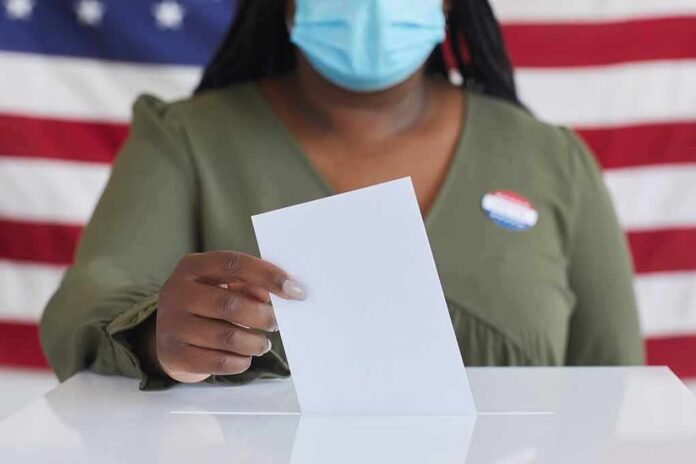
Reports say some Michigan poll workers told voters their split-ticket ballots would not count, even though state rules clearly allow it.
Story Highlights
- National Republican Senatorial Committee sent cease-and-desist letters to four Michigan county clerks over split-ticket misinformation.
- Michigan’s official ballot instructions allow a straight-ticket choice plus votes for individual candidates from other parties.
- State tabulator guidance says a direct vote for a candidate overrides the straight-ticket mark for that office.
- Michigan’s Secretary of State office said split-ticket voting is legal and contacted jurisdictions after hearing similar reports.
NRSC Targets Reported Misinformation at Michigan Polls
On November 3, the National Republican Senatorial Committee sent cease-and-desist letters to clerks in Shiawassee, Kent, Wayne, and Monroe counties. The letters say election inspectors told voters that choosing a straight-party option and then voting for a candidate from another party would spoil the ballot or cause it to be rejected. The Shiawassee letter gives a clear example: a voter picking the Democratic straight-party option and then Republican Mike Rogers for United States Senate.
The Shiawassee letter states the instruction is wrong under Michigan law and demands fixes. It asks clerks to issue written guidance to all precincts. It says voters may choose a straight ticket and then vote for candidates from other parties. It further says those ballots are valid and must be counted, and the direct vote for a candidate controls for that race. The letter also requests steps to restore any affected ballots, if any were held back.
Michigan’s Rules: Split Tickets Are Legal in November
Michigan’s Elections and Voting guidance explains a key distinction. Voters cannot split their ticket in certain primaries. Voters can split their ticket in the November general election. A 2018 measure also restored the straight-ticket option. That means a voter may pick a party at the top and still choose candidates from other parties down ballot in the general election, which is what many voters expect on Election Day.
Michigan’s mandated ballot instructions make the permission plain. The state’s official language says, “Split Ticket: You may vote a straight ticket AND vote for individual candidates of your choice.” This language is printed to guide voters in the booth. It exists to prevent confusion and to reduce errors when people mark their ballots quickly in busy precincts across the state.
How Ballots Are Counted When Voters Split Tickets
The state’s tabulator procedure backs up the rule with mechanics. The Michigan Secretary of State’s test manual defines a split ticket as a straight-party vote combined with direct votes for other parties. It explains that the machine will give votes to each candidate under the straight-party choice, except where a direct candidate vote overrides it. In plain terms, the direct vote wins for that office, not the straight-party mark.
This machine rule matters because it removes the fear that a split-ticket ballot will be kicked out. If a voter picks a straight ticket and then marks one race for the other party, the tabulator should count the direct mark for that race and the straight-party choices for the others. That is how the system is supposed to work statewide, regardless of county or precinct.
State Officials Acknowledge Reports and Intervene
Michigan’s Secretary of State office said it also received reports that some inspectors were giving the wrong guidance. The office stated that Michigan law allows split-ticket voting in the general election and that the Bureau of Elections had contacted the jurisdictions. That outreach suggests the state moved to reinforce the legal rule and to protect voters who heard the incorrect message at their polling place.
The public record so far centers on the Shiawassee letter and media reports naming four counties. The letters describe “multiple, credible reports” but do not list each inspector or include incident-level logs. The available materials also do not show any ballot that was actually rejected for a lawful split ticket. The core rule, however, is not in doubt: split-ticket voting is allowed in November, and a direct vote for a candidate overrides the straight-ticket line for that office.
What Michigan Voters Should Do Now
Michigan voters who want to split their ticket should mark their choices with confidence, following the ballot instructions. If a poll worker says a split ticket will spoil the ballot, voters should ask for the precinct chair and request the written state guidance. Voters can also report issues to county clerks and the state Bureau of Elections. Clear rules, simple ballots, and accurate poll worker training protect every lawful vote and keep Election Day fair for all.
Sources:
townhall.com, michigan.gov, abcnews4.com, edition.cnn.com