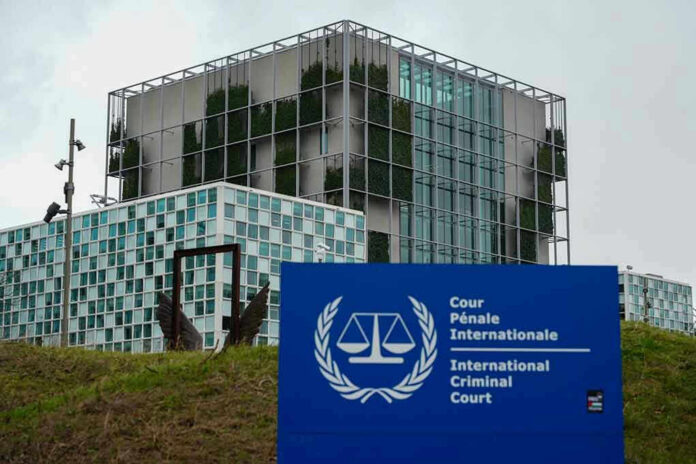
Washington is moving to crush the International Criminal Court’s reach over Americans and Israelis, using sanctions power and a clear legal case that the United States never joined the Court.
Story Snapshot
- Executive Order 14,203 authorizes sanctions on International Criminal Court personnel tied to probes of the United States or Israel.
- The United States says nonmembership in the Rome Statute blocks International Criminal Court authority over U.S. nationals.
- The State Department already sanctioned four International Criminal Court judges under the new policy.
- International Criminal Court leaders and European officials call the U.S. measures an attack on judicial independence.
What the Executive Order Does and Why It Matters
President Trump signed Executive Order 14,203 on February 6, 2025. The order permits blocking the property and interests of designated International Criminal Court officials. It also allows visa restrictions on officials, staff, agents, and their immediate families. The White House states the International Criminal Court has no authority over the United States or Israel because neither signed the Rome Statute. The policy focuses on cases that target Americans and Israelis, especially when tied to actions on foreign soil.
The State Department used that authority months later. It sanctioned four International Criminal Court judges linked to investigations affecting the United States and Israel. Sanctions can freeze assets in U.S. reach and bar entry to the country. These steps raise the cost for officials who try to put Americans in the dock of a court we did not join. They also signal that Washington will defend troops, diplomats, and elected leaders with real tools, not press lines.
The Legal Dispute: Sovereignty Versus Territorial Reach
The core U.S. case is simple. A nation that never joined a treaty is not bound by it. The United States says the International Criminal Court cannot claim power over U.S. nationals under a pact we rejected. The counter from the Court is different. It says it can act if alleged crimes happened on the land of a member country, even when the accused is not from a member state. That clash drives today’s fight.
This dispute has history. The United States has backed some International Criminal Court actions, like those aimed at foreign adversaries, while opposing probes that threaten U.S. and Israeli personnel. That split view brings charges of selectivity from critics. The administration answers with sovereignty and self-defense. It argues American courts and the Uniform Code of Military Justice can handle any credible allegations at home, without handing power to foreign judges.
Pushback From The Court and Europe
International Criminal Court leaders blasted the sanctions. They called them a flagrant attack on an impartial court. They said threats and penalties harm victims who rely on the Court when local justice fails. They vowed to keep working under the Rome Statute with support from the 125 states that joined. European officials echoed those claims and argued the measures try to obstruct independent investigations and court work.
The United States rejects that frame. The executive order targets specific officials who press cases against Americans and Israelis. It does not bind countries that want the Court. It protects U.S. sovereignty, service members, and elected leaders from a foreign tribunal. The policy applies financial pressure and travel limits. It uses lawful U.S. tools on actors who reach into our system without our consent. It is a shield, not a gag, and it stays until the Court narrows its claims.
What Comes Next for Americans and Allies
The administration says it will dismantle any illegitimate reach of the Court, brick by brick. That can include more designations, tighter banking pressure, and wider visa bans under the executive order. It may also involve work with partners to limit the Court’s access to funds and cooperation in cases that target Americans or Israelis. The State Department signaled more moves are possible if the Court keeps asserting power over nonmembers through territorial claims.
Congress and the Pentagon will have roles too. Lawmakers can back the policy through oversight and funding limits. Military leaders can document how external probes risk missions and troops. Clear records of American investigations can also show that credible cases get handled at home. That supports the principle called complementarity without ceding control to foreign judges. The goal remains firm: defend U.S. sovereignty and keep American warriors outside a court we never accepted.
Sources:
cbsnews.com, icc-cpi.int, news.un.org