

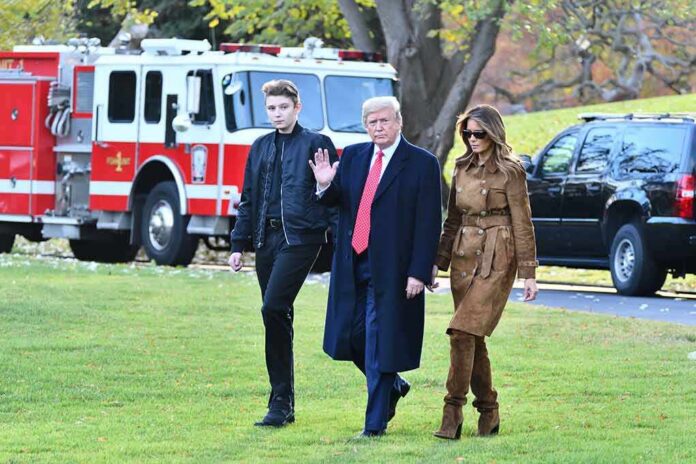
Newly released White House records say Biden-era agents tracked Melania and Barron Trump’s movements while mapping the Mar-a-Lago search.
Story Highlights
- White House task force records describe FBI monitoring of Melania and Barron Trump’s travel during 2022 planning.
- Documents outline a pen register on Trump adviser Susie Wiles’ phone in early 2023, capturing call metadata.
- Reported logs flagged contacts with at least 21 Trump defense lawyers and several journalists.
- Records tie the monitoring to the classified-documents probe linked to special counsel Jack Smith’s team.
White House Records Describe Family Travel Tracking In 2022
White House transparency records described by multiple outlets say Federal Bureau of Investigation (FBI) agents “watched Donald, Melania and Barron Trump closely” while planning the Mar-a-Lago search in late May 2022. Reporting says the emails tracked the former first lady and the Trump son’s travel as agents mapped timing and routes for the operation. The reports attribute the material to a Government Transparency Task Force release dated October 5, 2026, citing internal communications tied to the search planning.
Coverage says the same released packet connected the family-travel monitoring to steps in the classified-documents investigation. Outlets described the material as White House-released, not a leak from private actors, and said it documents how agents synchronized logistics for the Palm Beach action. The accounts do not detail the specific collection method for travel tracking, but they frame it as part of the planning window for the Mar-a-Lago search operation in 2022.
Pen Register On Susie Wiles Captured Call Metadata In 2023
Separate records in the release reportedly show a pen register and trap-and-trace operation on Trump adviser Susie Wiles’ phone from about February to May 2023. A pen register records who called a number, who was called back, and the duration and timing, but not the call contents. Reporting says the output identified contacts with at least 21 lawyers linked to Trump’s defense and at least five journalists, mapping a network of advice and outreach during the probe.
One outlet reports the FBI interviewed Wiles on April 7, 2023, and then showed her four pages of communications, suggesting agents compiled and reviewed the call-detail records. That account aligns with descriptions that investigators used metadata, not audio, to trace lines between legal counsel, campaign advisers, and media. The records, as described, place this activity within the same classified-documents case environment tied to special counsel Jack Smith’s work.
Investigative Context And Civil Liberty Concerns For Conservatives
Just the News and the Washington Examiner report the task force release framed the activities as part of the broader classified-documents investigation, later overseen by special counsel Jack Smith. That links the monitoring of Wiles and the tracking of Trump family movements to a defined case, not a free-floating program. The description says the records were internal government materials released by the White House Government Transparency Task Force on October 5, 2026.
🚨 NEWLY RELEASED RECORDS SHOW BIDEN-ERA FBI TRACKED MELANIA AND BARRON TRUMP’S TRAVEL DURING MAR-A-LAGO PROBE: Declassified documents show federal investigators mapped the movements of Melania and Barron Trump while planning the 2022 search of Mar-a-Lago, as part of the…
— MDBayNews (@MDBayNews) October 6, 2026
Former special counsel Jack Smith has publicly argued that obtaining toll records and call metadata is common practice in complex conspiracy cases and that these records do not capture content. He has said such steps follow Department of Justice policy and can corroborate timelines and contacts in sensitive probes. Supporters of civil liberties note that even metadata can chill speech and association when collection sweeps in lawyers, journalists, and family movements.
What It Means Now: Guardrails, Oversight, And Next Steps
Conservative readers see clear stakes. When federal agents track a first lady and a teenage son’s travel during a search plan, that raises core questions about limits, need, and scope. When investigators log a political adviser’s call routes with defense lawyers and reporters, it touches the First Amendment and the right to counsel. Congress and the courts set guardrails for pen registers and sensitive-entity monitoring. The reported records invite a review of approvals, minimization, and whether the scope stayed narrow.
Lawmakers can press for the underlying orders, affidavits, and minimization procedures that governed the pen register and any travel tracking. They can seek the exact Government Transparency Task Force documents and attachments. Clear standards help agents do real cases while protecting families, lawyers, and the press from mission creep. President Trump’s administration can back full disclosure and tighter rules to ensure investigations target crimes, not political communities or constitutionally protected activity.
Sources:
redstate.com, nypost.com, wfmd.com, westernjournal.com, washingtonexaminer.com, thegatewaypundit.com, thefederalist.com