

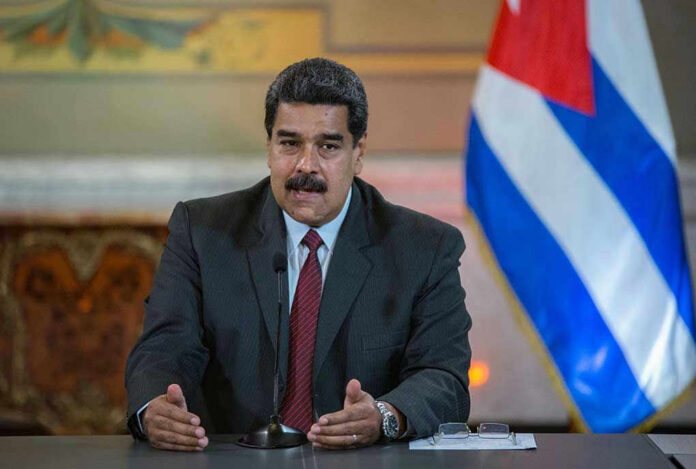
A private Oval Office chat with Elon Musk’s Grok reportedly weighed public reaction to Nicolás Maduro’s capture before the U.S. moved in.
Story Snapshot
- Reports say President Trump asked Grok how Venezuelans would react if Maduro were captured.
- Grok was quoted calling Maduro a “deeply unpopular dictator” and predicting many would celebrate his fall.
- Coverage ties the Grok exchange to a December 2025 meeting ahead of a January 2026 operation.
- Public reports also describe a long-term oil rights deal struck after Maduro’s removal.
What the reports say happened inside the Oval Office
Time-based coverage, summarized by major outlets, says President Trump met Elon Musk in December 2025 and used Musk’s Grok chatbot to ask how Venezuelans might react if the United States captured Nicolás Maduro. According to an official present, Grok called Maduro a repressive and deeply unpopular dictator and predicted many Venezuelans would likely celebrate his downfall. The articles place this exchange shortly before the January 2026 operation that removed Maduro from power.
Several stories add that Trump spent hours asking Grok questions about his presidency and legacy as well as Venezuela. These accounts suggest Grok was part of a broader conversation, not the only voice in the room. The linked reporting repeats the same core quote about Maduro’s unpopularity and public reaction. That consistency across outlets supports that this specific answer was relayed by someone present at the meeting, even if no transcript has been released.
What Grok did and did not do, based on available evidence
Secondary summaries of the Time report stress that Grok did not tell Trump to capture Maduro. The chatbot’s role, as described, was to assess likely public reaction to a hypothetical capture, not to recommend action. One outlet states the evaluation may have influenced Trump’s later thinking, but it was not the sole or decisive factor. That distinction matters, because it rejects the claim that policy was “outsourced” to a chatbot.
No outlet in the research provides a primary transcript, chat log, or on-the-record witness. The evidence relies on an unnamed official present at a sensitive Oval Office meeting. That limits certainty about exact wording and timing. Still, the specific quote appears stable across reports, and none of the cited pieces dispute that Trump asked about Venezuelan reaction or that Grok used the “deeply unpopular dictator” framing in reply.
The broader Venezuela context after Maduro’s removal
PBS reporting says many Venezuelans hoped Maduro’s January ouster would end the ruling party’s 27-year control. In the months that followed, public documents and media coverage described a large restructuring of oil rights. Reports cite a statement saying 17 fields holding about 65 billion barrels were slated for development, and that a new company received rights to untapped fields for 100 years. These details frame why reaction inside Venezuela and abroad has been intense.
For American readers, this context speaks to energy, security, and stability. Supporters see a tyrant removed and a path to reliable oil that can help lower costs at home. Critics warn about overreach and legal questions around long concessions. Both views appear in the cited reporting. What is clear from the record used here is narrow: Trump asked Grok about public blowback, Grok forecast celebration among many Venezuelans, and the operation and oil steps followed soon after.
Why this matters to U.S. policy and conservative priorities
National leaders use many tools to sense public reaction, from polls to briefings to open-source technology. The Grok episode, as reported, shows a president testing how people might respond to the fall of a dictator who wrecked his nation. That aligns with peace through strength and smart power. The record does not show that a chatbot made the call. It shows a president asking for perspective, then owning the decision and its outcomes for American interests.
Sources:
insiderpaper.com, techcrunch.com, gizmodo.com, mezha.net, ms.now, ua.news, thedailybeast.com, newsbreak.com, pbs.org