
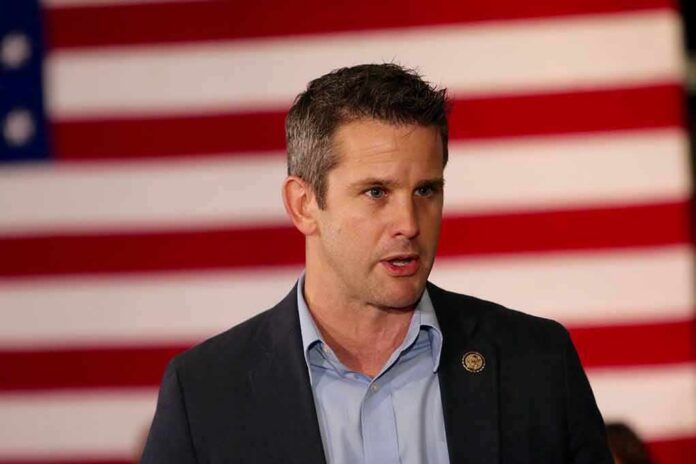
Federal regulators are examining whether Adam Kinzinger bet money on his own presidential pardon, raising fresh questions about political insiders gaming the system.
Story Snapshot
- Regulators are reviewing Kalshi trades tied to Kinzinger’s own potential pardon.
- Kinzinger admits he placed the bets and says he followed platform rules.
- Kalshi reportedly flagged the account to regulators as part of routine monitoring.
- No public record shows a formal enforcement action or charge at this time.
What Regulators Are Probing
Politico reported that the Commodity Futures Trading Commission is looking at trades a Kalshi account linked to Adam Kinzinger made in December 2024 and January 2025. The trades focused on whether President Joe Biden would pardon him. CNN reported the same day that a person familiar with the matter confirmed the review. These reports describe an active look at timing and content of the bets, not a public charge or complaint yet.
The Hill added that a Kalshi source said the company reported the account and trades to the Commodity Futures Trading Commission. That source called the review routine, which suggests the platform treats self-referential markets as sensitive. Raw Story and Decrypt both noted Kalshi policies against using nonpublic information and against betting on events where users are direct participants, aligning with broader market rules for fair dealing.
What Kinzinger Says He Did
Adam Kinzinger acknowledged that he placed the trades. He said he wagered less than one thousand dollars on two markets about whether he would receive a pardon and whether Biden would issue preemptive pardons before leaving office. He said he read Kalshi’s rules and believed he complied. He also said he had no inside information and did not talk with anyone about pardons, including anyone connected to the White House.
Kinzinger has framed the episode as a lapse in judgment, not a scheme. Outlets reported him calling it a “dumb bet,” while still maintaining he followed the rules as he understood them. Reports also note he said he would cooperate with any review. Those statements push back on claims of insider advantage, but the regulator review will test the facts against market and federal standards.
Why This Matters for Fair Play and Trust
Kalshi and other event markets now face the same core risks as financial exchanges. The Commodity Futures Trading Commission has stated it can police illegal trading and manipulation on registered prediction markets. Recent advisories describe cases where a political candidate traded on his own race and other “own-event” activity that raised red flags. These moves show regulators view self-referential bets as high risk for abuse and conflicts.
Feds Investigate Kinzinger Over Alleged Kalshi Bets On Own Pardon | Tyler Durden, Zerohedge
Former Republican Rep. Adam Kinzinger is reportedly under investigation by the Commodity Futures Trading Commission over prediction-market trades tied to an unusually personal event:… pic.twitter.com/Vyb7kRPOaO
— Owen Gregorian (@OwenGregorian) October 1, 2026
For everyday Americans, this is simple: people tied to an event should not profit from special access or even the appearance of it. If a public figure bets on his own legal outcome, faith in fair rules takes a hit. The reporting also shows gaps. No public document yet confirms a formal action, no trade records are public, and the exact rules in force at the time are not quoted. That makes patience and verification important before any final judgment.
How the Probe Could Play Out
Investigators could seek Kalshi’s internal records, trade logs, device data, and alerts to confirm who traded, when, and why. They could test whether messages or calls suggested any nonpublic tip. They will compare the timing of trades to public news. If the trades were normal speculation, the matter may close. If the account held an undue edge, sanctions could follow under rules against manipulation and misuse of nonpublic information.
Americans want one standard. If a prominent Trump critic can bet on his own pardon without consequence, that invites more self-dealing across politics. If rules apply, then sunlight and enforcement should follow the facts. President Trump’s administration has set a tone of law and order. A clear outcome here—whatever it is—would help protect market integrity, deter future abuses, and show that insiders do not get special treatment in America’s financial and political arenas.
Sources:
twitchy.com, edition.cnn.com, politico.com, finance.yahoo.com, nymag.com, redstate.com, foxsportsradio.iheart.com