
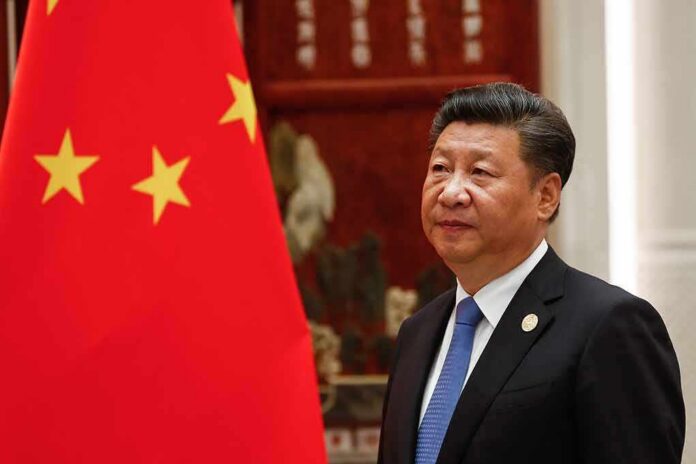
President Trump took the rare step of greeting China’s Xi Jinping planeside at Joint Base Andrews, signaling hard-nosed, face-to-face diplomacy from day one of a high-stakes visit.
Story Highlights
- Trump met Xi at the bottom of the aircraft stairs in a rare airport welcome.
- The three-day visit focuses on trade, technology, and security flashpoints.
- Officials announced an extension of a trade truce through early January.
- The airport greeting is a low-frequency, high-symbolism protocol signal.
Trump’s Rare Airport Welcome Sets a Firm Tone
President Trump greeted Chinese President Xi Jinping on the tarmac at Joint Base Andrews on Wednesday evening, an uncommon gesture for a United States leader. Reports describe a long red carpet, honor guards, and a formal handshake at the foot of the stairs. The welcome marked the start of a three-day state visit to Washington. Coverage called the move rare and symbolic, underscoring the stakes of the moment and the desire to engage directly at the leader level.
News outlets noted that presidents usually receive visiting leaders at the White House, not at the airport. That is why this greeting drew attention across the political spectrum. The move echoed Trump’s style of personal diplomacy and set expectations for tough, direct talks. For many conservatives, protocol is not the point. Results are. Meeting Xi at the plane conveyed that the United States would lead the engagement on American terms, in public view, without mixed signals.
Focus of Talks: Trade, Technology, and Security Risks
Officials sketched a packed agenda. Talks would cover trade balances, technology access, and security flashpoints that affect supply chains and costs for American families. Reporting said the visit opened with an extension of a trade truce into early January, creating space for negotiations without new tariff moves during the talks. The administration framed this as time to press for fair terms that protect American workers and stop games that hurt U.S. industry and farms.
The emphasis on technology rules reflects deep concern over intellectual property theft and control of critical systems. American voters remember how past globalist deals shipped jobs overseas and weakened local manufacturing. The White House signaled it wants concrete guardrails that block forced transfers and rigged market access. Any deal must be enforceable, with real penalties, not vague promises. That approach aligns with conservative priorities: fair trade, secure supply lines, and American jobs first.
Why the Protocol Matters to Leverage
Diplomatic protocol can shift leverage before a single word is said. Analysts called the airport greeting a low-frequency, high-symbolism move, seen only a few times across decades. Such ceremony can frame the talks without conceding an inch on substance. By taking charge of the optics, the administration highlighted strength, clarity, and unity at the top. The aim is simple: deter misread signals, cut the theater, and push for measurable results that defend U.S. interests.
Xi went to Washington for a controlled summit with Trump. Airport greeting, Oval Office, state dinner, two month trade truce. That is how a state manages a rival.
Modi’s US trips often carry a second job. Diaspora hall, camera, clip that plays in India the same night. That is…
— NaaNSenseAi (@NaanSenseAi) September 25, 2026
For readers worn down by years of weak deals, supply shocks, and rising prices, the measure is outcomes. Lower costs for energy and goods, more American-made products, and stronger protections for data and tools our families rely on. The airport welcome is not an end; it is a starting gun. Trump used a rare gesture to send a message: America will show respect while demanding reciprocity, fair play, and security for our people and our economy.
Sources:
thehill.com, nypost.com, bostonglobe.com, straitstimes.com, abcnews.com, cbsnews.com, pbs.org, yahoo.com