
California’s electricity price hit second-highest in the nation in 2025, doubling the U.S. average and squeezing families already battling inflation.
Story Highlights
- California’s 2025 average electricity price was 27.63 cents per kWh, more than double the U.S. average of 13.63 cents.
- State watchdog reports showed continued rate hikes across major utilities through 2025.
- Residential prices in the contiguous states ranked highest in California on several 2025 snapshots.
- Wildfire costs, grid spending, and net metering were cited as key pressures on bills.
California’s 2025 Price Level and National Rank
Public reporting in September 2026, drawing on 2025 data, placed California second in the nation for average retail electricity price, behind Hawaii. The cited 2025 statewide average was 27.63 cents per kilowatt-hour, compared with 13.63 cents nationally, confirming a gap of more than two to one. That ranking aligns with a broader pattern across 2025 snapshots showing California near the top across customer classes, with commercial and industrial prices also far above U.S. norms.
Californians also faced monthly bills shaped by sustained multi‑year increases, not only a one‑time jump. Independent energy trackers and policy summaries describe rates climbing sharply during 2021 to 2023, then settling into the low 30‑cent range for residential customers by 2025–2026. This escalation helps explain why affordability dominates hearings and headlines. The national comparison worsens the pain because the typical U.S. household paid closer to mid‑teens per kilowatt-hour in 2025.
Documented Rate Hikes Across Major Utilities
State Public Advocates Office reports for 2025 showed continued residential rate increases across Pacific Gas and Electric, San Diego Gas and Electric, and Southern California Edison territories through the year’s end. Those official quarterly updates tracked changes by customer class and utility, underscoring that rising delivery and other non‑energy charges pushed total bills higher. The watchdog’s findings align with outside summaries that show California leading the contiguous states on residential price snapshots in mid‑2025.
California lawmakers publicly acknowledged the strain on households and discussed affordability measures in 2025, while media coverage highlighted the state’s number‑two national ranking and price gap versus the U.S. average. Consumers could compare rates by location using the California Public Utilities Commission’s online tool, which lets residents check standard, low‑income, and electric‑vehicle tariffs by city, county, or ZIP code. That transparency shows the pattern is not isolated to one utility or one metro.
What Is Driving Higher Bills
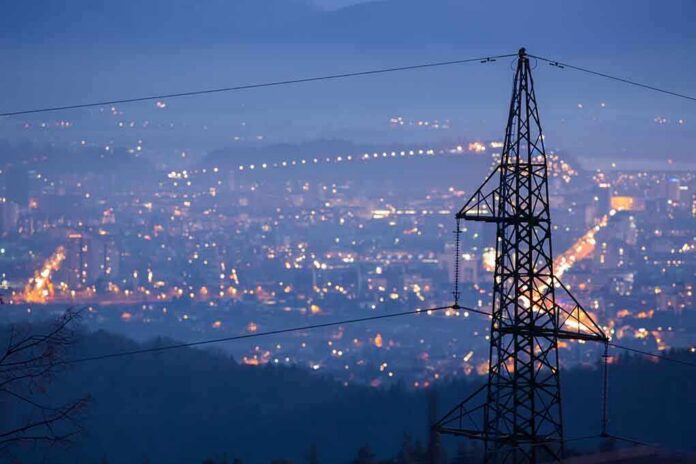
Explanations cited in 2025 focused on wildfire mitigation and liability, inflation in grid components, and retail net energy metering rules that shift costs into rates. Public Advocates Office materials also highlighted heavy transmission and distribution investments as key drivers showing up on customer bills. Those cost pressures tie to state policy choices and the mechanics of regulated utilities, where approved spending is recovered from ratepayers over time, which can magnify increases when multiple drivers hit at once.
California’s challenge also spans business rates. Commercial and industrial prices ran far above national averages in 2025 snapshots, raising costs for shops, factories, and warehouses that keep communities employed. Higher input costs squeeze margins and show up as higher prices on goods and services. That is why electricity affordability is not only a household issue; it is also a Main Street and jobs issue, especially when energy‑intense work is pushed out of state by persistent price gaps.
What Readers Can Do Right Now
Residents can use the state’s rate comparison site to review plans, verify eligibility for discounts, and see how usage patterns affect bills. Customers can also audit peak‑time use, explore demand response programs, and check utility alerts on critical‑peak pricing. For policy engagement, voters can track utility rate cases and Public Utilities Commission proceedings where specific spending plans become charges on bills. Clear engagement helps press for cost control, accountability, and a balance between reliability and affordability.
Sources:
nypost.com, publicadvocates.cpuc.ca.gov, hoodline.com, sandiegouniontribune.com, centerforjobs.org