

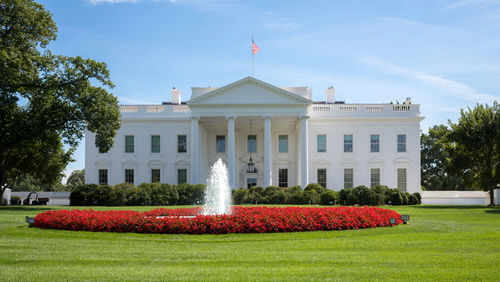
A Trump administration official wants to replace the White House’s 200-year-old Ionic columns with ornate Corinthian columns, raising alarms among patriots who view this as yet another example of bureaucrats tampering with our nation’s historic landmarks without proper oversight.
Story Snapshot
- Rodney Mims Cook Jr., Trump’s appointed chair of the Commission of Fine Arts, proposed replacing iconic 200-year-old Ionic columns with Corinthian columns
- The White House officially states there are “no plans” to change the historic columns despite Cook’s public advocacy for the proposal
- Architecture experts warn the change would harm the original design and violate historic preservation standards meant to protect national landmarks
- The proposal follows Trump’s extensive renovations including East Wing demolition and a planned $400 million ballroom featuring Corinthian columns
Trump Official Proposes Major Architectural Overhaul
Rodney Mims Cook Jr., Trump’s appointed chair of the Commission of Fine Arts, publicly advocated for replacing the White House’s North Portico columns with Corinthian-style pillars. Cook told The Washington Post that Corinthian represents “the highest order” of classical columns, matching those used at the U.S. Capitol and Supreme Court. He questioned why the White House’s “front door” wasn’t originally designed with this more formal architectural style. The proposal targets columns that have defined the People’s House for approximately two centuries, representing one of America’s most recognizable architectural features.
Historic Preservation Standards Under Scrutiny
Architecture experts and preservation advocates strongly oppose the proposal as a violation of established standards protecting national landmarks. Steven Semes, a classical architecture professor, explained that Ionic columns were deliberately chosen to convey “dignity, grace and a kind of intimacy or domesticity” appropriate for the Executive Residence. Bruce Redman Becker, a former federal arts commissioner purged by Trump, called the proposal “completely inappropriate and at odds with universally held historic preservation standards.” The National Trust for Historic Preservation previously filed lawsuits over Trump’s East Wing demolition, demonstrating ongoing concerns about bypassing formal review processes that safeguard America’s architectural heritage.
Pattern of Extensive White House Renovations
The column proposal represents the latest phase in Trump’s comprehensive White House transformation. Previous changes include demolishing the East Wing to construct a 90,000-square-foot ballroom valued at approximately $400 million, featuring Corinthian columns matching those in Trump Tower and Mar-a-Lago. Gold lettering and signage reminiscent of Trump’s private properties have appeared throughout the building. While Cook claimed he hasn’t directly discussed the column replacement with Trump, the pattern suggests administration officials anticipating the president’s aesthetic preferences. The proposed ballroom will incorporate the ornate architectural style Cook now advocates for the building’s exterior.
White House Denies Implementation Plans
Despite Cook’s public advocacy, a White House spokesperson officially stated there are “no plans” to replace the current columns. This creates uncertainty about whether the proposal will advance beyond the suggestion phase. Cook’s position as chair of the Commission of Fine Arts gives him influence over federal building aesthetics, yet his admission that he hasn’t consulted Trump directly raises questions about the proposal’s origins and viability. The disconnect between Cook’s statements and official White House denials mirrors broader concerns about transparency in the renovation process, particularly when constitutional stewardship of national landmarks requires proper oversight and public accountability.
The controversy highlights fundamental tensions between executive authority over federal property and preservation principles protecting America’s historic buildings for future generations. Whether this proposal gains traction or remains an unfulfilled suggestion, it underscores the importance of maintaining proper review processes that prevent unilateral changes to landmarks representing our shared national heritage. Americans who value constitutional limits on government power and preservation of our founding era’s architectural legacy have legitimate concerns when officials propose altering 200-year-old features without demonstrating clear public benefit or following established protective standards designed to prevent impulsive modifications to irreplaceable national treasures.
Sources:
Trump has a new target in mind for his White House makeover
Trump posts renderings showing Kennedy Center exterior after planned renovation
Trump Official Proposes Replacing 200-Year-Old White House Columns