
Phone logs now suggest Gavin Newsom’s office had a devastated father on the line for five minutes even as his team told the public they’d never heard from him.
Story Snapshot
- Phone records reportedly show Marcus Coleman did call Gov. Gavin Newsom’s office about his daughter Dalilah’s catastrophic injuries.
- Newsom’s staff publicly claimed they had “no records” of any outreach from the Coleman family.
- The clash comes as President Trump pushes the federal “Dalilah Law” to block commercial licenses for undocumented drivers.
- The case exposes how progressive immigration and licensing policies can collide with public safety and basic accountability.
Call Logs Versus Newsom’s Public Denials
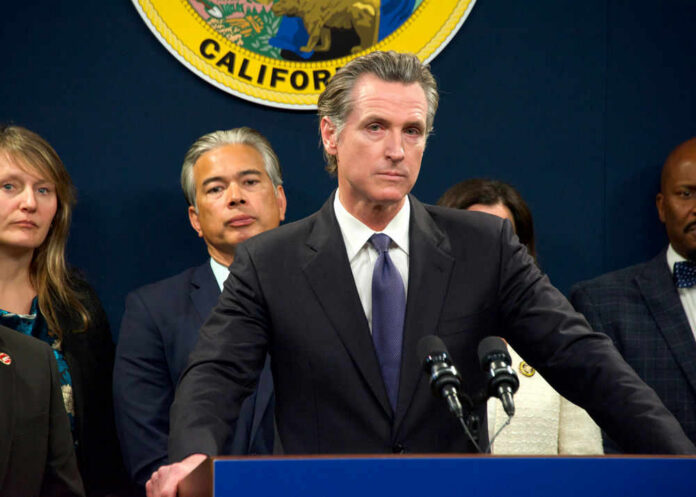
Daily Caller News Foundation reporting indicates that phone logs from the Coleman family show a call placed by Dalilah’s father, Marcus, to California Governor Gavin Newsom’s office that lasted about five minutes. Newsom’s staff had publicly insisted they had “no records” of any outreach from the family, even as Marcus said he had tried to contact the governor and never received a response. The discrepancy raises sharp questions about transparency, record‑keeping, and respect for a grieving family.
This episode fits a familiar pattern from blue‑state leadership: polished press statements that fall apart when basic facts are checked. The Coleman call was not a vague tip or anonymous complaint; it came from the father of the little girl whose name now headlines a national debate. If a governor’s office cannot accurately track or honestly describe that kind of constituent contact, it undercuts trust in every denial and every carefully worded talking point that follows.
From Desert Crash To National Immigration Flashpoint
The story begins in the Mojave Desert, where a multi‑vehicle crash involving a semi‑truck left young Bakersfield girl Dalilah Coleman with a traumatic brain injury, skull fractures, a broken femur, and lasting disabilities. The truck was driven by immigrant driver Partap Singh, who held a California commercial driver’s license after federal officials verified his work permit and legal presence. Reports describe Dalilah now as non‑verbal, unable to walk or eat orally, facing lifelong care instead of the first‑grade classroom she should have enjoyed.
California officials quickly stressed that federal authorities had approved Singh’s work permit and legal presence, making him eligible for a REAL ID‑compliant commercial license. That defense allowed Governor Newsom’s team to point the finger at Washington while claiming state agencies simply followed the law. Yet for families watching from Bakersfield to the Midwest, the bottom line was simpler: a dangerous crash in a construction zone, a severely injured American child, and a system that cleared a non‑citizen to operate a big rig on crowded highways.
Trump’s “Dalilah Law” And The Policy Divide
When President Donald Trump returned to the national stage with his State of the Union, he put Dalilah’s story at the center of his push for tougher immigration and licensing rules. The proposed “Dalilah Law” would prohibit states from issuing commercial driver’s licenses to undocumented immigrants or treating them as legally present for those purposes. Trump argued that allowing poorly vetted or non‑English‑proficient drivers to pilot heavy trucks on U.S. roads is a public‑safety gamble Americans never consented to.
Newsom blasted the proposal and framed criticism of California as politicizing a tragedy. His office reiterated that federal systems like SAVE and federal work permits cleared Singh, insisting California merely complied. But that framing sidesteps the bigger question for many conservatives: why are progressive leaders fighting so hard to preserve any pathway that puts non‑citizens behind the wheel of commercial rigs, instead of erring on the side of American families’ safety and clear, nationwide standards?
A Family’s Search For Help, And A Government’s Silence
As media coverage intensified, Marcus Coleman and his family appeared in local and national outlets seeking accountability and long‑term support for Dalilah. They even visited Singh in immigration detention, expressing forgiveness toward him personally while demanding a system that would protect other children. Marcus has said he tried to reach out to Newsom’s office and never heard back. The governor’s team responded publicly by claiming there was no record of any contact from the family.
That is where the phone logs matter. If a call from Marcus reached the governor’s office and stayed connected for roughly five minutes, either staff mishandled basic constituent services or someone later misled the public about what the records showed. For an administration that frequently lectures the rest of the country on compassion and equity, appearing to ignore or paper over a desperate father’s plea after his daughter lost half her skull is more than a bad look—it is a gut‑level reminder of how distant political elites can become from the people they serve.
Conservatives see in this saga a broader pattern: progressive governments pushing expansive immigration and licensing policies, then ducking responsibility when those policies intersect with human tragedy. The Coleman family never asked to become a national symbol. Yet their ordeal now highlights why many Americans back Trump’s push for tighter rules like the Dalilah Law, stronger border controls, and a renewed focus on protecting citizens first. When powerful offices cannot even admit who called them, voters understandably demand clearer laws and leaders who will finally listen.
Sources:
“Is Newsom’s Office Lying About Devastated Father Never Calling About Trump’s ‘Dalilah Law’?” – AOL
“Gavin Newsom ignored calls to help girl, 5, left with half a skull, father says” – AOL