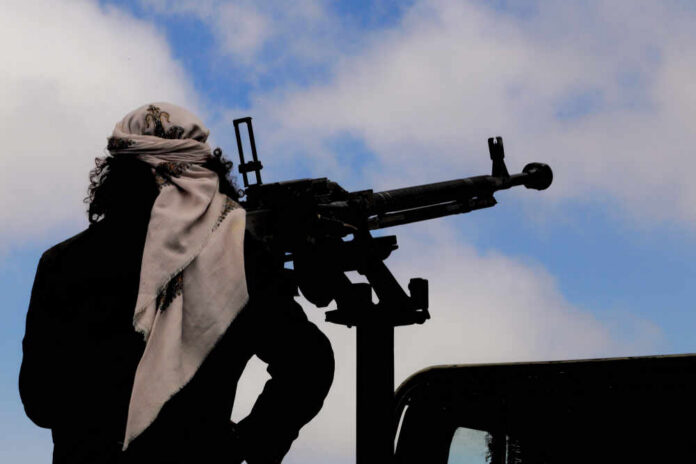
Iran-backed Houthi rebels are making bellicose threats about joining the war against America and Israel, but their actual commitment to the fight remains suspiciously absent despite Tehran’s desperate calls for help.
Story Snapshot
- Houthis issue “fingers on the trigger” warnings after U.S.-Israel strikes killed Iran’s Supreme Leader, but have launched no actual attacks
- Iran’s new leader Mojtaba Khamenei publicly thanked Houthis for support, yet the rebels maintain truces with both the U.S. and Saudi Arabia
- Yemen-based militants deployed hypersonic missiles as deterrence theater while prioritizing domestic stability over Iranian proxy warfare
- Trump administration’s May 2025 truce and strategic pressure complicate Houthi calculus between Tehran loyalty and survival
Bellicose Rhetoric Meets Strategic Hesitation
The Houthis issued ominous warnings in early March 2026 after American and Israeli forces killed Iran’s Supreme Leader Ali Khamenei on February 28, with rebel leader Abdul Malik al-Houthi declaring his forces had “fingers on the trigger.” Iran’s new supreme leader Mojtaba Khamenei publicly thanked the Yemeni militants alongside Hezbollah and Iraqi militias for their backing. Despite this war rhetoric, no Houthi attacks have materialized against U.S. or Israeli targets. The rebels deployed Palestine-2 hypersonic missiles to Saada and Hajjah provinces as visible deterrence, signaling readiness without committing to action that would invite devastating American retaliation.
Complicated Loyalties and Self-Preservation
The Houthi movement faces a difficult strategic dilemma that pits Iranian patronage against Yemeni survival interests. Iran’s Islamic Revolutionary Guard Corps supplies approximately 90 percent of the rebels’ advanced military capabilities, including weapons, training, and funding that sustain their control over northwestern Yemen since seizing the capital Sana’a in 2014. However, the Houthis simultaneously maintain de facto truces with the Trump administration and Saudi Arabia, agreements that have paused American airstrikes and reduced regional hostilities. These arrangements provide breathing room for the rebels to consolidate domestic governance and deliver basic services to Yemenis exhausted by years of conflict, creating powerful incentives to avoid reigniting full-scale war.
Iran’s Weakened Proxy Network Increases Pressure
Tehran’s desperation for Houthi involvement stems from catastrophic losses across its regional proxy network throughout 2024 and 2025. Israeli operations systematically decapitated Hezbollah leadership in Lebanon, while Syrian dictator Bashar al-Assad’s regime collapsed, severing crucial Iranian supply lines. These developments leave the Houthis as Iran’s most resilient proxy force at precisely the moment the regime faces existential threats from American and Israeli military action. Iran’s Axis of Resistance strategy relied on distributing defensive burdens across multiple militant groups, but with Hezbollah crippled and Syria lost, the mullahs need Houthi participation to sustain any credible deterrence against further strikes. This desperation explains Mojtaba Khamenei’s public gratitude and likely private pressure on Yemeni militants.
Red Sea Shipping Remains Vulnerable Leverage Point
Houthi capabilities to disrupt global commerce through Red Sea attacks provide significant strategic leverage that concerns American policymakers and Gulf state partners. The rebels nearly paralyzed Suez Canal traffic during 2023-2025 solidarity strikes supporting Gaza, prompting a 51-day U.S. military campaign before the May 2025 truce froze hostilities. Any resumption of maritime attacks would compound economic disruptions from the ongoing Iran war, particularly if combined with potential Iranian closure of the Strait of Hormuz. Western and Israeli intelligence agencies issued alerts in mid-March about potential Houthi Red Sea operations, though analysts note such actions would invite devastating American, Israeli, and potentially Saudi Arabian military responses targeting Yemeni ports like Hudaydah. The economic costs of renewed shipping disruptions create powerful deterrents against Houthi escalation.
Conditional Commitment Preserves Future Options
Expert analysis from think tanks including the Stimson Center and Atlantic Council identifies Houthi strategy as conditional readiness rather than immediate belligerence. The rebels publicly signal alignment with Iran to maintain crucial support relationships while privately calculating escalation thresholds tied to specific triggers such as Gaza ceasefire collapse or direct existential threats to the Iranian regime. This approach allows Houthis to demonstrate ideological solidarity without sacrificing hard-won truces or inviting strikes that would devastate their governance capacity. Internal divisions between hardline ideologues favoring Iranian loyalty and pragmatists prioritizing Yemeni stability further complicate decision-making, creating genuine uncertainty about whether warnings represent actual war preparation or political theater designed to preserve options while avoiding immediate commitment.
Sources:
This military rebel group could join the Iran war next against the U.S.
A week into the war: the Houthis between loyalty to Iran and staying in power
The Houthis must decide: Join Iran’s war against the US and Israel, or abandon Iran
Will the Houthis join the Iran war?
Why Yemen’s Houthis have not joined the Iran war
Red Sea Uncertainty: A 2026 Forecast for the Houthis’ Actions