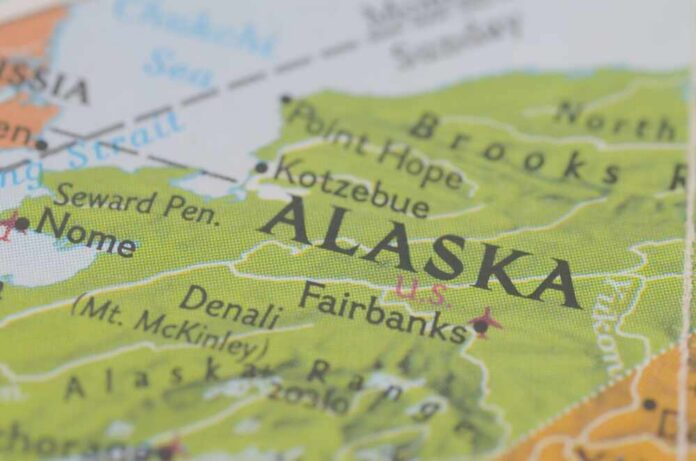
The Justice Department has now admitted Biden’s Arctic oil leasing rules broke the law and has cleared the way for expanded drilling in Alaska’s Arctic National Wildlife Refuge.
Story Snapshot
- Justice Department settled Alaska’s lawsuits by conceding Biden-era leasing restrictions violated the 2017 tax law.
- 2024 rules closed about 75% of the Coastal Plain and capped surface use far below the law’s 2,000-acre limit.
- Trump-era officials say this shift restores Congress’s intent for a real, competitive oil and gas program.
- Environmental groups are suing again, claiming the revived program breaks major environmental protection laws.
DOJ Concedes Biden Rules Violated Federal Law
The United States Department of Justice announced it has settled lawsuits brought by the State of Alaska and the Alaska Industrial Development and Export Authority over the 2024 Arctic National Wildlife Refuge Coastal Plain Oil and Gas Leasing Program. Acting Attorney General Todd Blanche said the Biden-era program “violated the law and improperly limited Alaska’s energy potential with unreasonable regulation,” aligning the department with Congress’s push for domestic energy and with the Trump administration’s stated energy independence goals.
Under the settlement, the Justice Department formally conceded that the 2024 program broke the Tax Cuts and Jobs Act of 2017 in several ways. The department said the program effectively ducked the Interior Department’s duty to hold a second lease sale, shut down leasing on roughly three-quarters of the 1.56 million-acre Coastal Plain, and stacked “unreasonable” surface-use limits on the remaining quarter. The settlement also faults the program for capping surface disturbance at 995 acres instead of allowing up to 2,000 acres, the ceiling written into the tax law for development footprints.
What Changes Now for Alaska Energy and Federal Agencies
Associate Attorney General Stanley Woodward said the settlement makes clear that the 2024 restrictions were too tight and ran against Congress’s directive for a competitive leasing program on the Coastal Plain. He explained that the Bureau of Land Management must now run the program based on the plain text of the governing statute, which should lead to more leases, more domestic production, and less reliance on foreign energy sources. This marks a clear shift away from using back-door regulations to stall projects that Congress has already authorized.
The settlement lands on top of earlier court rulings that already questioned aggressive Biden-era efforts to halt Arctic development. In March 2025, a federal court in Alaska overturned the Interior Department’s attempt to cancel seven leases held by Alaska’s development authority, finding that the agency needed a court order to terminate those contracts. That ruling helped confirm that agencies cannot simply erase legally granted leases when politics change, a principle now reinforced by the Justice Department’s new position on the 2024 restrictions.
Environmental Lawsuits Keep the Fight Alive
Even as the Justice Department backs a stronger leasing program, environmental groups are moving in the opposite direction through fresh lawsuits. A coalition led by Earthjustice, the Natural Resources Defense Council, and the Center for Biological Diversity filed an amended complaint in federal court challenging Interior’s October 2025 decision to reopen the Coastal Plain to drilling. They argue that the agency violated the National Environmental Policy Act, the Endangered Species Act, the Alaska National Interest Lands Conservation Act, and the Administrative Procedure Act when it approved the program.
These groups say the revived leasing plan threatens polar bears, caribou, migratory birds, and the broader Arctic ecosystem while failing to fully study climate impacts. Washington State Attorney General Bob Ferguson has also sued, claiming the Trump and earlier Biden plans break several refuge and environmental laws, including the Refuge Administration Act and the National Environmental Policy Act. While these cases do not yet directly refute the Justice Department’s tax law analysis, they aim to block or reshape the program on different legal grounds, keeping pressure on federal agencies and the courts.
Decades-Long Policy Tug-of-War over ANWR
The current settlement fits a long pattern of back-and-forth policy swings over drilling in the Arctic National Wildlife Refuge. For decades, presidents and Congress have alternated between opening and shielding the area, with each move quickly challenged in court. The 2017 tax law opened the door to leasing, but later actions by the Biden administration tried to limit or cancel those efforts, citing environmental review flaws and legal defects. The Trump administration’s Justice Department is now pushing the pendulum back toward development under the same statute.
This legal instability has made the refuge highly “radioactive” for industry and advocacy groups alike, as described in past analyses of Arctic leasing. Conservation organizations have worked for years to seal off the refuge from drilling, while energy supporters view it as a key piece of American energy security. The Justice Department’s latest move does not end that conflict, but it does reaffirm that executive agencies must obey clear limits set by Congress and that they cannot quietly rewrite those limits through restrictive rulemaking when voters elect a new president.
Sources:
zerohedge.com, atg.wa.gov, doi.gov, alaskabeacon.com, inthesetimes.com, congress.gov