
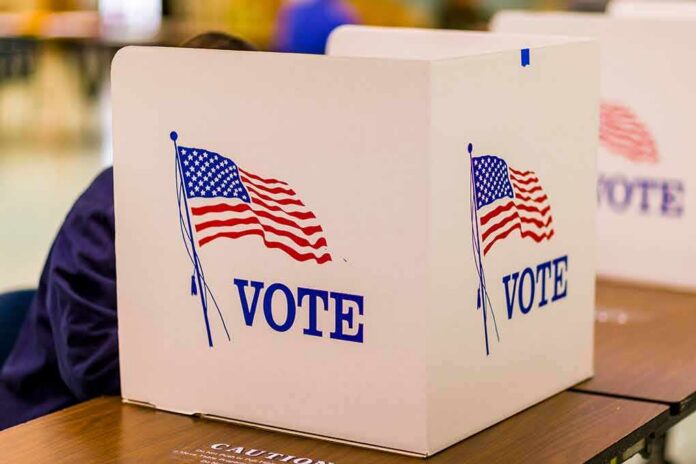
America’s top general says there are no plans to put troops at polling places this November, underscoring that elections belong to states and local communities.
Story Highlights
- Joint Chiefs Chair Gen. Dan Caine wrote there are no plans to deploy troops to polling places in 2026.
- Caine also said there are no plans to seize ballots, voting machines, or other election materials.
- Federal law has long barred troops at the polls except to repel an invasion, a point cited in coverage.
- Sen. Elissa Slotkin pressed for written assurances and promoted a bill to limit federal forces at election sites.
Caine’s Written Assurance: No Troops at Polls, No Seizures
General Dan Caine, the Chairman of the Joint Chiefs of Staff, stated in writing that the Joint Force has no plans to send federal military personnel or federalized National Guard members to polling places during the 2026 elections. He also wrote there are no plans to seize ballots, voting machines, or other election materials. His letter grounded the stance in the legal role of state and local officials for election administration and security, according to national reporting.
Associated Press and other outlets reported that Caine added he has not received, and does not expect to receive, any unlawful order about the military’s role in the November midterms. The statement, while firm, describes current plans rather than a permanent bar. The denial matches long-standing law that sharply limits any military presence at voting sites. The coverage summarized Caine’s core point: the military is not planning to stand at the polls or touch election materials.
The Law: Civilian Elections, Narrow Exceptions
Federal law dating back to the Civil War era prohibits stationing troops at places where elections are held, except in the extreme case of repelling armed enemies of the United States. Contemporary reporting highlighted this legal backdrop when describing the current assurances. The rule supports a simple principle: civil elections are run by civilian officials, not the armed forces. That tradition protects calm polling places and prevents the chilling effect of uniforms and rifles where Americans cast votes.
That bright line matters to voters on both sides. Clear rules reduce the chance of confusion or intimidation at the door of a polling site. Local sheriffs and police already handle basic safety. If a true national emergency arose, federal law spells out narrow lanes where force could be used. Today’s military leaders say they see no need or plan to test those lanes at the polls this fall. That keeps uniformed service members focused on defense, not domestic election duties.
Why Democrats Pressed, And What Conservatives Should Watch
Senator Elissa Slotkin asked for written confirmation that no federal troops or federalized Guard would be sent to the polls and that no election materials would be seized. She also promoted the Protect Our Polls Act to require new limits on federal forces around elections. News coverage described her push as driven by Democratic concern about possible misuse of federal power during the midterms, even as existing law already sets strict barriers to troop presence at polls.
Conservatives can take two lessons here. First, the law already guards against armed federal presence at polling places. Second, some in Washington still seek new layers of federal rules that could expand central control over elections. Voters should favor clarity without creeping federal overreach. State and local leaders run elections. The military defends the nation. Caine’s letter affirms that line. Any future move should be judged against statute, not partisan fear or beltway theater.
Limits and Open Questions That Deserve Oversight
Caine’s letter addresses federal troops and federalized Guard at polling places, and seizures of election materials. It does not speak to every federal agency or every action outside the doorway of a polling site. Reporting does not include internal planning documents, legal memos, or contingency orders. Congress can ask for those records to ensure consistency with the law and with Caine’s assurance. Targeted oversight can confirm that policy matches practice without stoking alarm.
For now, the takeaway is simple and steady. The military says it will not stand at our polls or touch our ballots. The law backs that up. States and counties remain in charge of election security and logistics. Citizens should vote with confidence, and demand transparency when politicians claim otherwise. Calm, lawful elections with local control are not just tradition. They are a guardrail of our Republic, and they work best without federal boots at the ballot box.
Sources:
feedpress.me, nbcnews.com, apnews.com, statesunited.org