

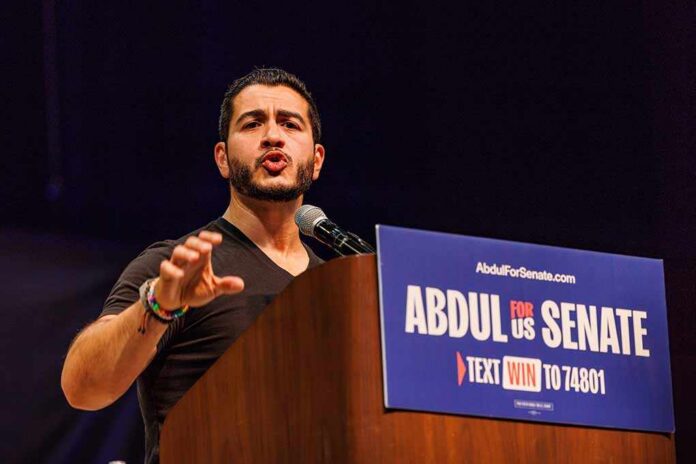
A spine surgeon just warned that Medicare-style incentives are driving more back fusions while paying doctors less, and he challenged Medicare for All champion Abdul El-Sayed to defend the plan.
Story Highlights
- A spine surgeon said Medicare’s payment rules helped push more lumbar fusions while pay fell.
- He challenged Abdul El-Sayed to debate Medicare for All and called for outcome-based pay.
- Congressional analysts project massive new federal costs under single-payer options.
- The Congressional Budget Office warned that a national switch could be disruptive.
Surgeon links payment incentives to more spine fusions
Hooman M. Melamed, a board-certified spine surgeon, said Medicare lumbar fusions rose 95 percent since 2000, with one type up nearly 600 percent. He said surgeon pay per case fell 25 to 35 percent after inflation over those years. He argued most fusions do not clearly beat good rehab and that state fusion rates vary by 50 percent. He posted the data and challenged Abdul El-Sayed to debate Medicare for All’s incentives and results.
Melamed tied his critique to real patient outcomes. He urged leaders to publish every surgeon’s results and to pay for proven results, not raw procedure counts. He warned that copying today’s fee-for-service rules into a national plan could push more questionable surgeries. He said policymakers should fix incentives first, then debate bigger expansions. His message aimed at everyday patients who pay the price when volume rises but outcomes do not.
Fiscal stakes under Medicare for All are enormous
Federal budget experts have flagged the cost scale of single-payer proposals. In testimony updated in November 2026, economist Charles Blahous estimated Medicare for All would add about $32.6 trillion to $38.8 trillion in federal costs over ten years of full rollout. That shift would move vast private spending onto federal ledgers, requiring major taxes or borrowing. Supporters and critics debate totals, but the federal tab would surge under most designs.
The Congressional Budget Office (CBO) analyzed single-payer options and found federal subsidies in 2030 could be $1.5 trillion to $3.0 trillion higher than under current law. The agency explained that design choices, like provider payment rates and cost sharing, drive results. It also warned the transition could be complicated and disruptive for patients, doctors, and insurers, with significant uncertainty for all parties during the shift.
Utilization responds to prices and rules
Evidence shows medical service volume moves with payment incentives. The CBO has cited research indicating that when Medicare raises physician payment rates by about 2 percent, the supply of care increases roughly 3 percent. That does not prove payment cuts alone caused spine fusion growth, but it supports the idea that payment design can shape how much care is delivered. Melamed’s warning fits this broader pattern in health economics and practice.
Supporters of El-Sayed’s approach argue that a public plan could keep private options and win savings from lower administrative waste and stronger price bargaining. Reporting states that El-Sayed prefers public coverage for all while allowing private plans to remain. Advocates also tout fewer bills and simpler rules. These goals are popular, but they do not by themselves answer whether fee-for-service incentives would still reward volume over value.
What El-Sayed proposes and what is missing
Abdul El-Sayed has promoted expanding Medicare to cover more services with no premiums, copays, or deductibles, while leaving some room for private insurance. That vision promises broad access and less paperwork. However, public materials reviewed do not show a full payment formula or safeguards specific to spine surgery. The record does not document his direct reply to Melamed’s challenge or whether his plan’s payment rules would avoid volume-driven overuse.
Doctor Who? Spine Surgeon SCHOOLS Abdul El-Sayed on Medicare for All — Challenges Him to Debate https://t.co/lYyiaQM1pK
— Benjamín II (@benji0ben) November 24, 2026
Because details matter, several questions remain. Would El-Sayed’s plan still pay per procedure, which can boost volume? Would it publish surgeon-level outcomes, as Melamed urges? Would it tie payment to recovery and function, not just surgical codes? Without those answers, patients could face more centralized control but the same old incentives. That risks longer waits, fewer choices, and hospitals chasing volume to survive under government-set rates.
What reforms conservatives can back right now
Lawmakers can act now without risking a disruptive national overhaul. Congress can require transparent, surgeon-level outcome reporting for major procedures like lumbar fusions. Agencies can tie payment to results that matter to patients, such as pain relief, mobility, and return to work. Policymakers can also expand access to proven rehab before surgery and protect second-opinion rights. These steps put patients, not procedure counts, at the center while guarding taxpayer dollars.
Bottom line
Melamed raised a concrete red flag: payment rules shape care, and today’s rules can push more surgery even when benefits are unclear. The CBO confirms that design choices drive costs and that a national switch could be disruptive. Before Washington expands a system that rewards volume, it should demand outcome transparency and pay for real results. Patients deserve choice, value, and accountability—not another blank check written in their name.
Sources:
twitchy.com, budget.senate.gov, congress.gov, healthaffairs.org, nbcnews.com, x.com