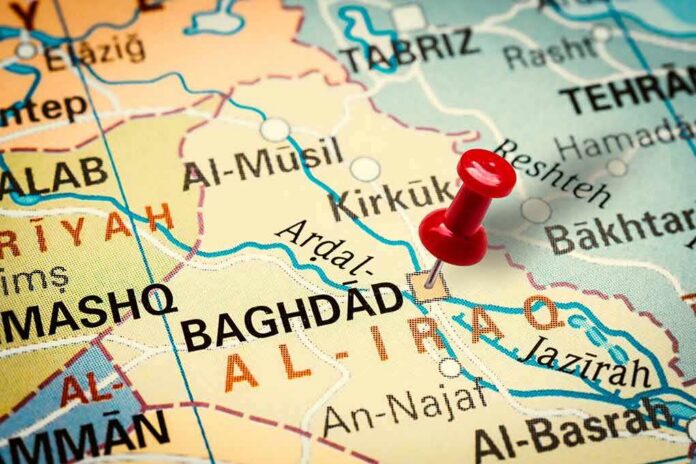
Baghdad says every last American service member will leave Iraq by September 30, closing a 23-year chapter and testing how the United States counters Iran without boots on the ground.
Story Highlights
- Iraq set September 30 as the fixed, final date to end the coalition mission and complete the U.S. troop withdrawal.
- A 2024 U.S.–Iraq joint statement laid the path to wrap up the mission no later than September 2025 and shift to bilateral security ties.
- U.S. officials and open reporting say the remaining hundreds of troops are packing up and will be out by the deadline.
- Analysts warn Iran and its militias could gain ground as the U.S. footprint shrinks, so American leverage must shift to other tools.
Withdrawal Deadline Set And Reaffirmed
Iraq’s prime minister set a clear line: September 30 ends the coalition’s military mission and completes the exit of foreign troops. He said U.S. forces will be out by that date, while American companies stay to invest and partner. The Associated Press documented the pledge during the leader’s meetings in Washington, and Baghdad repeated the message at home. The Pentagon tied the timeline back to the prior agreement that formalized the wind-down of the mission against the Islamic State group.
Washington and Baghdad put the framework in writing last year. Their joint statement said the coalition mission would conclude over twelve months, no later than the end of September 2025, and then transition to normal security ties. That document guided planners on both sides and shaped the steps now playing out on the ground. It is the baseline both governments cite as they hand bases to Iraqi forces and shift to an advisory, diplomatic, and economic track.
On-The-Ground Movements And Base Transfers
U.S. and coalition officials report that the last units in northern Iraq are packing equipment and moving out. Reporting from the field says the small number of remaining troops will leave by the deadline, with base transfers in the Kurdistan Region moving ahead. Iraqi spokesmen and Kurdish officials have described a phased removal of systems and the return of sites to national control. These actions match Baghdad’s fixed end date and the practical steps seen at several facilities this month.
Iraq’s government has also described the plan for the Kurdistan Region, where the coalition prepared to withdraw and transfer bases before the cutoff. Public updates noted that the schedule follows the 2024 agreement. The focus is to complete the mission against the Islamic State group, pass sites to Iraqi forces, and close out coalition operations by September 30. Regional media and official statements line up on the same point: the exit is organized, active, and timed to the month-end deadline.
What Changes For U.S. Power And Partners
Security experts warn that whenever the U.S. reduces its troop presence, Iran and its militia networks look to fill space. A RAND assessment states even a partial pullback can bring Tehran some benefit. That is why American power must shift tools, not fade. Sanctions, arms sales, training outside Iraq, intelligence sharing, energy investment, and dollar access rules are all parts of that leverage. These tools can protect U.S. interests and support Iraqi partners without a large footprint.
Policy analysts add that influence does not end when troops depart; it changes form. The Atlantic Council describes the new phase as more typical of U.S. relations: diplomacy first, backed by finance, energy, and defense ties. That approach can help our Kurdish and Sunni partners, and steady Baghdad, while keeping pressure on terror cells. It also helps counter Iran’s push by tying aid and access to clear behavior, rather than relying on permanent deployments.
Why This Matters To American Readers
This exit closes a long, costly mission. It also opens a new test. President Trump’s team will need to keep Americans safe, defend allies, and check Iran’s reach without daily patrols in Iraq. The administration can lean on targeted tools and strict conditional aid. If done well, this protects our troops, saves money, and upholds strength abroad. If neglected, militias could gain ground. The facts show the clock is real; the strategy after September 30 is what counts.
Sources:
military.com, aljazeera.com, en.mehrnews.com, stripes.com, newindianexpress.com, english.aawsat.com, derasat.org.bh